Apple filed a federal lawsuit against OpenAI on Friday, accusing the artificial intelligence company of stealing trade secrets to build its own consumer hardware products. The suit was filed in federal court in Northern California.
According to reporting by CNBC, the lawsuit states that OpenAI systematically took Apple's intellectual property at multiple levels of the organization. "This much is clear, however: at every level, from members of its Technical Staff to its Chief Hardware Officer, and in coordination with business partners, OpenAI has been stealing Apple's trade secrets and confidential information," Apple said in the legal filing.
The lawsuit names OpenAI's hardware chief Tang Tan, a former Apple vice president, as a defendant. Apple alleged that Tan directed job candidates who were still employed at Apple to bring physical materials to interviews. "He has directed job candidates still working for Apple to bring 'actual parts' from Apple to their interviews for 'show and tell' sessions in which he and his team at OpenAI can elicit still more Apple confidential information," Apple said in the filing.
Apple also alleged that OpenAI coached departing Apple employees on how to evade the company's security processes. A former Apple employee named Chang Liu, who later joined OpenAI, is accused of stealing an Apple laptop. Liu is also named as a defendant. IO Products, the startup at the center of the dispute, is named in the lawsuit as well.
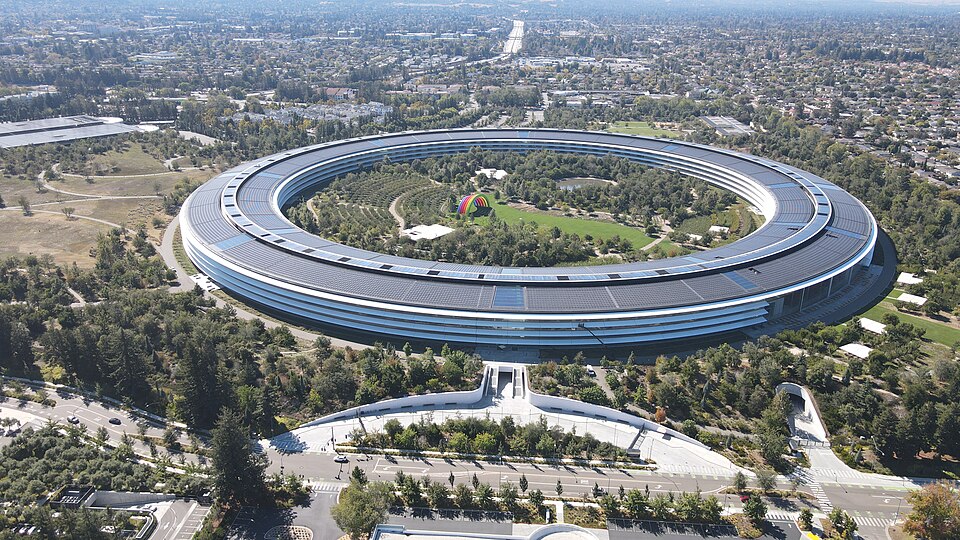
The suit comes as a striking reversal in what had been a high-profile business partnership. In 2024, Apple and OpenAI announced an agreement to integrate ChatGPT into Apple's iPhone operating system. OpenAI CEO Sam Altman attended the announcement at Apple's headquarters in person.
Relations between the two companies began to deteriorate after OpenAI announced plans to enter the hardware market. In 2025, OpenAI acquired IO Products, the startup founded by former Apple designer Jony Ive, for $6.4 billion. Apple has since moved away from OpenAI's technology for its own products. The updated version of Apple's Siri assistant, set to release this fall, is built on Google's Gemini AI models rather than OpenAI's.
Apple also alleged in the lawsuit that OpenAI is directing hardware manufacturing partners to use a metal finishing technique invented by Apple, while misleading those partners into believing they had Apple's permission to do so.
In a statement to CNBC, an Apple representative said: "Recently, significant evidence has emerged suggesting individuals employed by OpenAI wrongfully took Apple's secret and confidential information regarding our unreleased technologies, processes, and products."
OpenAI responded with a brief denial. "We have no interest in other companies' trade secrets. We remain focused on building innovative technology that empowers people everywhere," a company representative said.
OpenAI has not publicly announced a release date or specific product details for its hardware line. Altman said in November that the company had completed its first prototypes. Apple did not address whether the lawsuit would affect the ongoing ChatGPT integration within Apple Intelligence.