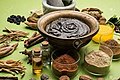
A debate over the World Health Organization's approach to traditional medicine has drawn responses from researchers who argue the discussion needs to account for national regulation, research capacity, and patient access, not just the safety concerns raised in a recent editorial.
The British Medical Journal published rapid responses to an editorial titled "WHO's misguided push for complementary and alternative medicine." Both responses pushed back on what they described as a one-sided framing of a complicated global health question.
One respondent argued that the original editorial used the term complementary and alternative medicine without drawing a meaningful distinction between unregulated practices and government-recognized medical systems. In countries such as India, systems including Ayurveda, Yoga and Naturopathy, Unani, Siddha, and Homeopathy operate under national legislation, standardized curricula, licensing requirements, and professional councils. Treating those systems as equivalent to unregulated folk remedies, the respondent said, misrepresents the regulatory landscape in large parts of the world.
Both responses pointed to one of the stated goals of the WHO's Global Traditional Medicine Strategy 2025 to 2034, which is to strengthen research, improve safety monitoring, promote pharmacovigilance, and develop stronger evidence for traditional medical practices using internationally accepted scientific methods. The respondents argued that integration into the strategy does not mean unconditional acceptance. It means building a framework for evaluation, quality assurance, and regulation.
On the question of evidence, one response made a distinction between the absence of evidence and evidence of absence. Many traditional systems developed over centuries of clinical practice without access to the research infrastructure available to modern biomedicine. The appropriate response, the respondent argued, is to expand high-quality research into those systems, not to exclude them from scientific investigation.
The responses also pointed to artemisinin as a concrete example. Artemisinin is now a standard treatment for malaria and originated from traditional medicinal knowledge. It reached global acceptance through scientific validation. That history, the respondents argued, shows the value of investigating traditional knowledge rather than dismissing it.
Safety concerns raised in the original editorial were not dismissed. One response acknowledged that reports of liver injury, contamination, and adulteration associated with certain herbal products are real problems. But the respondent argued those problems call for stronger manufacturing standards, better pharmacovigilance, and tighter regulatory oversight, not rejection of an entire medical system. The same logic, the response noted, applies to conventional medicine. Conventional drugs are also associated with liver injury, kidney toxicity, and allergic reactions. The standard should not be whether a system is risk-free, the respondent wrote, but whether all systems are held to equally rigorous standards.
The access dimension of the debate also came up. In India, the doctor-to-patient ratio remains below the WHO-recommended level, and healthcare access is uneven across the country. One respondent argued that evidence-based integration of qualified traditional medicine practitioners could help address gaps in healthcare delivery, particularly in underserved communities, as long as patient safety and scientific standards are maintained.
The WHO defines health as "a state of complete physical, mental and social well-being and not merely the absence of disease or infirmity." One respondent cited that definition to argue that achieving it requires a patient-centered approach that respects informed choice while maintaining scientific rigor, and that legally recognized and regulated healthcare systems should allow individuals to choose among them according to their needs.
The debate reflects a broader tension in global health policy over how quickly and under what conditions traditional medical practices should be incorporated into formal healthcare systems. The WHO strategy runs through 2034, giving researchers and regulators more than eight years to produce the evidence both sides say they want.