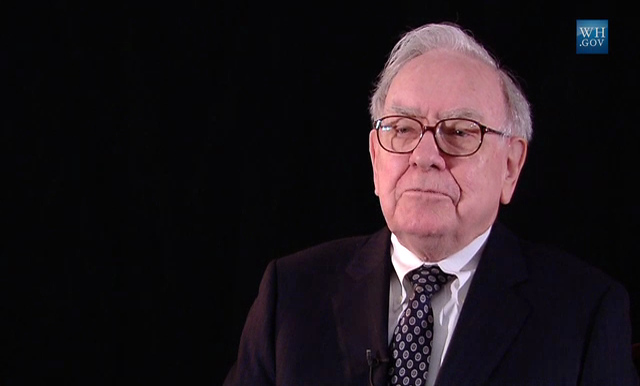
Warren Buffett told the trustee of his estate in 2014 to put 90 percent of the cash in a low-cost S&P 500 index fund. More than a decade later, that advice has proven out in measurable terms.
A $5,000 investment made in the Vanguard S&P 500 ETF on the first trading day after Buffett published his recommendation would be worth $20,465 today without accounting for dividends, according to a report by Yahoo Finance. With reinvested dividends, that figure rises to $25,270. That represents a more than fivefold return from a single, passive investment held without any trading or adjustment.
Buffett put his recommendation in writing in Berkshire Hathaway's 2013 shareholder letter, published March 1, 2014. His instructions to his estate's trustee were direct: "Put 10% of the cash in short-term government bonds and 90% in a very low-cost S&P 500 index fund. (I suggest Vanguard's.) I believe the trust's long-term results from this policy will be superior to those attained by most investors — whether pension funds, institutions or individuals — who employ high-fee managers."
The data from Standard & Poor's supports his position. Over the past 10 years, more than 85 percent of large-cap mutual funds available to U.S. investors have underperformed the S&P 500. Over 15 years, that number rises to nearly 90 percent. Actively managed funds, even those run by professionals, have consistently failed to beat the index over long time horizons.
Buffett has long argued that most individual investors are better off avoiding stock picking entirely. In the same 2014 letter, he wrote that "the unsophisticated investor who is realistic about his shortcomings is likely to obtain better long-term results than the knowledgeable professional who is blind to even a single weakness."
The Vanguard S&P 500 ETF, ticker VOO, tracks the performance of the S&P 500 index and charges among the lowest expense ratios in the industry. It does not require any active management decisions from the investor after purchase.
The comparison between active and passive investing has persisted as a debate in financial circles for decades. The S&P data, however, has continued to point in one direction over every long time period measured: most professional managers underperform a simple index fund.
For investors who started following Buffett's advice in 2014, the returns did not require picking a winning stock, timing the market, or paying a fund manager. They required only patience.