Nearly seven in ten Americans want the government to force AI companies to hand over half their stock to a public fund, according to a new national survey. The poll, conducted in June by research firm Verasight and published earlier this month, surveyed 1,690 adults and found broad support for an idea that would have seemed fringe just a few years ago.
"In the eyes of the public, AI Sovereign funds are seen as a tool to distribute the gains from the AI industry back to broader society," said Benjamin Leff, chief executive officer of Verasight.
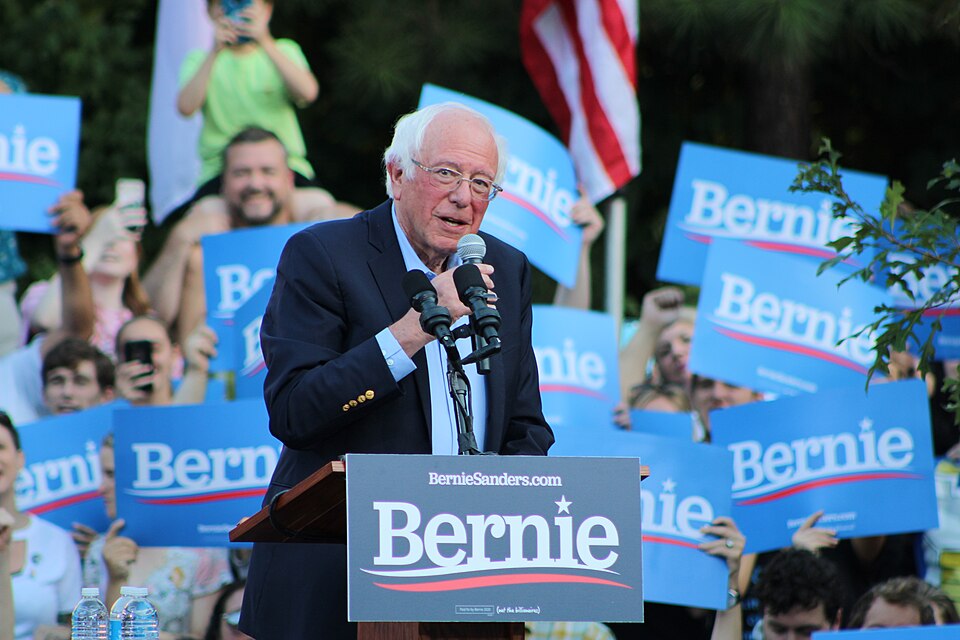
The survey results line up with a proposal introduced in June by Senator Bernie Sanders. His American AI Sovereign Wealth Fund Act, if passed, would give the public a 50% stake in the largest AI companies in the United States.
"It would guarantee that the economic benefits generated by AI are used to improve the lives of all of us — not simply to make the richest people in the world even richer," Sanders said in a statement last month. "The future of AI and the fate of humanity must not be decided behind closed doors in Silicon Valley by billionaires seeking to maximize their power and profit," he added.
The backdrop to all of this is a wave of tech layoffs that has left many workers anxious about their futures. Companies are spending heavily on AI infrastructure even as they cut jobs, and workers are watching that math with growing frustration. According to CNBC, Goldman Sachs Senior Global Economist Joseph Briggs estimates that more than 9% of the labor force, or around 15 million workers, could lose their jobs during a 10-year AI transition period.
"This would be the type of automation and reallocation shock that we saw in the late '90s and early 2000s and in other periods of significant technological change," Briggs said. The Goldman Sachs report notes that Briggs "believes these losses will prove temporary owing to his expectation that AI will create many new jobs over the long term even as it destroys existing ones."
Research firm Windfall Trust outlines several roles a sovereign wealth fund could play in the AI economy. It could fund capital-intensive AI infrastructure, take equity stakes in AI companies, and capture a share of AI-driven economic gains for the public treasury. But Windfall Trust also identifies a central tension in the model: "There is also a tension between the financial mandate (maximize returns for citizens) and the strategic mandate (build national AI capacity, maintain influence over frontier systems), since these objectives can conflict when the best financial investment is a foreign AI company rather than a domestic one."
Sanders' bill has not yet been voted on. Whether it gains traction in the Senate will depend in part on how the broader political conversation around AI and inequality develops over the coming months.