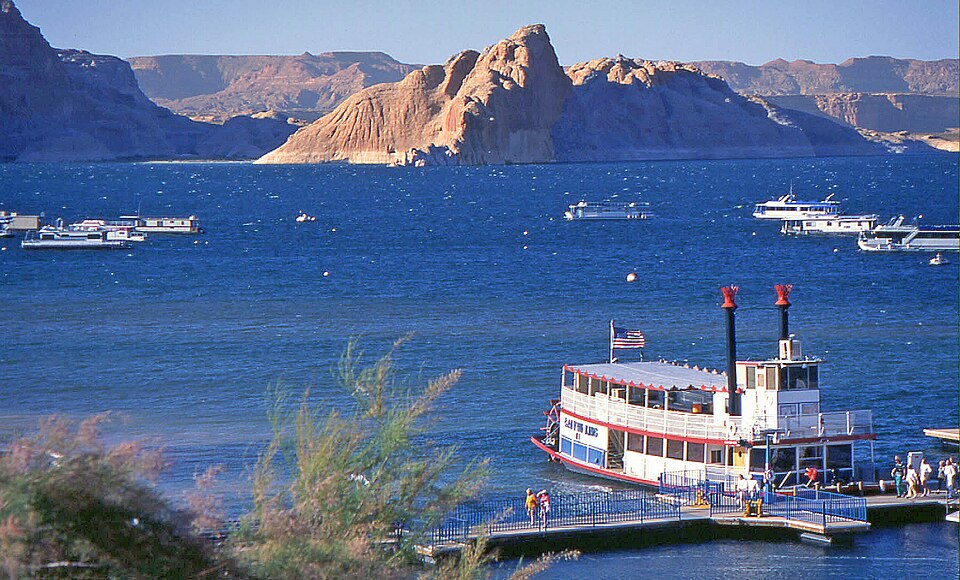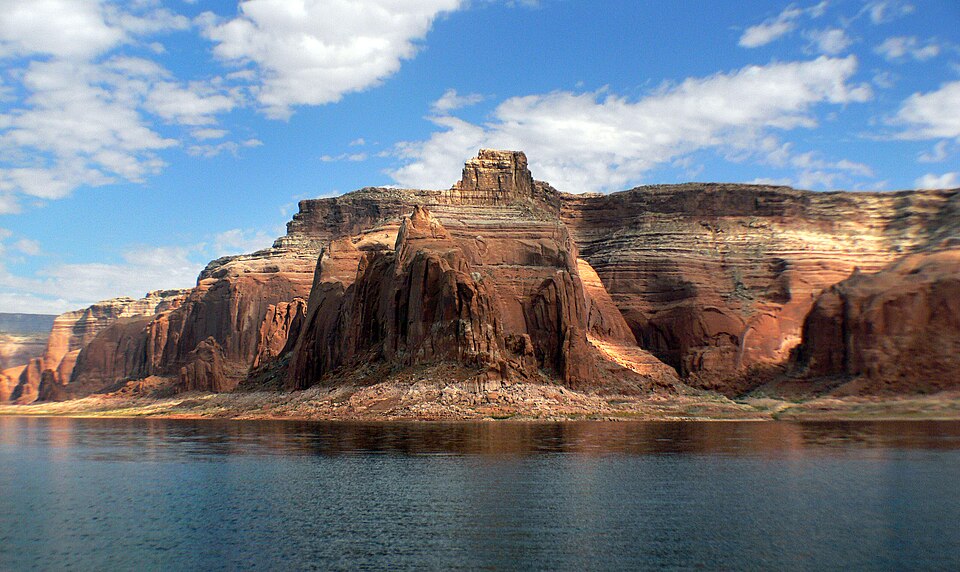
Lake Powell, the second-largest reservoir in the United States, is now just 34 feet above the elevation at which it can no longer produce hydroelectric power, the latest federal data shows, according to ABC News.
As of Monday, water levels at Lake Powell stood at 3,524.3 feet above sea level, according to the US Bureau of Reclamation tracker. The minimum, or "dead," power pool begins at 3,490 feet. Below that elevation, the water is too low to spin the hydroelectric turbines.
Peter Soeth, public affairs lead at the Bureau of Reclamation, confirmed the 3,490-foot threshold to ABC News. Jack Schmidt, director of the Center for Colorado River Studies at Utah State University, said the reservoir currently holds about 5.52 million acre-feet of live storage and has been losing approximately 4,800 acre-feet of water per day since June 1.
Schmidt said reservoir operations can get "very complicated" once elevation drops below 3,500 feet and live storage falls below 4.3 million acre-feet. At that point, he said, the Bureau of Reclamation would "be seriously concerned."
The situation could grow worse if levels continue to fall. A "dead pool" threshold exists at 3,370 feet, at which point water can no longer flow past Glen Canyon Dam by gravity at all. At that stage, approximately 240 feet of water would be trapped at the canyon bottom, unreachable by the millions of people in Arizona, California, and Nevada who depend on it, the Lake Powell Chronicle reported.
Since the reservoir was created in the early 1960s following the completion of Glen Canyon Dam, its live storage has never dropped below 5.26 million acre-feet. The current level of 5.52 million acre-feet is approaching that historic low.
The Colorado River Basin is experiencing the effects of the lowest snowpack on record, according to Soeth. More than two-thirds of the West remains in drought, with much of the Colorado River Basin under severe to extreme conditions, according to the US Drought Monitor.
There may be some short-term relief ahead. Above-average precipitation is favored across much of the West, according to the National Oceanic and Atmospheric Administration's Climate Prediction Center. Monsoon season and an intensifying El Nino are both underway and could bring additional rainfall to the region. However, experts say any new precipitation will not offset the long-term factors driving water shortages, including prolonged drought and historically low seasonal snowpack.
Full pool elevation at Lake Powell sits at 3,700 feet, according to the Lake Powell Water Database, meaning the reservoir is currently 175.7 feet below full capacity.