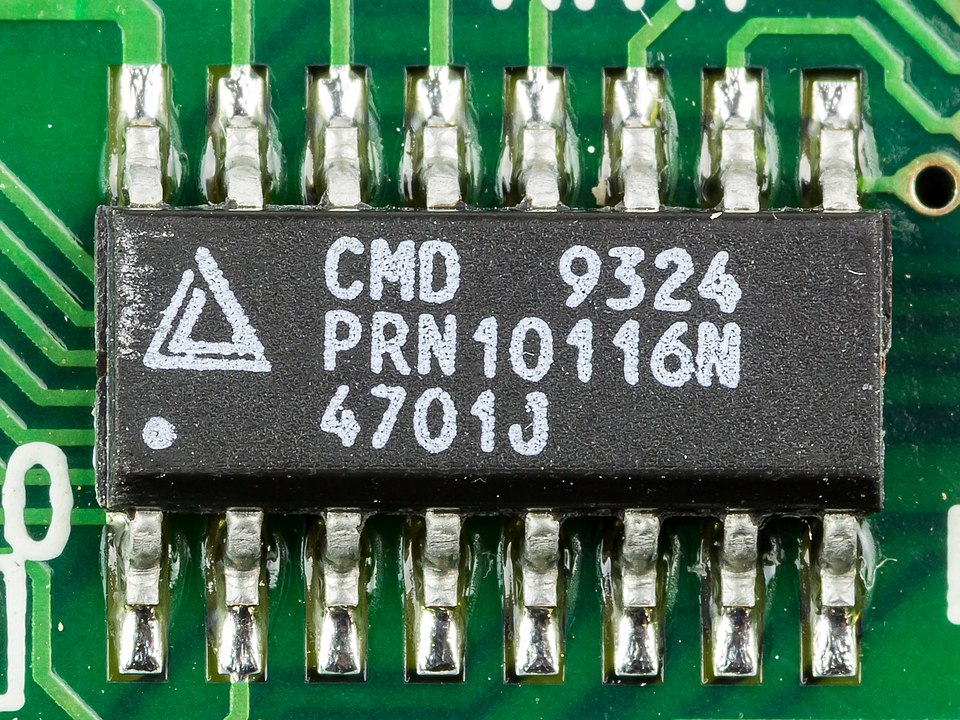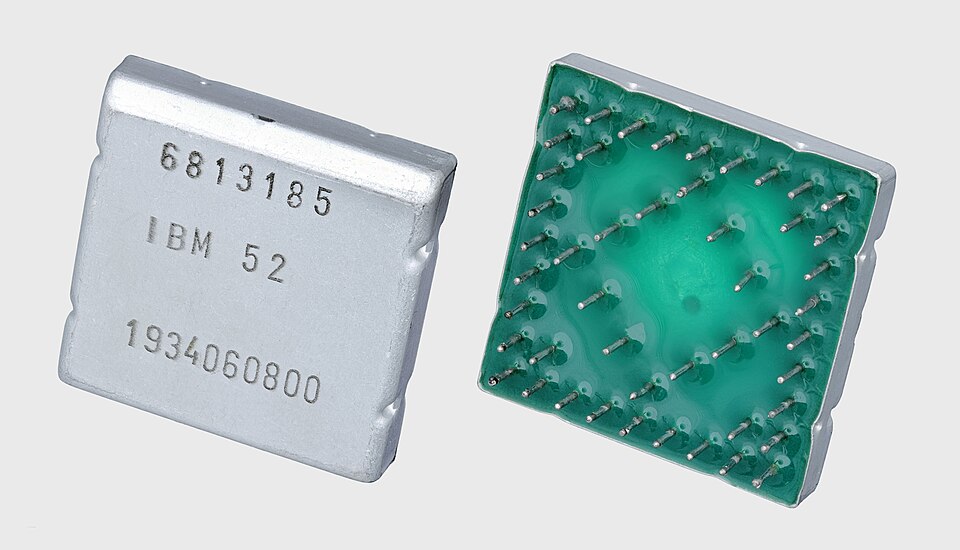
As computer chips grow more powerful and more compact, the materials wrapped around them have struggled to keep pace. A research team at National Taiwan University has now developed a liquid epoxy system that solves one of the field's most stubborn problems: how to make a protective material that is both easy to process and highly resistant to heat-driven stress.
According to Phys.org, the study was led by Chi-An Dai, a professor in the Department of Chemical Engineering at National Taiwan University. The findings were published in the journal Materials Horizons.
The core challenge in chip packaging involves silica. Adding silica to liquid epoxy reduces how much the material expands and contracts with temperature changes, which protects chips from warping and cracking. But loading large amounts of silica into epoxy also makes the liquid much thicker and harder to work with during manufacturing. Engineers have long faced a choice between a material that performs well after hardening or one that is practical to apply in the first place.
Dai's team attacked that trade-off from multiple directions at once. The researchers combined silica particles of different sizes so that smaller particles filled the gaps between larger ones. That arrangement allowed the epoxy to carry an unusually high silica load while still flowing well enough to be used in manufacturing.
The team also added rubber nanoparticles dispersed throughout the silica network. Those nanoparticles absorbed local mechanical stresses inside the cured material, making it tougher and more resistant to cracking. They also improved thermal stability and further reduced how much the material expanded under heat, a combination the researchers described as rarely achieved in highly filled epoxy systems.
Surface chemistry played a role as well. The team modified the surface of the silica particles to improve their compatibility with the surrounding epoxy. That modification prevented densely packed particles from clumping together, which kept the liquid mixture flowing smoothly before it was cured.
After curing, the material showed an exceptionally low coefficient of thermal expansion. That value was comparable to those of glass and silicon substrates, the materials that make up the chips themselves. The cured epoxy also demonstrated strong mechanical performance and reduced wafer warpage in packaging reliability tests.
"By combining resin design, optimized particle packing, rubber nanoparticle toughening and surface engineering, we developed a highly filled epoxy that remains easy to process while providing the strength, dimensional stability and reliability needed for next-generation chip packaging," said co-corresponding author Prof. Chi-An Dai.
The work addresses a problem that is growing more urgent as chip designs continue to shrink. Advanced packaging techniques, including wafer-level packaging where components are assembled at the scale of the full silicon wafer, demand materials that can perform at tolerances that older epoxy systems cannot meet. The combination of low expansion, high toughness, and easy processing in a single material represents a significant step toward meeting those demands at production scale.