

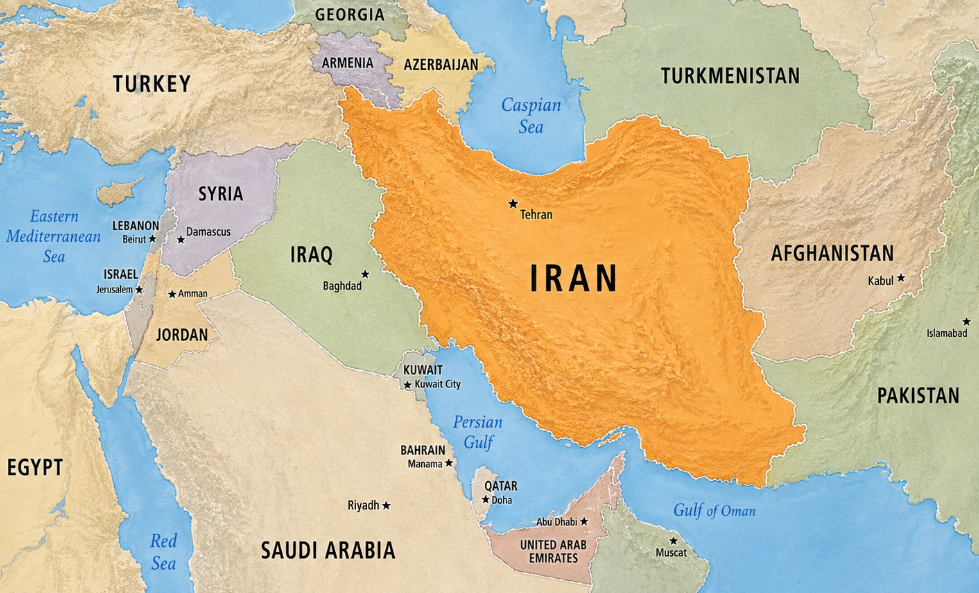
The United States carried out a fresh wave of airstrikes against Iran overnight Tuesday into Wednesday, targeting command centers, air defense sites, missile and drone capabilities, and coastal surveillance facilities. It was the fifth straight day of American military action. Iran responded with strikes of its own across the Middle East and issued its sharpest warning yet about what comes next.
In a statement published on Telegram on Thursday morning, a spokesperson for Iran's top military command warned that if Trump's threats were carried out, "everything that is still intact … that is, all the infrastructure in the region – will be crushed under the steel blows of the powerful armed forces of the Islamic Republic of Iran; so that no trace of them remains and it is as if they never existed in the first place." The statement made clear that Tehran considered American involvement in the Strait of Hormuz a crossing of an absolute limit. "Under no circumstances and in no way will we allow America, as a foreign and extra-regional country, to interfere in the Strait of Hormuz," the spokesperson said. "This is Iran's invincible red line."
The warning came directly after President Trump said in a Tuesday evening interview with Fox News that the United States would escalate its targeting next week if Iran did not return to the negotiating table. "Next week it gets really bad for them because next week comes the power plants," Trump said. "Next week comes the bridges. We're going to knock out all their power plants. We're going to knock out all their bridges unless they get to the table and negotiate."
U.S. Central Command described the overnight strikes in a statement posted on X. "U.S. forces struck Iranian command centers, air defense sites, missile and drone capabilities, and coastal surveillance facilities to further degrade Iran's ability to threaten innocent mariners crewing commercial vessels transiting the Strait of Hormuz," Centcom said. "CENTCOM used precision munitions to hit targets in multiple locations including Bandar Abbas."
Iran's Foreign Ministry also issued a warning on Wednesday. "Our hands are not tied," a spokesperson said at an event in Tehran, according to state-affiliated media. "Our fighters will respond with full force and power to US aggressions, and in other clauses of the memorandum, wherever we had reciprocal commitments, we have not implemented them."
Reuters reported Thursday, citing anonymous sources, that Iran may also be looking to expand its reach on global shipping lanes. The news agency said the Iranian government had asked Yemen's Tehran-backed Houthis to stand ready to close the Red Sea oil route should U.S. forces carry out Trump's threatened attacks. Last week, Trump declared that the ceasefire agreed between the two sides last month was "over."
The Strait of Hormuz, through which a fifth of the world's oil once flowed, sits at the center of the conflict. Its closure or disruption has ripple effects well beyond the region, touching commodity prices and inflation expectations worldwide, according to Yahoo Finance. Silver futures, which opened Thursday at $58.12 per ounce, had slipped to $57.07 by 8:15 a.m. ET as markets processed the latest developments. Silver is down 16.8% from one month ago, a sharp reversal from a year-over-year gain of 53.1%. If the Federal Reserve elects to raise interest rates to control rising prices triggered by the conflict, silver and gold would face additional pressure, since neither pays interest.
Gas prices have also been climbing. Vermont Business Magazine reported that both U.S. and Vermont gas prices have been moving higher, a trend that connects directly to the uncertainty surrounding oil flows through the strait. Tehran has also launched attacks on multiple Gulf countries in recent days, broadening the scope of the conflict beyond the waterway itself.