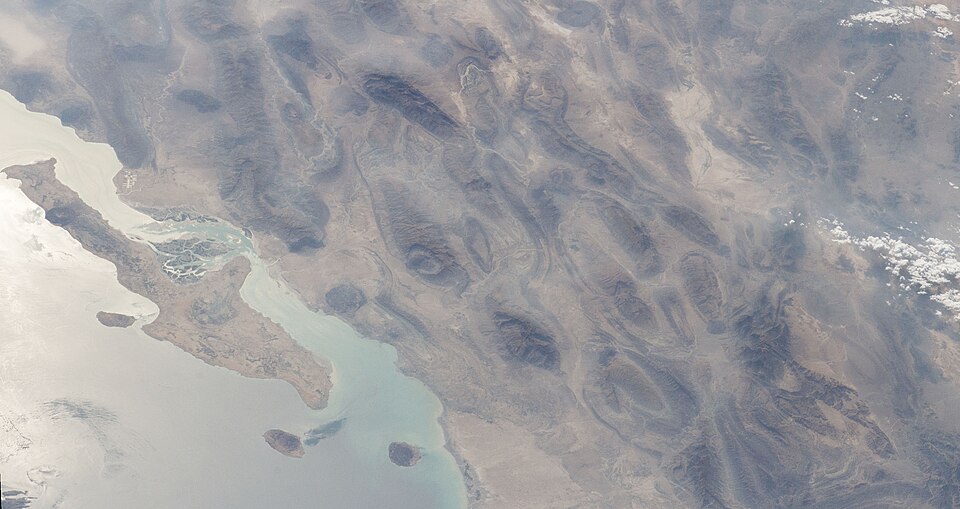
Ship crews in and around the Strait of Hormuz have stopped moving. The breakdown of a U.S.-Iran ceasefire has pushed one of the world's most critical waterways into a standstill, with the CEO of a Greek maritime risk management company saying, "we've gone back to the worst case scenario. Nobody is willing to move."
According to CBS News, the U.S. military completed a sixth consecutive night of strikes early Friday, hitting what it described as "dozens of Iranian military targets," including coastal surveillance systems and air defense infrastructure. White House press secretary Karoline Leavitt said President Trump would not allow ongoing attacks on ships and Gulf states "without ensuring Iran pays consequences."
Iran's Revolutionary Guard claimed a new series of strikes Friday targeting U.S. military facilities across the Middle East, alleging attacks on bases in Syria, Kuwait, Oman, Bahrain, and Jordan. U.S. officials did not confirm any impacts. Iranian forces have often exaggerated their claims, according to CBS News.
One of the more dramatic Iranian claims involved a supposed strike on a U.S. special forces base at al-Tanf in southeast Syria. The IRGC said it "carried out a surprise attack" on the facility, destroying helicopters and causing casualties. A Syrian military source told the AFP news agency that the claim was false. "We deny any Iranian bombardment targeting the Al-Tanf area," the source said, speaking on condition of anonymity. The U.S. military said its forces had withdrawn from the base earlier this year following a long deployment as part of a U.S.-led anti-terrorism coalition.
Iran's health ministry said Friday that at least 38 people have been killed and 400 wounded since June 22 in U.S. strikes. Hossein Karmanpour, head of the ministry's information center, provided a breakdown of the casualties. "Among the casualties are 22 injured women, three women killed, nine injured minors under the age of 18, and one child killed," he said. "A total of 47 people remain hospitalized."
The commander of the Revolutionary Guard's Aerospace Force, Brig. Gen. Seyyed Majid Mousavi, said Friday that Iran would not stop. "Every inch of territory is equally important," he said. "Our effective and targeted strikes against the enemy, launched from across Iran, will continue until security and calm are restored along the southern coastline and in the Strait of Hormuz."
On the water, U.S. Marines from the 11th Marine Expeditionary Unit released video showing them boarding the commercial tanker M/T Wen Yao in the Gulf of Oman, according to Al Jazeera. The boarding was described as part of the naval blockade against Iran. The footage added a visible dimension to what has otherwise been a conflict tracked largely through competing government statements and casualty figures.
The Strait of Hormuz is one of the most important chokepoints in global oil shipping. A prolonged shutdown of commercial traffic through the strait would have consequences well beyond the region.