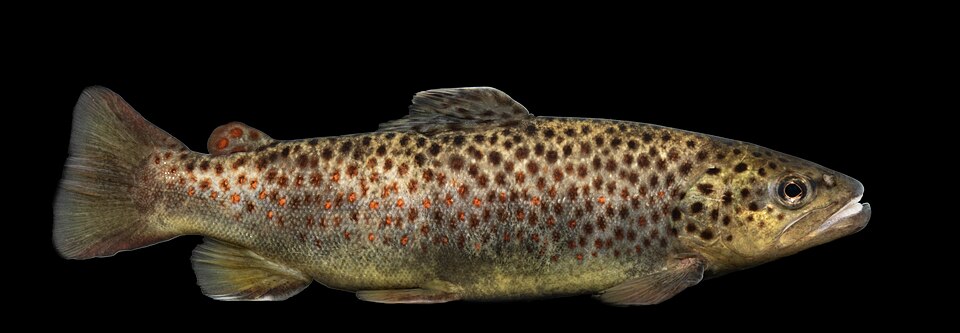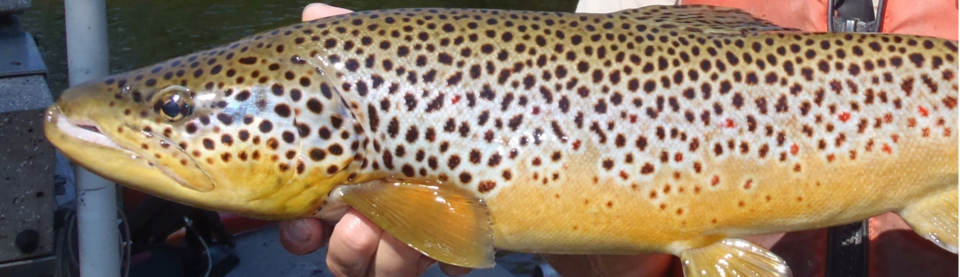
A lake in the mountains of southern Norway was stocked with brown trout by hunter-gatherers roughly 7,000 years ago, making it the oldest known case of humans deliberately moving fish into new waters. The finding comes from the discovery and radiocarbon dating of ancient wooden fish traps uncovered at Lake Tesse, a body of water sitting at about 850 meters elevation that could not have been reached by fish on their own.
According to a report by New Scientist, the research was led by Axel Mjærum at the University of Oslo. "This is the oldest documented example of human-mediated translocation of fish in the world," Mjærum said.
Lake Tesse was buried under the Fennoscandian ice sheet until around 8400 years ago. When the ice retreated, it left what researchers describe as an ecological blank canvas. Large waterfalls and other geographic barriers made it physically impossible for fish to migrate upstream into the lake naturally. Yet before the lake was converted for hydropower storage in the 1940s, it was considered one of Norway's richest brown trout waterways, producing nine tonnes of fish per year.
The question of when humans first introduced fish to these mountain lakes had gone unanswered for more than a century. That changed in 2022, when falling water levels exposed the partially buried remains of several elaborate wooden fish traps. Mjærum and his colleagues studied those remains closely.
Radiocarbon dating placed the oldest trap at around 4950 B.C. The team also matched recovered wood to pine tree ring records from the central Scandinavian mountains, allowing them to date some of the younger posts with remarkable precision. One post was felled between spring and winter of 2669 B.C., and another was felled 12 years later, during the winter of 2657 to 2656 B.C. The precision of those dates showed the traps were being actively maintained over long stretches of time.
"Therefore, it is possible that this form of trap fishing was ongoing in Tesse during much of the period between 5000 and 2650 BC," Mjærum said.
Brown trout were a practical choice for the introduction. The fish can grow large, carry significant calories, and are relatively easy to catch. As reported by Phys.org, the species made them well suited for people who needed reliable food sources during summer stays in the highlands. Mjærum suggests the people who built the traps likely spent winters in coastal areas or valleys, moving into the mountains during warmer months to hunt reindeer and fish. "A good and predictable food supply also made longer stays possible, not only for hunters aiming for big game, but for whole family groups," he said.
How the fish were physically transported into the mountains remains unknown. Researchers suggest waterskins as one possibility. What is clear is that the people responsible were hunter-fisher-gatherers living in the Scandinavian Mesolithic, a period that predates the arrival of farming in the region by centuries.
"For more than 100 years, it has been known that the fish inhabiting watercourses in the Norwegian mountains are descended from specimens translocated by humans," Mjærum said. "However, until now, it has remained unclear when people first began transporting fish upstream into lakes and rivers that originally lacked natural fish."
The find places Scandinavian hunter-gatherers alongside other early examples of environmental management. Eel traps and channels built in Australia date back 8,600 years, suggesting that deliberate manipulation of fish populations emerged independently in multiple parts of the world well before organized agriculture.
The impact of that first introduction at Lake Tesse has lasted into the present day. Modern fishers still harvest brown trout from Norwegian mountain waters descended from the fish those Mesolithic people carried up into the highlands thousands of years ago. The study was published in the journal Antiquity.