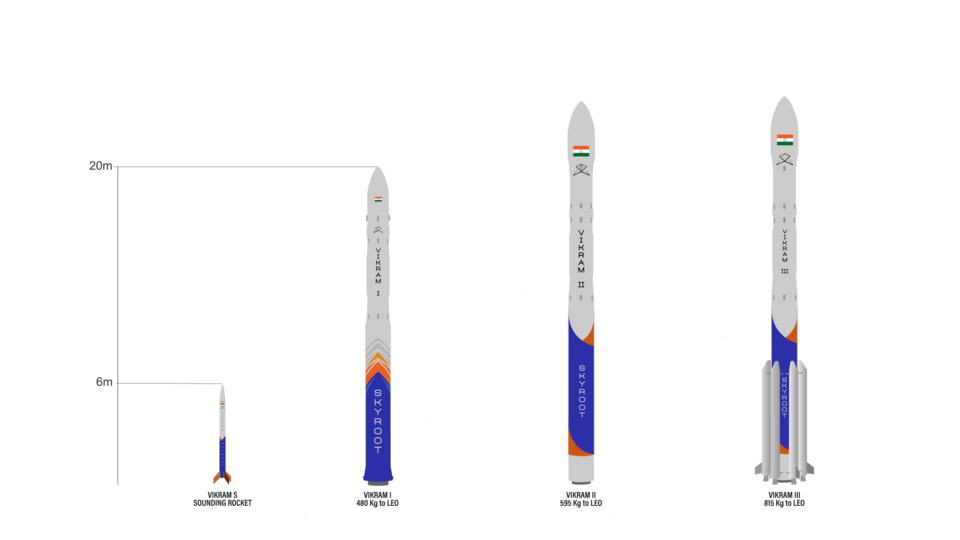
India's first fully commercial satellite launcher reached orbit Saturday, marking a milestone for the country's private space industry. The Vikram-1 rocket, built by Skyroot Aerospace, lifted off from India's primary spaceport on Sriharikota Island at 1:35 a.m. EDT and climbed to a 280-mile-high orbit on its first flight.
According to Ars Technica, Indian space officials called the debut a "grand success."
The launch was delayed more than 30 minutes while crews resolved a last-minute technical problem. Once the countdown resumed, Vikram-1's solid-fueled first stage ignited and pushed the rocket off the pad. Three solid-fueled motors fired in sequence to carry the vehicle toward space. A small liquid-fueled fourth stage then ignited and accelerated the rocket to orbital velocity, reaching approximately 17,000 miles per hour. Live onboard camera footage showed each phase of the sequence as it happened.
One moment drew attention during the flight. When the third stage separated from the fourth, the spent motor appeared to linger near the upper stage rather than falling away quickly. The fourth stage still completed its burn, reaching an orbit approximately 280 miles high at an inclination of 60 degrees to the equator. That result was close to what engineers had predicted before launch. US military tracking data confirmed the rocket had successfully reached orbit.
Vikram-1 stands about 72 feet tall and can carry payloads of up to 770 pounds into low-Earth orbit. That puts it slightly larger than Rocket Lab's Electron vehicle, which Ars Technica described as the world's most successful dedicated small satellite launcher.
The successful flight positions Skyroot Aerospace as a new player in the commercial launch market, giving Indian satellite operators a domestic private option for reaching orbit.