

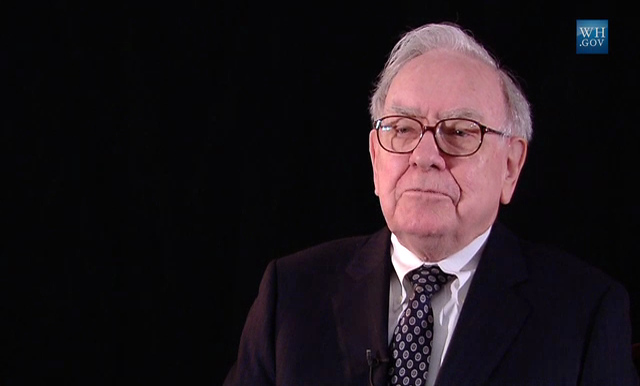
Warren Buffett has long said he supports the estate tax. He will not be paying it.
According to a report by CNBC, Buffett is speeding up his annual donations from his $140 billion in Berkshire Hathaway shares to four family foundations. The move, which generated a large volume of reader responses, effectively routes his fortune around the estate and capital gains taxes he has publicly championed for years.
Buffett has said he believes he is "under-taxed in relation to what society has delivered to me." He has also repeatedly pointed out that his secretary pays a higher tax rate than he does when payroll taxes are factored in, since capital gains are taxed at a lower rate than ordinary income. That complaint was prominent enough that President Barack Obama proposed a Buffett Rule in his second term, which would have imposed a 30% minimum tax on Americans earning more than $1 million a year. The Senate rejected it in 2012.
In a 2017 interview on CNBC's Squawk Box, Buffett explained his opposition to eliminating the estate tax in terms of what the money could do across generations. Congress was considering a GOP-sponsored bill that would have eliminated the 40% estate tax over several years. Buffett told host Becky Quick that he did not think he needed a tax cut. He then laid out a direct example.
"Well, I — I don't think I need a tax cut," Buffett said. "But — for example, the current proposal eliminates the estate tax. And it's not a death tax. There are going to be 2.6 million people die this year in the United States. And there'll be 5,000 tax returns that people — estates that pay tax."
He pressed further on what repealing the tax would mean in practical terms. "The truth is if they pass the bill that — they're talking about — I could leave $75 billion to a bunch of children, and grandchildren, and great-grandchildren — and if left it to 35 of them — they'd each have a couple billion dollars. They could put it out at 5 percent, have 100 million."
His argument was that the tax code shapes how wealth moves through society. "I mean, is that a great way to allocate resources in the United States? Because that's what you're doing with — for the tax code, is you're affecting the allocation of resources."
Buffett has also joked, in a 1998 remark, that personal conviction about taxes has its limits. "I don't send along any voluntary payments to the I.R.S, I want you to understand," he said.
The tension between his public position and his private estate planning has drawn criticism from some readers who say philanthropic giving to foundations is simply another way to avoid taxes while maintaining family control over large pools of wealth. Others have questioned whether donations routed through foundations reach elderly or impoverished Americans in any meaningful way.
Buffett takes pride in the billions Berkshire Hathaway has paid in taxes over the years. He has repeatedly said paying taxes does not bother him. But the decision to accelerate gifts to family foundations, rather than allow his estate to pass through the tax system he endorses, makes him similar in outcome to virtually every other billionaire he has criticized.