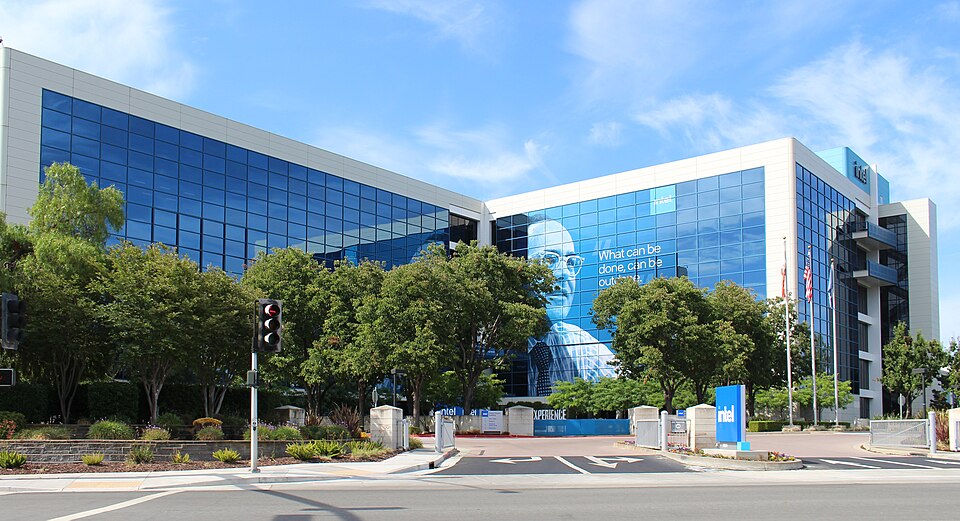
A shift in how artificial intelligence data centers are built is changing the math on which chip companies stand to benefit most, and one prominent investor argues that shift points toward Intel.
The argument, laid out by CNBC's Jim Cramer last weekend, centers on the changing ratio of graphics processing units to central processing units inside AI data centers. When Lip-Bu Tan took over as Intel's chief executive, data centers were using roughly four Nvidia GPUs for every one CPU. Tan told Cramer last Thursday that the ratio has now moved to approximately one CPU for every one GPU. The next step, according to Tan, will be data centers running four CPUs for every one GPU.
That matters for margins. GPUs, which are Nvidia's core product, carry significantly higher gross margins than CPUs. If data centers shift toward more CPUs and fewer GPUs, Intel stands to capture a larger share of spending, while Nvidia's revenue mix could become less favorable over time.
Cramer said he has been moving his charitable trust portfolio away from traditional technology names, including semiconductors, software, and data center stocks, and toward what he described as tech-infused pharma and aerospace. Within semiconductors, he said the trust has been making Intel, not Nvidia, the focal point.
He also pointed to Apple as a contrasting example. Apple has not spent hundreds of billions on AI infrastructure in the way other large technology companies have, and its stock has had what Cramer described as its best month in three years. Cramer argued that Apple's strategy of focusing on its hardware and allowing AI companies to compete for access to its platform has proven effective, with Google effectively giving away its Gemini service to maintain a presence on Apple devices.
On Nvidia, Cramer said the stock's recent price action has been speaking loudly. He said he is not exiting Nvidia and still expects the company to report a strong quarter, but that the momentum in the stock has shifted. "No, I'm not giving up Nvidia. It is still amazing, and I think it will have a bang-up quarter. But the 'action' in the stock is speaking too loudly," he said.
The broader case for Intel rests not just on the CPU-GPU ratio, but on Tan's background. Cramer described him as perhaps the most dedicated semiconductor investor who knows how to spend money wisely to build foundries, which are factories that manufacture chips, at a time when foundry capacity is in short supply. Tan also has expertise in chip packaging, which has become increasingly important as the industry reaches the limits of traditional miniaturization.
The concept behind Moore's Law, named for Intel co-founder Gordon Moore, holds that chips can be made ever smaller and more powerful over time. Cramer noted that Nvidia CEO Jensen Huang has said that trajectory has run out. With traditional scaling limits reached, packaging technology, which bundles multiple chips together to increase performance, becomes a more critical advantage.
Cramer said the trust was buying Intel slowly and had slightly more than half a position built heading into the company's upcoming earnings report, where he said he was betting on an upside surprise.