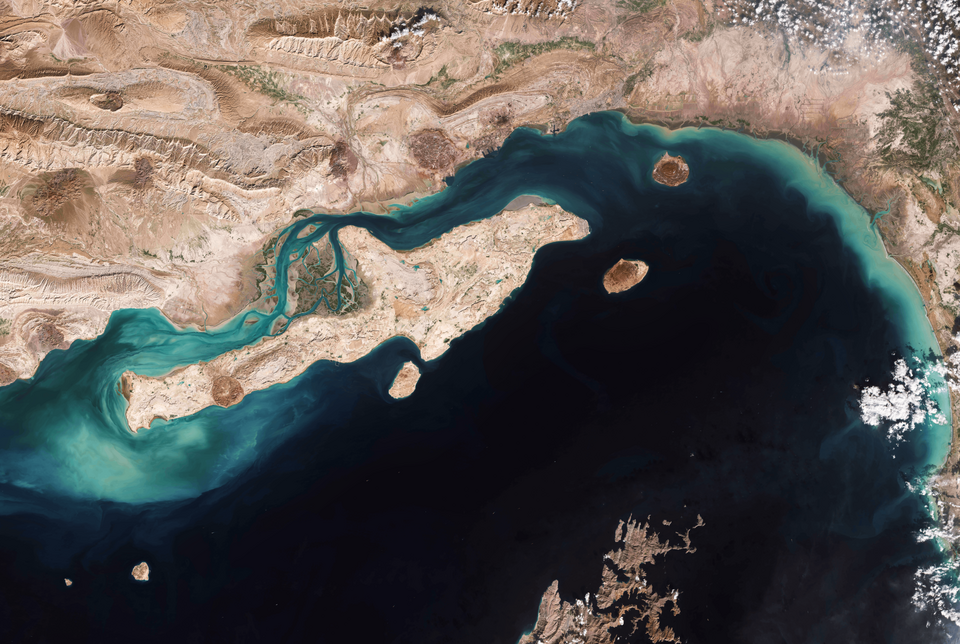
Iran's foreign minister held separate phone calls Tuesday with his counterparts in Saudi Arabia and Oman, discussing the future of the Strait of Hormuz and what Tehran called the need to remove instability from the passage. The calls came as a pause in U.S.-Iran hostilities appeared to hold after two weeks of strikes between the two sides came to a temporary halt on Friday.
According to a Telegram statement from Iran's Foreign Ministry, translated by Google, the calls "emphasized the need to strengthen cooperation and advance joint diplomatic efforts to establish stability in the region and eliminate the insecurity imposed on the Strait of Hormuz caused by the aggressive actions of the United States." Iranian Foreign Minister Seyyed Abbas Araqchi spoke with Saudi Arabia's Faisal bin Farhan and Oman's Badr Al-Busaidi regarding what the ministry described as "the latest bilateral and regional developments."
Reuters reported Tuesday that Oman had presented Iran with a plan for the strait backed by Gulf states. The plan would involve voluntary fees paid by ships rather than mandatory tolls that Iran had sought to impose. A similar model operates in the Strait of Malacca, where Indonesia, Malaysia, and Singapore ask vessels to contribute to navigation, environmental protection, and search-and-rescue operations.
Markets responded positively to the broader ceasefire over the previous session, with stocks rallying and oil prices falling Monday on hopes of a lasting agreement. But the situation in the region remained unsettled. Saudi Arabia reported overnight that it had intercepted a number of drones allegedly launched by Iran-backed militias in Iraq and targeting Saudi oil facilities. The Iraqi militias had not claimed responsibility, while Yemen's Houthis said they had attacked Saudi oil infrastructure, leaving the source unclear. Jordan's army also reported downing a drone in its airspace.
U.S. President Donald Trump described the talks as productive. Speaking to reporters on Air Force One late Monday, he called them "good talks." But he also warned that military action remains on the table. "You can't bribe them. You've got to beat them, and we'll beat the hell out of them. But we'll see how it turns out. Right now, there are very friendly negotiations going on," Trump told a campaign rally in Michigan.
Iran's foreign ministry continued to deny that any direct negotiations with the United States were taking place, but indicated that messages were being exchanged through intermediaries.