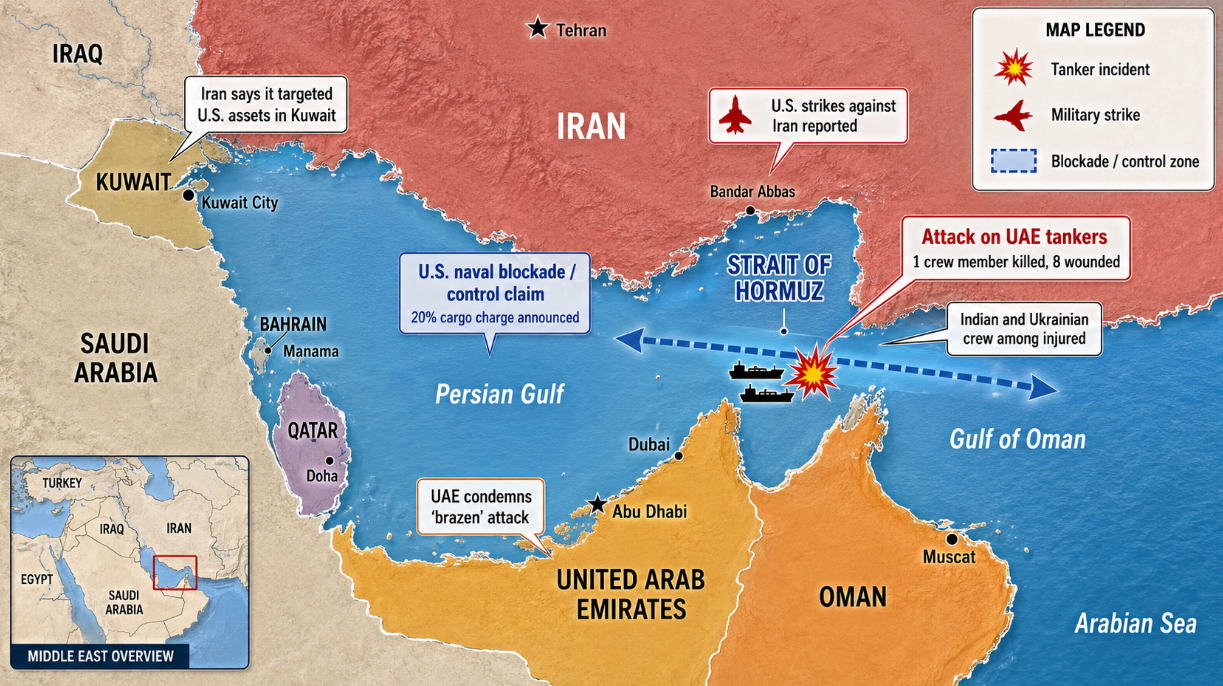
President Donald Trump has paused planned military action against Iran to allow diplomatic negotiations to continue, according to reporting by Bloomberg. The pause comes as talks resume over two separate but connected issues: Iran's nuclear program and control of the Strait of Hormuz, one of the world's most critical shipping lanes.
Bloomberg correspondents Jeff Mason and Dan Williams reported that Trump warned the pause is conditional and depends on reaching a deal quickly. No timeline for the negotiations was specified in the available reporting, but the urgency attached to the pause signals that military options remain on the table.
The Financial Times separately reported that Trump said he cancelled the strikes following a request from Middle East allies, though the full details of that report were not available. The Bloomberg account adds that Gulf states are increasingly pursuing their own security strategies rather than relying solely on U.S. military posture in the region.
Israel's position is described as cautious. The country has not moved in step with the U.S. pause and is watching the negotiations carefully. Any agreement on shipping through the Strait of Hormuz would carry significant consequences for the regional balance of power. The strait is a narrow waterway through which roughly 20 percent of the world's oil supply passes, making it a central pressure point in any confrontation with Iran.
Bloomberg's reporting notes that broader conflicts in Gaza and Lebanon are continuing even as the Iran negotiations resume. Those ongoing situations add complexity to any deal, since an agreement on Hormuz and nuclear issues would not resolve the wider regional instability that has defined the Middle East over the past several years.
The combination of a nuclear standoff, shipping security concerns, and active conflicts in multiple neighboring territories makes the current diplomatic moment unusually dense. Gulf states watching their own long-term security calculus have reason to prefer a negotiated outcome, which may explain why regional allies reportedly urged Trump to hold off on strikes.
Whether the pause leads to a durable agreement or collapses under the pressure of competing demands from Israel, Gulf states, and Iran remains to be seen. Trump's own framing, as reported by Bloomberg, suggests he views the current window as narrow.