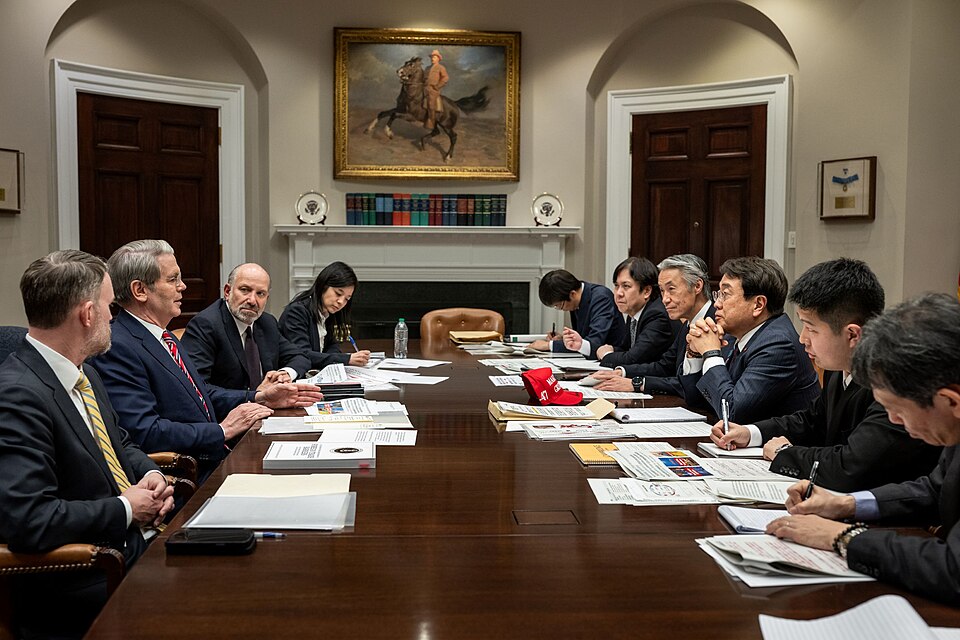
The United States actively joined Japan in a coordinated effort to strengthen the yen, Treasury Secretary Scott Bessent confirmed Tuesday, calling the Japanese currency's weakness a threat to financial stability across Asia.
Bessent made the comments on CNBC's "Squawk Box," explaining the reasoning behind what analysts described as a rare instance of the U.S. stepping in to support a foreign currency. The Treasury Department sold euros from U.S. reserves and used the proceeds to buy yen. Bessent said he assured European officials that the euro sale was a reallocation of reserves, not a move against the euro.
"A stable yen is not only important for the U.S., but very important for the entire region," Bessent said.
He said a sharply weaker yen could push other countries to devalue their own currencies. He pointed to volatility in the South Korean won and expressed concern that China's yuan is already undervalued, suggesting a weaker yen would add further pressure to an already fragile regional currency environment.
"Given the trade flows, given the size of the economy, given their contribution to the global savings market, [it is] very important to have a stable yen," Bessent said. "The Japanese government understands that, and we are proud to stand with them in implementing their policies and help them stabilize the region."
Bessent described the yen's level before the intervention as a "substantial undervaluation" and said the two governments had been in close contact leading up to the operation. But he was clear that buying yen can only do so much.
"You can give market signals with intervention, but it's policy that turns it," he said.
He declined to say whether the Bank of Japan should raise interest rates but said Japanese officials would need to follow through with broader policy changes for the intervention to have lasting effect. He added that the U.S. joined the effort because it was optimistic about Japan's policy direction going forward.
The intervention is considered unusual. The U.S. does not often participate in currency operations designed to support another nation's money, and the use of euro reserves to fund yen purchases adds another layer of complexity to an already closely watched move.