

Purifying industrial solvents is one of the most energy-intensive tasks in chemical manufacturing. A team of researchers led by KU Leuven has now developed a membrane that does the job faster and with less energy than current methods, according to results published in Nature Communications.
The target solvent is isopropanol, used widely in the pharmaceutical and electronics industries. Right now, purifying it relies mainly on heating and distillation, processes that consume significant energy and produce substantial CO2 emissions. Separating chemical mixtures into pure components accounts for 10% to 15% of global energy use across industrial chemistry.
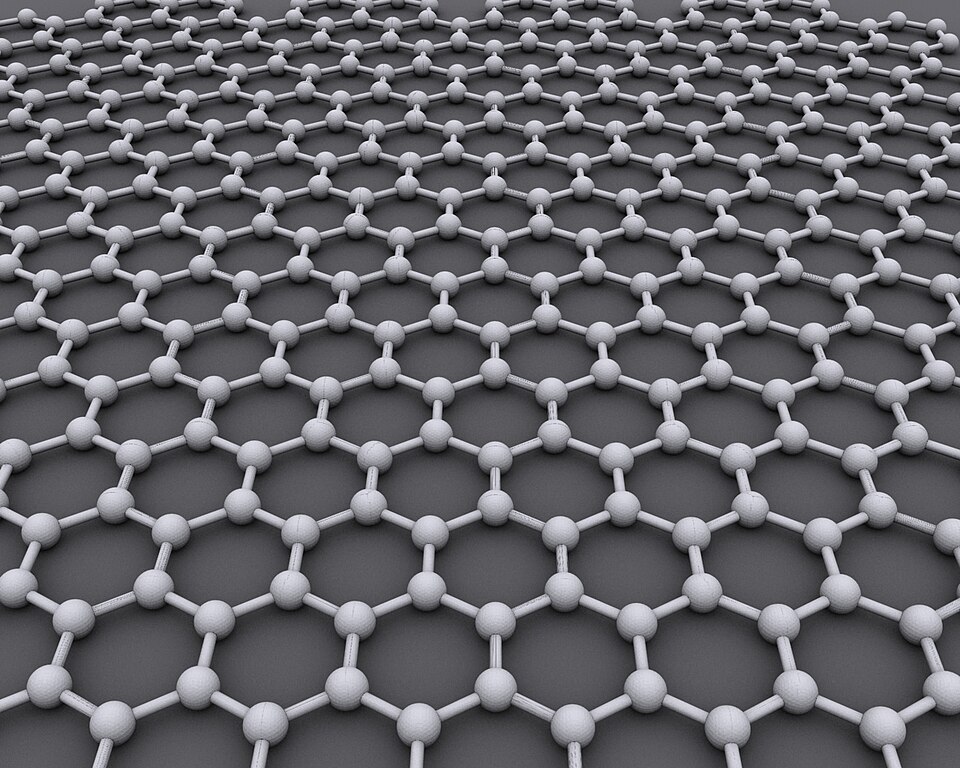
The new membrane is built from graphene oxide, a material made of ultrathin carbon layers. Researchers combined conventional graphene oxide sheets with newer variants that have smaller pores. The resulting structure has two functions: narrow channels that block larger molecules, and regions that attract water and allow it to pass through.
The design challenge was precise. Lei Jiang, a doctoral researcher at KU Leuven, described the balance the team had to strike. "The main challenge is to design a structure where the channels are not too small, which would slow down the separation and require more energy, but also not too large, which would reduce the purity of the final product. The new membrane combines both efficient and high-quality separation in a single structure," Jiang said.
The performance results were specific. Dr. Pengrui Jin, a researcher in the Department of Chemical Engineering and an independent principal investigator on the study, explained what the membrane achieved in testing. "The new membrane efficiently removes water from a mixture containing 90% isopropanol and 10% water. It selectively transports the water through the membrane, producing a permeate containing about 99.6% water. In addition, the process is faster than existing techniques and requires less energy, as it does not rely on high temperatures," Jin said.
Professor Bart Van der Bruggen, the lead researcher at KU Leuven, described the result in broad terms. "The membrane delivers gains across the board: purity, energy consumption and economic efficiency," Van der Bruggen said. He added that the team plans to test the technology on other chemical mixtures.
The development arrives as industries face increasing pressure to reduce their carbon footprints. Isopropanol can also be produced in bio-based forms from renewable resources, and Van der Bruggen noted the relevance of that context. "With the growing demand for more sustainable production processes, more efficient separation techniques are essential to continue using isopropanol — also in its bio-based forms from renewable resources — on a large scale," he said.
The team was international, with the Department of Chemical Engineering working alongside KU Leuven researchers. The next step involves testing the membrane against other industrial chemical mixtures to see how broadly the technology can apply beyond isopropanol purification.