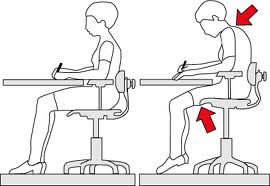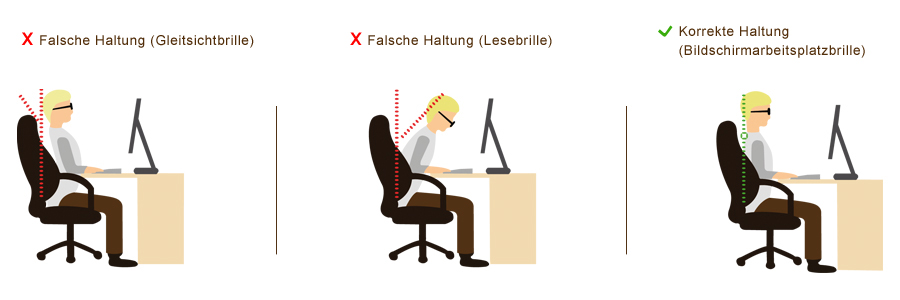
Something as simple as how a person sits may influence both their mood and the quality of their decisions. New research from McGill University found that people who sat upright reported more positive emotions and performed better on a risk-and-reward task than those who slouched.
The study, reported by Science Daily, recruited nearly 200 people from the McGill community. Participants first completed tasks on a computer monitor. They were then asked to perform a second task on a tablet while being told that researchers were evaluating a mobile application.
The tablet setup was the key to the experiment. In one condition, the device rested on an adjustable stand that encouraged participants to sit upright. In another, the tablet lay flat on a low desk, which encouraged participants to lean forward and hunch over. Most participants did not realize their posture was being manipulated, which helped rule out the possibility that results were driven by expectations.
Participants then played a virtual balloon game. Players could earn larger rewards by continuing to inflate a balloon, but they risked losing everything from that round if it burst. People in the upright group generally took greater risks and earned larger rewards.
"This suggests they were not acting more impulsively but rather were engaging in more effective risk-taking," explained Jorge Armony, a professor in the Departments of Psychiatry and Psychology at McGill and the study's senior author.
Participants in the upright group also reported significantly stronger feelings of pride, an emotion associated with more positive mood states.
Armony worked with graduate student Soren Wainio-Theberge, who developed the original idea and coauthored the paper. The researchers noted that the effects were relatively small and observed under controlled laboratory conditions.
Scientists have debated for years whether body posture can meaningfully affect thoughts and emotions. This study adds new evidence to that discussion. The findings also raise questions about workplace ergonomics, suggesting that physical setup at a desk could affect more than just back pain.