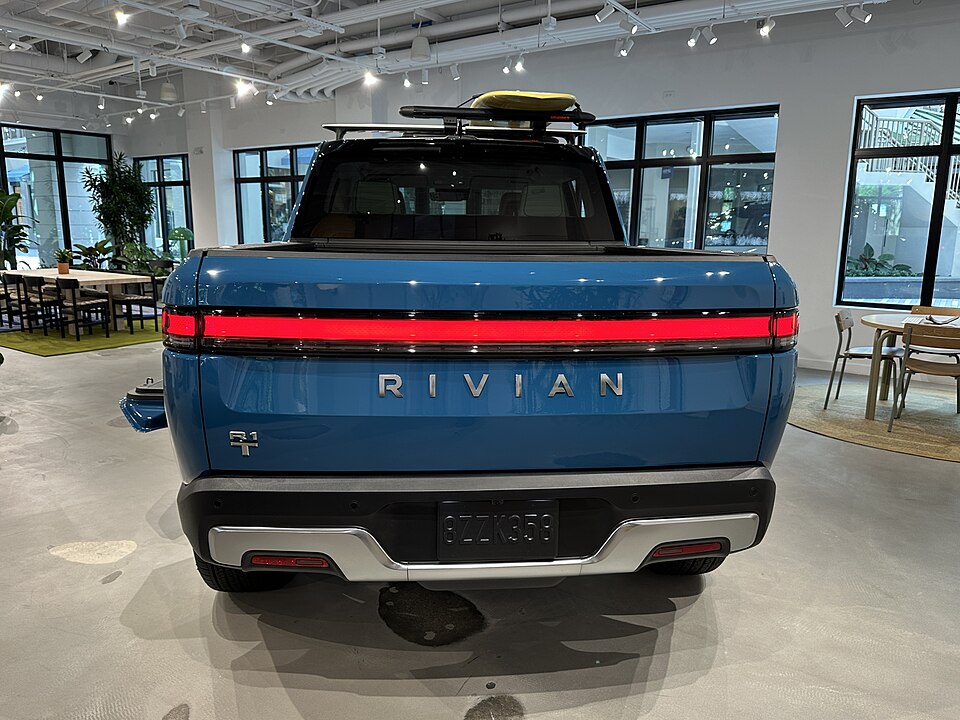
Rivian's new driver-assistance system has pulled ahead of legacy automakers but has not yet caught Tesla, according to a hands-on comparison published by CNBC following test drives totaling hundreds of miles across several Midwest highways.
The system, called Autonomy+, allows the Rivian R1T pickup truck to largely control itself on highways, handling speed, braking, and steering using cameras, sensors, and mapping data. CNBC found it surpasses General Motors' Super Cruise in capability. But it remains behind Tesla's FSD Supervised version 14, particularly when it comes to driving in cities and navigating point-to-point routes where a vehicle is designed to handle the full trip from start to finish without driver input.
Rivian says point-to-point driving is coming later this year. "That's the next step," said James Philbin, senior vice president of autonomy and AI at Rivian. "Tesla's system you use is a point-to-point system. So that that's the next big leap for us in a way, is getting to that same point-to-point type interaction and that system where it really does the full driving task."
The company attributes its progress to vertical integration, meaning it built its own software and electrical architecture rather than relying on outside suppliers. That approach is just beginning to produce results with the ADAS rollout.
Pricing differs between the two systems. Tesla's FSD is available for $99 a month. Rivian's Autonomy+ costs $49.99 a month or $2,500 as a one-time purchase for the lifetime of the vehicle.
Both systems require drivers to stay attentive and be ready to take control. No vehicle on sale today is fully autonomous. The distinction matters legally and practically, even as the systems become more capable.
Investors are paying close attention. Piper Sandler analyst Alexander Potter upgraded Rivian's stock last month, citing the company's push toward in-house development. "We favor self-reliant (and properly-valued) companies that are building next-gen machines using in-house expertise," Potter wrote in an investor note. "As volume rises, Rivian should be better able to monetize software & services, a key benefit of vertical integration."
The software subscription model is increasingly central to how automakers pitch long-term revenue. For Rivian, Autonomy+ represents both a competitive tool against Tesla and a potential recurring revenue stream as its vehicle volume grows.