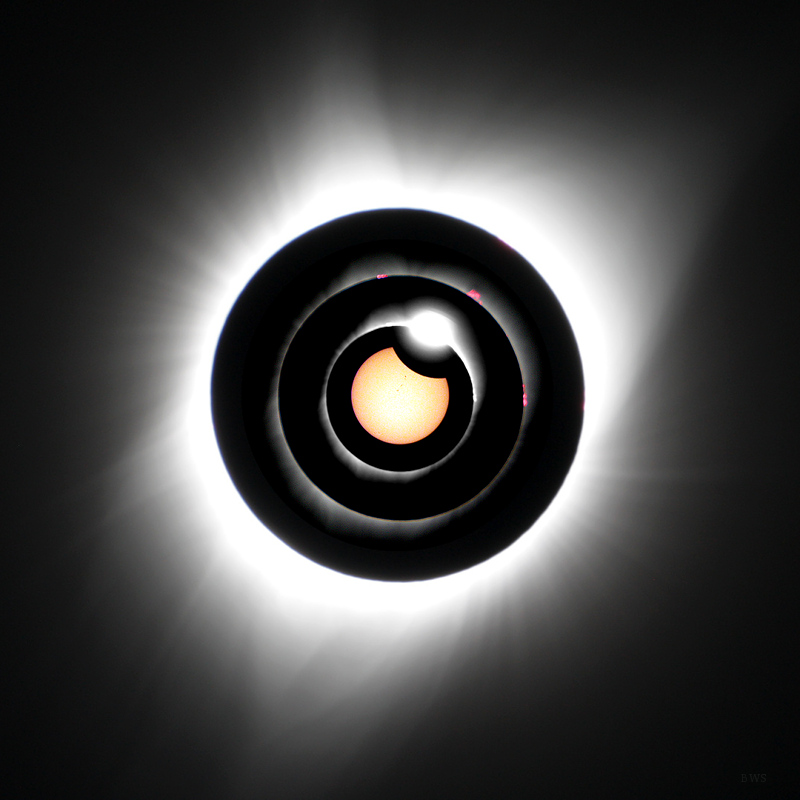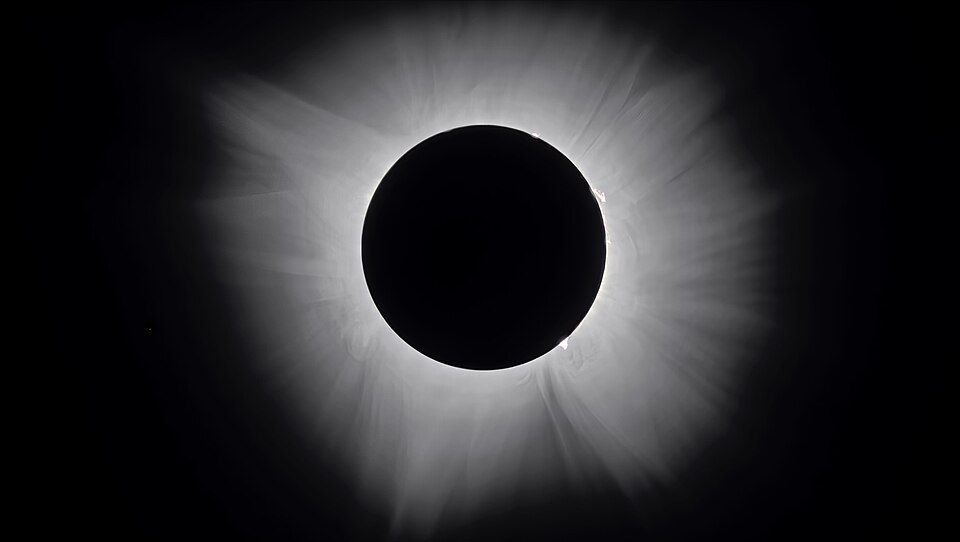
A team of scientists flew above a heavy cloud deck off the coast of Iceland this week to catch a total solar eclipse that most ground observers could not see. Using NASA's WB-57 high-altitude jet, the researchers tracked the moon's shadow at 50,000 feet and collected data on the sun's outer atmosphere in nine different wavelengths, from visible light to infrared.
According to Phys.org, the mission was led by the Southwest Research Institute and conducted in collaboration with NASA's Johnson Space Center in Houston and Langley Research Center in Hampton, Virginia.
"This eclipse was the perfect opportunity to use the unique imaging capabilities of NASA's high-flying research observatory," said Dr. Amir Caspi, a senior program manager at SwRI's Solar System Science and Exploration Division in Boulder, Colorado. "The eclipse track was mostly over the Atlantic Ocean, in locations where clouds are common, exemplifying the advantages of the WB-57's mobile, high-altitude capabilities."
The team used an instrument called the Airborne Multispectral Imager, or SAMI, mounted on the nose of the aircraft. SAMI was originally developed at Langley Research Center to image the Artemis I rocket plume and capsule reentry. It has since been adapted for astronomical use through a series of eclipse observations.
Flying at high altitude solves two problems at once. It removes cloud cover as an obstacle, and it allows scientists to capture infrared wavelengths that Earth's atmosphere absorbs before they reach the ground. The faint glow of the corona is normally drowned out by the sun's brightness, but a total eclipse blocks the solar disk and makes those observations possible.
One of the most significant finds from the mission was a large, unexpected structure on the edge of the sun. These features, called prominences, are massive loops of hot magnetized plasma that can erupt from the sun's surface. If the resulting particles reach Earth, they can damage satellites, disrupt GPS navigation, and knock out power grids.
"The data are really exciting and include a massive, unexpected prominence on the sun's east limb, which will provide some very interesting science," said SwRI's Dr. William Ashfield, who led calibration and analysis for the 2024 eclipse mission and will continue that work with the new data. "Based on lessons learned from using SAMI in 2024, the new observations will allow us to explore this phenomenon in all of SAMI's passbands. I'm looking forward to digging into the results."
The team used experience from the 2024 eclipse mission to plan the flight path and observation sequence for this flight. Analysis of the new data is ongoing.