

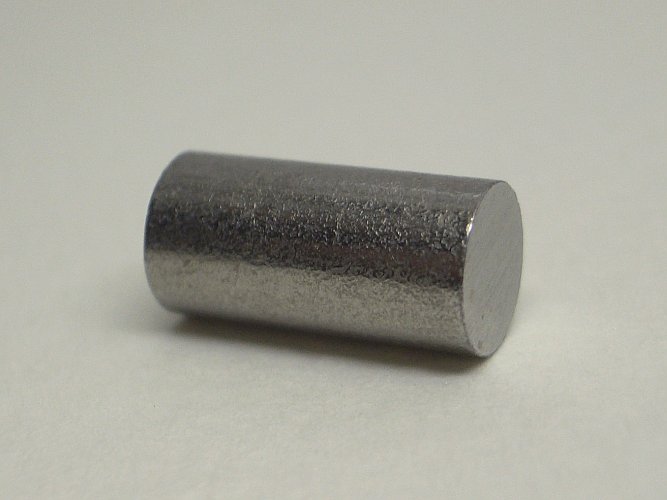
Tungsten was supposed to hold up. Now researchers say it may not hold up as well as the models suggested.
Scientists at the University of Helsinki ran molecular dynamics simulations to study how tungsten behaves under the kind of extreme radiation found inside fusion reactors. Their findings, published in Physical Review Letters, suggest that tungsten components would deteriorate more than originally anticipated when exposed to the high-energy neutrons produced during fusion reactions.
According to Phys.org, the study focused on what happens during primary radiation damage, the chain reaction that begins when a single high-energy neutron strikes an atom and knocks it out of position. That displaced atom then collides with others, pushing them out of place as well. Researchers wanted to know how much damage accumulates in tungsten as the energy of those initial impacts increases.
The answer did not match existing models.
Current models of radiation damage in metals assume that the number of displaced atoms first increases sublinearly with rising energy, then shifts to a linear relationship. The Helsinki team found something different in tungsten. "In metals, current models assume that the number of defects first increases sublinearly with increasing recoil energy, and then linearly," said Jesper Byggmästar, first author of the paper. "We found that in tungsten, the trend goes from sublinear to superlinear and finally to linear."
That superlinear phase in the middle is the problem. It means that at certain energy ranges, damage accumulates faster than models predict. For fusion reactor designers counting on tungsten to survive decades of neutron bombardment, the difference matters.
To reach this finding, the team ran simulations at a scale not previously achieved in this field. They used a machine-learning model to reproduce tungsten's molecular dynamics and pushed the simulation size to one billion atoms at once. Byggmästar described that scale as a milestone.
The project grew out of an effort to make their simulation model run efficiently on graphics processing units. "After that we realized we can run much larger and more accurate simulations than ever before," Byggmästar told Phys.org. "We decided to find out what kind of damage is created if one irradiates tungsten with extremely high-energy ions."
Tungsten is one of the most promising materials for fusion reactor components because it has the highest melting point of any metal and handles heat well. It is a leading candidate for the plasma-facing parts of reactors, where conditions are most severe. The finding does not rule tungsten out, but it does mean that current damage estimates for reactor components may need to be revised upward.
Fusion reactors work by fusing light atomic nuclei at extremely high temperatures, generating energy in a process similar to what powers the sun. The superheated plasma where the reaction takes place is surrounded by structural materials that must survive intense neutron bombardment over long operational periods. Accurate predictions of how those materials degrade are essential for reactor design and safety planning.
The Helsinki team's next steps were not fully detailed in the published findings, but the simulation platform they developed, capable of modeling one billion atoms with machine-learning accuracy, opens the door to similar studies on other candidate reactor materials.