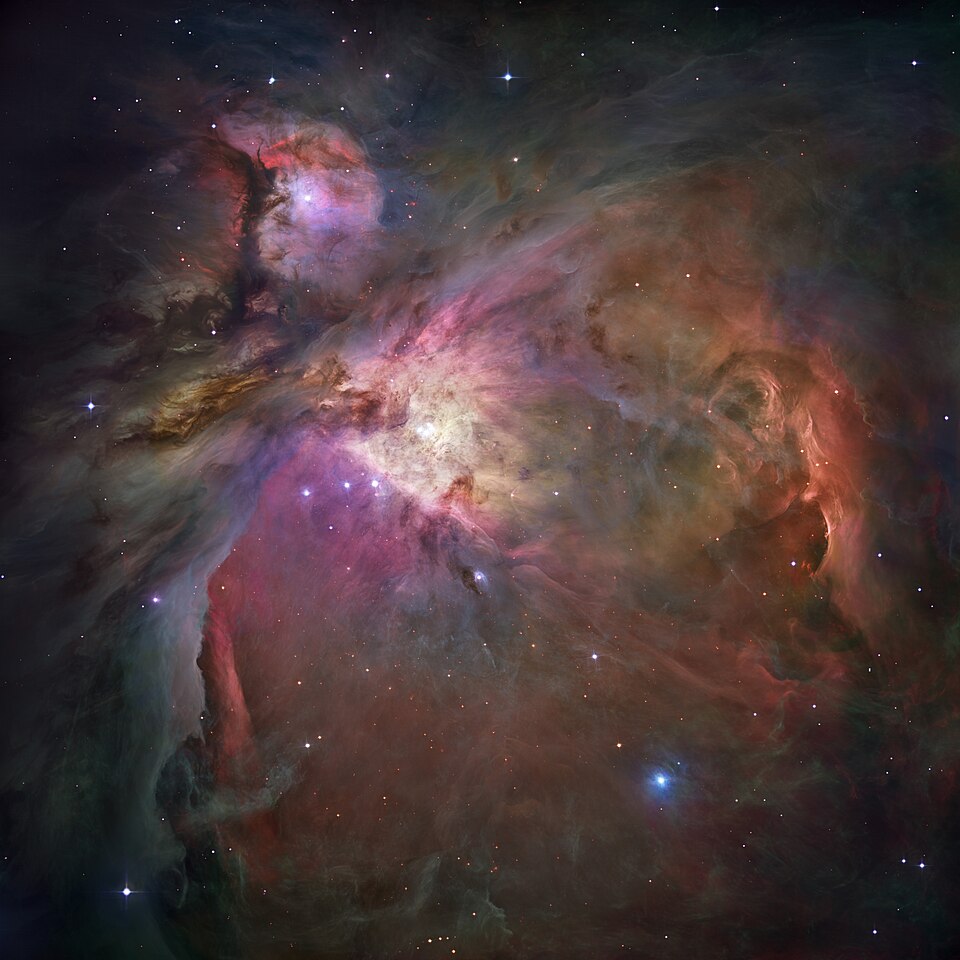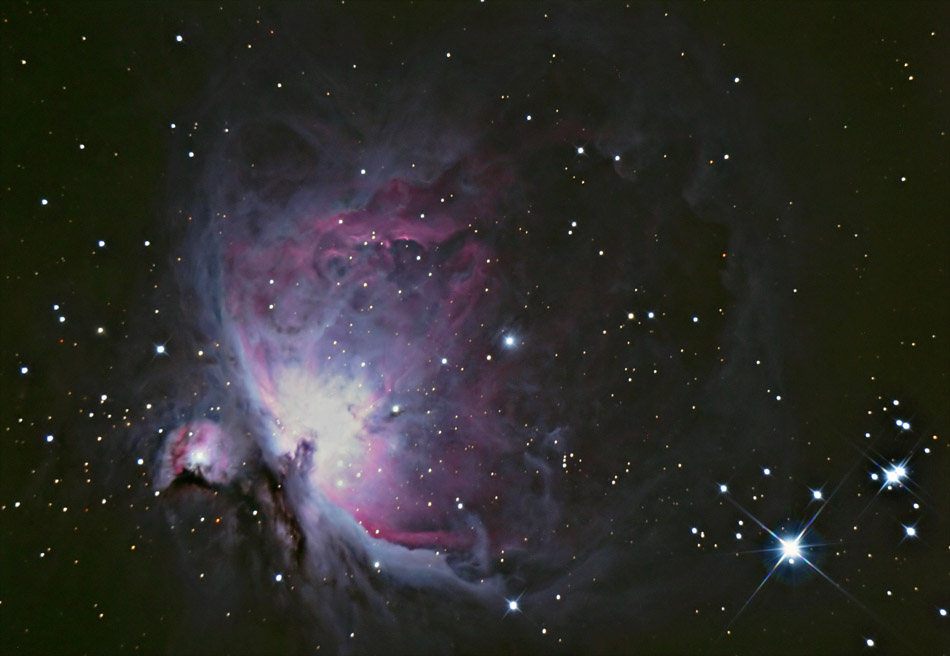
The Orion Kleinmann-Low nebula sits about 1,300 light-years from Earth. It is the closest high-mass, star-forming region to our solar system. And for one team of researchers, it is the best laboratory in the universe, even if no one can visit it.
Scientists who study how stars are born have spent decades mapping the molecules that drift through interstellar space. Now, according to a report by Phys.org, improved technology and techniques are allowing researchers to map those molecules at more precise scales than ever before, and to check whether older maps still hold up against newer data.
The work matters because of what happens inside these regions. Stars form inside molecular clouds, which are clumps of gas and dust that function as cosmic nurseries. Those clouds start out at temperatures around negative 442 degrees Fahrenheit, with densities of about 100 molecules per cubic centimeter. The air a person breathes right now contains roughly 10 quintillion molecules per cubic centimeter, which puts the near-emptiness of interstellar space into perspective.
As infant stars begin to take shape inside these clouds, temperatures climb to somewhere between negative 279 and negative 100 degrees Fahrenheit. Density rises to 10 million molecules per cubic centimeter or more. Under those conditions, some of the most fundamental chemical reactions in the universe occur. The molecules produced during that process include building blocks associated with the chemistry of life.
The Orion KL nebula is a smaller region nested inside the larger Great Orion Nebula. The Great Orion Nebula is visible to the naked eye as a reddish smear just below the belt of the Orion constellation. Orion KL itself is where researchers focus when they want to study how large, high-mass stars develop, because it is the nearest such region available.
Astrochemists use radio telescopes to observe these regions from Earth. Radio waves pass through dust clouds that would block visible light, allowing researchers to detect specific molecules by the frequencies they emit. By mapping those signals across a region, scientists can track how different molecules are distributed, how hot the gas is, how fast it is moving, and how conditions change from one part of a cloud to another.
The research team recently compared results from newer, more precise mapping methods against earlier maps. The goal was to confirm that older measurements remain consistent with what the updated technology shows. That kind of verification matters because conclusions about how stars and chemistry develop have often been built on data collected over several decades.
The broader scientific question behind the work connects to something the astronomer Carl Sagan described decades ago when he said that humans are made of star-stuff. The elements heavier than hydrogen and helium were forged inside early stars. The question researchers are now trying to answer is how those raw materials eventually gave rise to the complex chemistry found in rocks, plants, and living things. Mapping molecules in the environments where new stars are forming is one way to trace that chain.