Negotiators from the United States and Canada met Friday morning with just hours left before a new round of tariffs was set to take effect on Canadian goods including hockey sticks and wine.
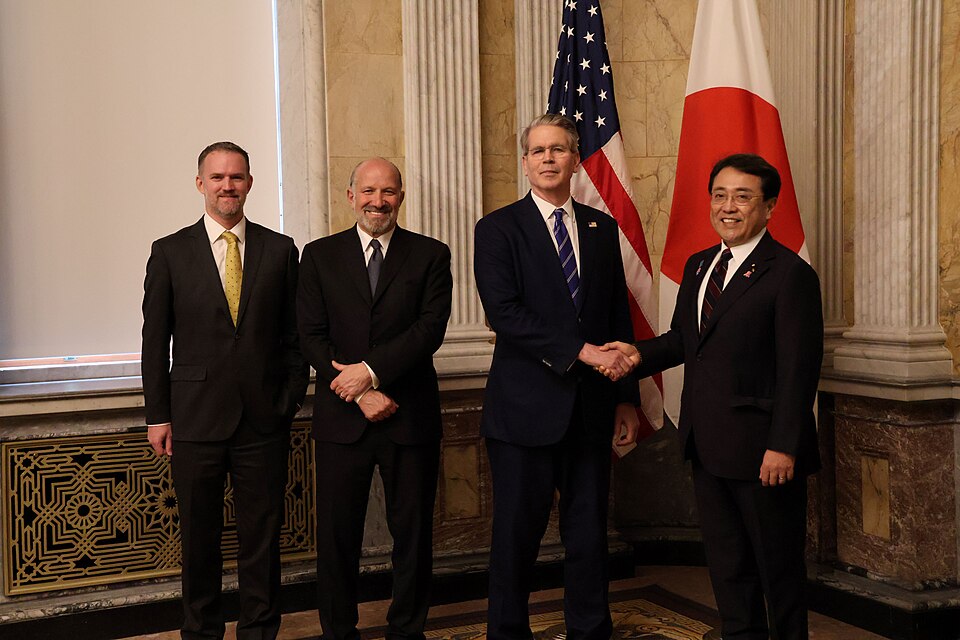
According to CNBC, Canada-U.S. Trade Minister Dominic LeBlanc and chief Canadian trade negotiator Janice Charette were scheduled to meet with U.S. Trade Representative Jamieson Greer at 10:30 a.m. ET at Greer's office in Washington.
The 50% retaliatory tariffs were originally set to begin Wednesday. President Donald Trump delayed them by three days in a post on Truth Social, saying negotiations could continue while a tentative deal was being finalized. Trump described the agreement as all but complete, subject to the finalization of documents. But talks on Wednesday and Thursday ended without a signed deal.
"We're very close," LeBlanc told reporters Thursday afternoon. "We continue to make progress, and we're going to stay here and do the work that's necessary until we get to that point."
He added that Charette was still in active talks with Greer and other Trump administration officials even as he spoke to reporters. LeBlanc also said that any agreement would need to meet a clear standard. "Canadians expect us to get a deal that's in the economic interest of Canada and Canadian workers," he said.
If no deal is reached by 12:01 a.m. ET Saturday, the 50% tariffs will take effect on roughly $20 billion worth of Canadian imports. Businesses have warned the duties could cripple their sales and said the threat alone has already done damage.
Negotiators have kept quiet about the specifics still under discussion. Trump's existing tariffs on Canadian steel, aluminum, and lumber are a central concern in the talks, according to the New York Times, citing people familiar with the negotiations. LeBlanc's office declined to comment to CNBC on how those metals tariffs factor into the discussions.
Trump said Wednesday that the U.S. might agree to lower duties on Canadian steel and aluminum and suggested that lower tariffs on Canadian autos could also be under consideration. He also raised the possibility that a deal could include reviving the Keystone XL pipeline, the planned oil route from Alberta to Nebraska that was canceled in 2021 by then-President Joe Biden.
On the agricultural side, Trump said Wednesday that Canadian tariffs "will be nonexistent for our farmers." The looming 50% tariff threat was partly tied to Canada's alleged discrimination against the U.S. dairy industry. Canada has not confirmed that claim.
Canadian Prime Minister Mark Carney posted on X Wednesday that his government was moving toward an agreement. "We are now moving towards an agreement that reinforces that Canadian advantage, including by securing the best terms in each of Canada's most important strategic sectors and providing greater certainty about our future trading relationship," Carney wrote.
The Friday morning meeting between LeBlanc, Charette, and Greer is the latest in a series of rounds that began after Trump's Truth Social post extended the deadline. Both sides have described progress without detailing what remains unresolved.