

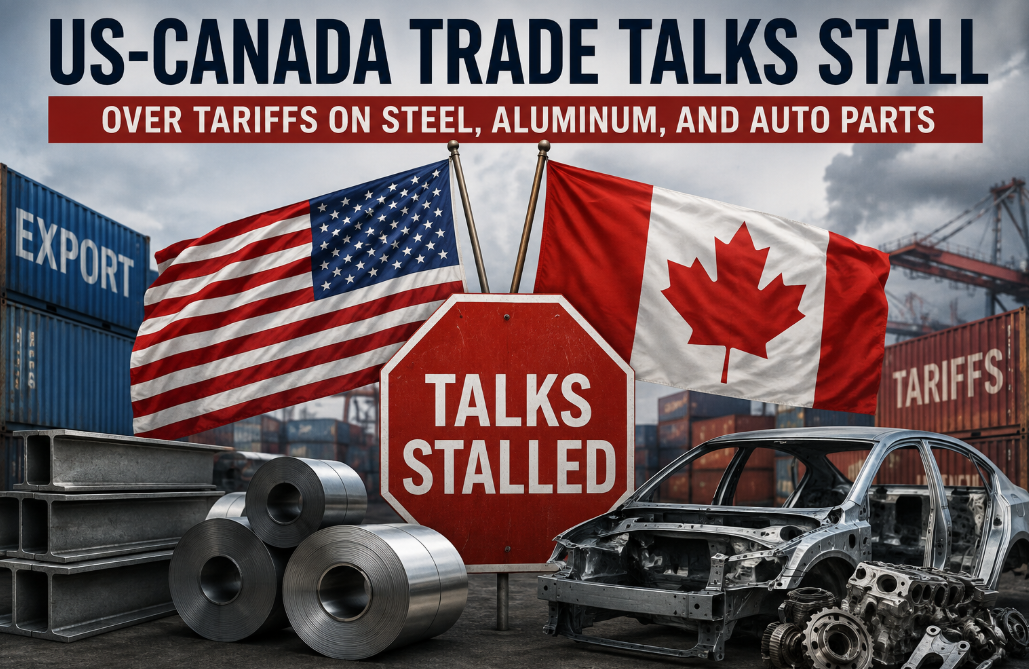
A tentative trade agreement between the United States and Canada would prevent new American tariffs from taking effect, but only if Canada agrees to significant concessions, according to Bloomberg. The deal as described would require Canada to ease its retaliatory measures, allow US alcohol back into provincial stores, and align with Washington on certain digital policy issues.
Former Canadian Deputy Prime Minister Chrystia Freeland, speaking in an interview recorded August 20, outlined what such an agreement would and would not accomplish. Existing US tariffs on Canadian steel, aluminum, cars, and auto parts would remain in place, though at reduced levels. Freeland said that outcome would represent a major departure from Canada's long-held position that those tariffs violate the United States-Mexico-Canada Agreement. She also said the tariffs could hurt both countries, with particular damage to US manufacturing and the Detroit-Windsor auto supply chain, which relies heavily on cross-border parts movement.
The auto industry concern is not abstract. The Detroit-Windsor corridor is one of the most integrated manufacturing zones in North America. Vehicles and components cross the border multiple times during production, meaning tariffs on auto parts compound across the supply chain rather than applying only once.
Canadian Prime Minister Mark Carney has taken a harder public line. He has described Canada as being at war with the United States over trade, a framing that signals the political difficulty of accepting a deal that leaves existing tariffs in place.
The gap between Freeland's description of a tentative agreement and Carney's public posture illustrates the pressure facing Canadian negotiators. Accepting reduced tariffs while leaving the underlying US measures intact would mean abandoning the legal argument that those tariffs were never permissible under USMCA in the first place. Walking away from that position would have implications for how Canada approaches future trade disputes.
The timeline for any final agreement remains unclear. The concessions Canada would need to make, particularly on retaliatory tariffs and alcohol sales, are politically sensitive domestically. Provincial control over alcohol distribution has historically been a point of friction in trade negotiations, and easing those rules at Washington's request would require coordination with provincial governments.
No final agreement has been announced. The details Freeland described remain part of ongoing negotiations, and the existing tariffs on steel, aluminum, and auto products continue to apply while talks proceed.