

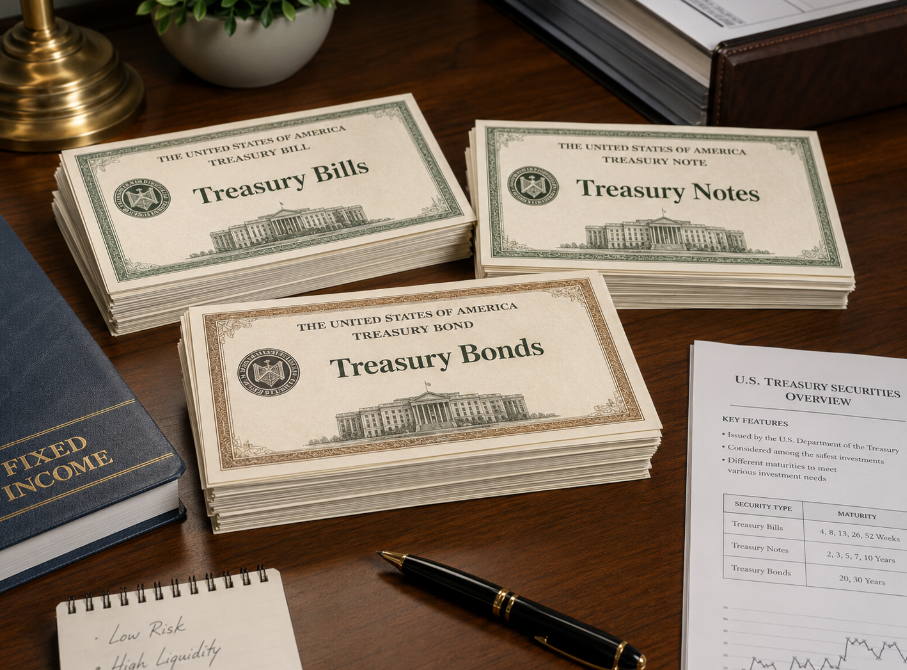
U.S. Treasury yields climbed Tuesday to their highest levels since January 2025, driven by renewed military tensions between the United States and Iran and rising oil prices that are stoking fresh inflation concerns.
The 10-year Treasury note yield, which serves as the main benchmark for mortgages, auto loans, and credit card debt, rose more than 1 basis point to 4.776%. The 30-year Treasury bond yield was up less than 1 basis point at 5.257%. The 2-year note yield, which typically tracks Federal Reserve interest rate decisions, climbed more than 1 basis point to 4.365%, according to CNBC.
The move in bond markets followed a series of events in and around the Strait of Hormuz. On Monday, a tanker was struck by three unknown projectiles while transiting the strait, according to an incident report from the U.K. Maritime Trade Operations Centre. The vessel was sailing in the southern shipping lane close to the Omani coast. No casualties were reported.
The tanker strike came after a rapid exchange of military action between Washington and Tehran. American forces targeted two Iranian rocket launchers on Larak Island on Sunday, reportedly killing three, after U.S. officials said Iran intended to launch rockets carrying sea mines into the Strait. Iran responded Monday with attacks on two American bases in Jordan.
Iran has used Larak Island, located in the strait, as a critical military and shipping control point, helping maintain pressure on vessel traffic through one of the world's most important maritime routes.
Iranian President Masoud Pezeshkian told the Shanghai Cooperation Organisation Summit Tuesday that Tehran would immediately reciprocate if Washington agreed to return to its commitments under the interim deal signed in June, according to the Iranian Student News Agency.
President Donald Trump, speaking to Fox News Monday, left little room for ambiguity about the U.S. posture. "We are going to hit them hard," he said, adding that "there will be a response" to Iran's attacks on American military bases in the region.
Analysts described the U.S. strike on Larak Island as targeted rather than escalatory. "By hitting the launchers rather than broader Iranian military infrastructure, the U.S. appears to be punishing a specific behaviour rather than, at least for now, broadening its war aims," said Ali Vaez, deputy program director at International Crisis Group.
Jason Brodsky, policy director of United Against Nuclear Iran, said the strike was about enforcement. "It is enforcing the blockade," he said, adding that the Trump administration's goal was to further degrade Tehran's capabilities to mine the strait while focusing on economic coercive measures as midterm elections approach.
Oil prices jumped sharply. West Texas Intermediate futures were up about 3% at above $88 per barrel. Brent crude, the international benchmark, advanced more than 2% to above $92 per barrel.
U.S. Treasury Secretary Scott Bessent, speaking Monday on the sidelines of the G20 finance ministers meeting in Asheville, North Carolina, said Iran was "lashing out kinetically" because new U.S. secondary sanctions were taking a toll on its economy. The G20 meeting was set to conclude later Tuesday.
Ulrike Hoffmann-Burchardi, UBS chief investment officer of the Americas and global head of equities, said in a Tuesday note that bond market pressure is coming from multiple directions. "With no clear path to reopening the Strait after six months of war, inflation worries remain elevated. Uncertainty over the Federal Reserve's policy outlook, fiscal concerns, and rising AI-related debt issuance have all kept bonds under pressure," she wrote. "Yield volatility is likely to persist in the near term."
Investors are also watching a set of domestic economic data releases this week, including the ISM Manufacturing PMI and the Job Openings and Labor Turnover Survey, with nonfarm payrolls figures expected Friday.