

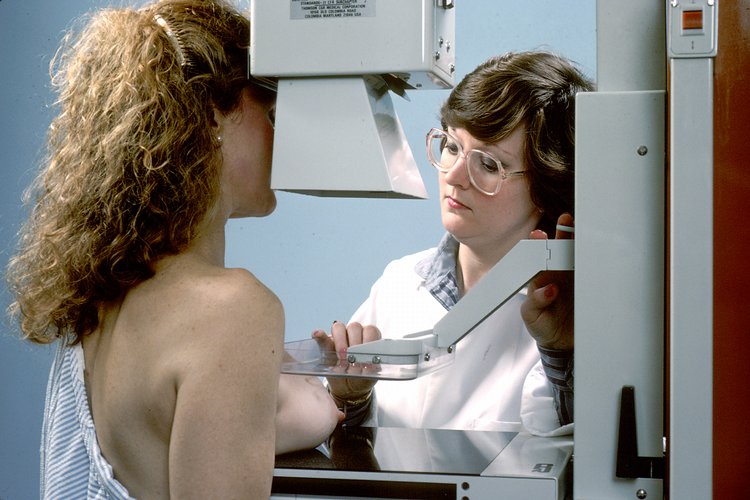
A mobile mammography unit operated by Mercy Health will travel throughout Ohio's Mahoning Valley during September, bringing breast cancer screenings directly to communities in Mahoning, Trumbull and Columbiana counties.
The Joanie Abdu Mobile Mammography Van will make stops at primary care offices, schools, a university, a library and other community locations throughout the month, giving patients another option for receiving routine breast cancer screenings without traveling to a hospital or dedicated imaging center.
The mobile program is part of the Joanie Abdu Comprehensive Breast Care Center operated by Mercy Health in the Youngstown area. According to Mercy Health, the van uses the same high-quality technology and equipment available at the comprehensive breast care center. The program offers 3D mammography, also known as digital breast tomosynthesis, which produces multiple images of breast tissue that can be examined by radiologists.
Mobile mammography programs are intended to reduce some of the practical obstacles that can keep people from undergoing recommended cancer screenings. Transportation problems, work schedules, caregiving responsibilities and the distance to a hospital or imaging center can all make it easier to postpone a mammogram.
Instead of requiring patients to travel to a central facility, Mercy Health brings the imaging equipment into neighborhoods throughout the Mahoning Valley.
The mobile unit has become a substantial part of Mercy Health's regional breast cancer screening program. Mercy Health says the unit serves more than 25 locations each month and has the capacity to perform more than 9,500 breast examinations annually for women across the Mahoning Valley.
The program dates to 2016, when the Joanie Abdu Comprehensive Breast Care Center added a mobile mammography unit to expand access to screening. The unit was supported in part through donations to the Joanie's Promise Fund and fundraising connected with the annual Panerathon. Financial assistance for mobile screenings is also available to patients who qualify.
September's schedule illustrates just how widely the van travels.
Stops begin September 1 at First Church of the Nazarene in East Liverpool. On September 2, the van is scheduled to visit Church Hill Primary Care in Youngstown from 8 a.m. to 10:30 a.m. before traveling to Struthers Primary Care from 11:45 a.m. to 1:45 p.m.
On September 3, the unit is scheduled for Mineral Ridge Primary Care in the morning and Newton Falls Primary Care in the afternoon. It will spend September 4 at Howland Primary Care in Warren from 8 a.m. until 1:45 p.m.
Additional stops are scheduled September 8 in Salem and Sebring; September 9 in North Lima and Boardman; September 10 in Hubbard; September 11 in East Palestine; September 15 in Howland; September 16 in Canfield and Austintown; September 17 at the Eastwood Mall area in Niles and Liberty Schools; September 18 in Canfield; September 22 in Howland; September 23 at Youngstown State University; September 24 in Vienna; September 25 in Canfield; September 29 in Warren; and September 30 in Cortland and at Champion Primary Care in Warren.
The September 23 stop at Youngstown State University, for example, is scheduled from 8 a.m. until 1:45 p.m. in the Central Receiving parking lot at 235 W. Rayen Avenue. The following day, the van is scheduled to operate from 8 a.m. until 1:45 p.m. at Mercy Health's Vienna Primary Care location.
At several stops, Mercy Health also offers bone density screening using a radiation-free measurement of the heel.
The mammography service itself is intended primarily as a screening tool for people who do not currently have breast symptoms. Mercy Health says women over age 40 who are not experiencing breast problems can self-refer for a routine screening mammogram without obtaining a physician's order. Patients experiencing a lump, breast pain, discharge or another concerning symptom may instead need a diagnostic evaluation and should contact a health care provider.
Recommendations on how frequently women should receive mammograms vary somewhat between medical organizations.
The U.S. Preventive Services Task Force recommends that women ages 40 through 74 at average risk undergo mammography every two years. The recommendation was updated in 2024 to begin routine screening at age 40 rather than leaving the decision individualized for many women in their 40s.
The American Cancer Society uses a somewhat different schedule. Its guidelines say women ages 40 through 44 should have the option of beginning annual mammography, women ages 45 through 54 should receive mammograms every year, and women 55 and older may switch to mammography every two years or continue annual screening.
Those recommendations are generally intended for people at average risk. Someone with a strong family history of breast cancer, certain genetic mutations, previous breast cancer or other significant risk factors may need a different screening schedule or additional imaging. The American Cancer Society recommends annual MRI along with mammography for certain women considered at high risk, typically beginning at a younger age.
Breast cancer screening is designed to identify cancer before symptoms develop. Finding breast cancer at an earlier stage can provide more treatment options and is one reason health organizations place considerable emphasis on maintaining routine screening schedules.
Access, however, remains an important part of whether screening recommendations actually translate into completed mammograms.
A person may understand the importance of screening yet still delay an appointment because the nearest imaging facility is inconvenient, taking time away from work is difficult or transportation is unreliable. A mobile unit attempts to address those problems by placing the screening equipment closer to where people already live, work or receive routine medical care.
That is particularly important for a service such as mammography, which must be repeated periodically rather than performed only once.
The Mercy Health program also provides an option for patients who do not already have a physician directing their screening. Mercy Health says a physician's prescription is not required to receive a routine screening mammogram aboard the mobile van. Most insurance plans generally include screening mammography benefits, while financial assistance may be available to qualifying patients through programs associated with the Joanie Abdu Comprehensive Breast Care Center. Patients should verify individual insurance coverage and eligibility before an appointment.
The van is named as part of the Joanie Abdu Comprehensive Breast Care Center, which provides breast imaging, cancer detection and other breast health services in the Youngstown region. The center is accredited through the National Accreditation Program for Breast Centers and provides 3D digital mammography at its primary facility as well as through the mobile program.
For patients who have repeatedly postponed a mammogram because of convenience or transportation issues, September's schedule provides numerous opportunities across the Valley.
Appointments are recommended because availability at individual stops can be limited. Patients interested in using the Joanie Abdu Mobile Mammography Van can call Mercy Health at 330-480-2654 to schedule a screening or confirm the date, time and location of an upcoming stop.