

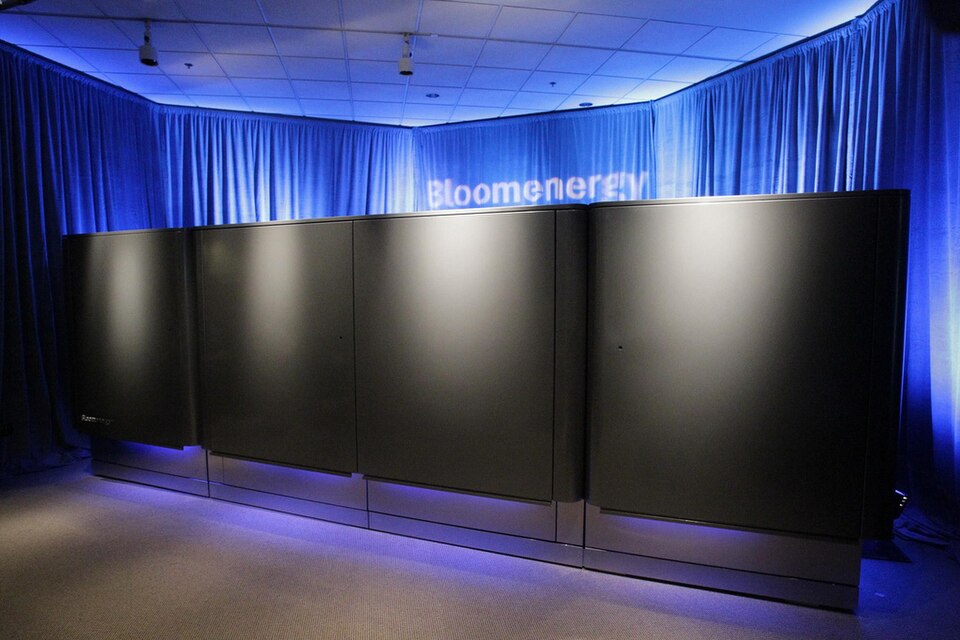
Bloom Energy has been named to the S&P 500 as part of an upcoming reshuffle of the benchmark stock index, according to MarketWatch and S&P Dow Jones Indices. The move marks a significant milestone for the fuel-cell company as demand for electricity from data centers and artificial intelligence infrastructure continues to grow.
Bloom Energy will join the S&P 500 along with Illumina and Everpure. To make room for the three companies, Molson Coors Beverage, Builders FirstSource, and Trade Desk will be removed from the index. The changes are scheduled to take effect before the opening of trading on Monday, September 21, as part of the S&P 500's quarterly rebalancing.
Inclusion in the S&P 500 is closely watched by investors because trillions of dollars are invested in funds and financial products that track or are benchmarked against the index. Index funds designed to mirror the S&P 500 generally have to adjust their portfolios when companies are added or removed. That means newly included companies can experience substantial buying demand as funds acquire their shares.
The opposite can happen to companies being removed. Funds that closely track the S&P 500 generally sell shares of departing companies as they rebalance their portfolios. Although index membership does not change the underlying operations of a company, the amount of money tied to the S&P 500 means that additions and removals can have an immediate effect on trading volume and investor attention.
Bloom Energy shares moved higher following the announcement, adding to gains that had already pushed the company significantly higher during 2026. MarketWatch reported that Bloom had grown to a market capitalization of more than $70 billion by the time of the announcement, making it one of the largest companies that had been eligible for addition to the index.
Bloom Energy, based in San Jose, California, develops solid oxide fuel-cell systems capable of producing electricity directly at customer locations. Its technology has attracted particular attention as data center operators search for ways to obtain large amounts of reliable electricity without waiting years for utilities to construct new transmission lines, substations, and other grid infrastructure.
The rapid expansion of artificial intelligence has made power availability an increasingly important issue for the technology industry. AI data centers can require enormous amounts of electricity, and developers in some regions have encountered lengthy waits for new utility connections. Bloom has promoted its onsite generation systems as one way for data centers and industrial customers to add power more quickly.
The company said in August that its AI infrastructure business included nearly two dozen customers representing approximately 250 megawatts of capacity. Bloom has also been expanding partnerships intended to finance much larger power projects. In June, Bloom and Brookfield announced that their partnership for financing power projects supporting AI infrastructure had been expanded from $5 billion to as much as $25 billion.
That growing connection to artificial intelligence infrastructure has helped change the way investors view Bloom. The company was once primarily associated with clean-energy projects and distributed fuel-cell systems, but it has increasingly positioned its technology as an answer to the power shortages confronting data centers and other high-demand facilities.
Being selected for the S&P 500 also represents a substantial increase in Bloom Energy's visibility. The index contains many of the largest publicly traded companies in the United States and is one of the world's most widely followed measures of stock-market performance. Inclusion can expose a company to a much broader range of institutional investors while also making its shares a component of countless retirement accounts, mutual funds and exchange-traded funds.
Bloom's addition does not mean that S&P Dow Jones Indices is making a prediction about the company's future stock performance. The S&P 500 is managed by an index committee, and companies must meet several eligibility requirements involving factors such as market capitalization, liquidity, public float and profitability. Meeting the basic requirements also does not guarantee admission because the committee has discretion over which eligible companies are selected.
The three companies leaving the S&P 500 represent very different areas of the economy.
Molson Coors Beverage is one of North America's largest brewing companies and owns major beer brands including Coors Light, Miller Lite and Blue Moon. The company's removal comes as traditional beer producers continue to compete with changing consumer preferences and a wider range of alcoholic and nonalcoholic beverages.
Builders FirstSource is a major supplier of building materials, manufactured components and construction services to homebuilders. Its business is closely tied to conditions in the housing and construction markets, which can be affected by mortgage rates, interest rates and the pace of new home construction.
Trade Desk operates a digital advertising technology platform that allows advertisers to purchase and manage advertising campaigns across digital media. The company has long been associated with the expansion of programmatic advertising and connected television. Its removal illustrates that membership in the S&P 500 is not permanent, even for companies that have previously been viewed as rapidly growing technology businesses.
The reshuffle also demonstrates how the composition of the S&P 500 changes as different parts of the economy expand or contract. As companies grow, become profitable and reach sufficiently large market values, they can become candidates for inclusion. Other companies may eventually move into smaller-capitalization indexes as their relative market values decline.
For Bloom Energy, the move is particularly notable because of the company's growing connection to one of the biggest investment themes in the market: the massive buildout of AI infrastructure. Semiconductor companies such as Nvidia have received much of the attention surrounding artificial intelligence, but the construction of increasingly large data centers has also created demand for electrical generation, cooling systems, networking equipment and other infrastructure.
Power has increasingly become one of the limiting factors in expanding data center capacity. Bloom argues that onsite generation can allow operators to bring new computing capacity online without relying entirely on traditional utility expansion. The company says its systems can also be deployed for commercial, industrial and utility applications.
The September reshuffle therefore represents more than a routine change of three names in an index. It reflects changes taking place across the broader U.S. economy and stock market, where companies connected to computing infrastructure, electricity demand and artificial intelligence have attracted increasing investor interest.
When the changes take effect September 21, Bloom Energy will officially become one of the companies represented in the benchmark used every day to measure the performance of large U.S. stocks. For a company whose growth is increasingly tied to the enormous power requirements of the AI and data-center industries, joining the S&P 500 provides another indication of how dramatically its position in the market has changed.