

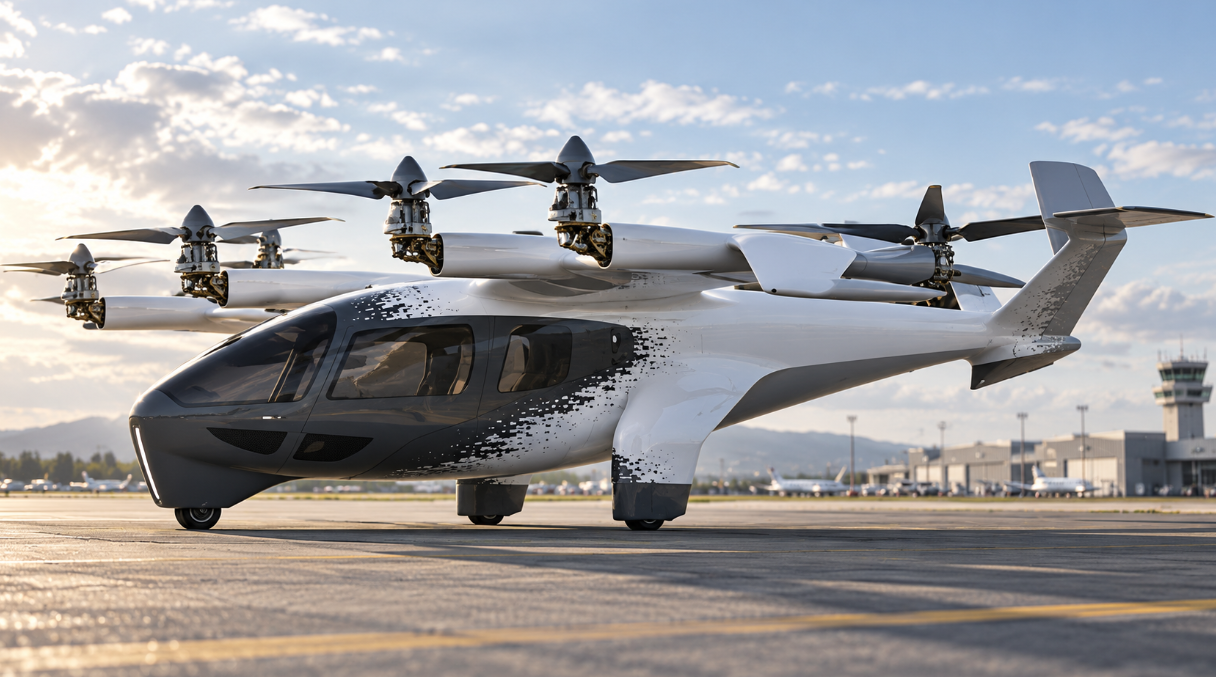
Archer Aviation is making a major expansion beyond its original air-taxi business through an agreement with Boeing that will give the electric vertical takeoff and landing company control of three aerospace businesses.
Under the deal, Archer will acquire Wisk Aero, SkyGrid and Insitu from Boeing. In exchange, Boeing will receive Archer shares representing approximately 19.75% of Archer's outstanding Class A shares immediately before the transaction closes, subject to certain adjustments. Boeing will also receive two warrants, each covering $100 million worth of Archer stock.
The arrangement gives Boeing a substantial stake in Archer while allowing Archer to acquire the businesses without making a large cash payment for them. Boeing will also become a strategic partner and retain access to some of Wisk's autonomous flight technology through a separate collaboration and technology-sharing agreement.
The three businesses give Archer capabilities that extend well beyond passenger air taxis.
Wisk is an autonomous electric aircraft developer that has spent years working on self-flying eVTOL technology. The company has designed and flown multiple generations of aircraft and conducted more than 1,700 flight tests. Bringing Wisk into Archer gives the company additional engineering expertise, autonomous-flight technology and intellectual property in a field closely related to Archer's Midnight air taxi.
SkyGrid adds another piece of the aviation system. Its technology focuses on digital airspace management, allowing aircraft, drones and potentially autonomous vehicles to operate safely in increasingly crowded skies. Such systems could become important if air taxis and autonomous aircraft eventually operate at significant scale over major cities.
Insitu may be the most immediately valuable business financially. The company manufactures unmanned aircraft systems used for intelligence, surveillance and reconnaissance missions and operates in dozens of countries. Archer says Insitu is profitable and generates more than $200 million in annual revenue.
That is a significant figure for Archer, which reported only $5 million in revenue during the second quarter of 2026.
Archer's second-quarter financial results illustrate why adding an established revenue-producing operation could matter. The company reported $284.2 million in operating expenses during the quarter and a net loss of $263.2 million. It used $156.4 million in cash for operating activities during the quarter.
Despite those losses, Archer still ended the quarter with approximately $1.56 billion in cash, cash equivalents and short-term investments. That gives the company substantial financial resources, but developing new aircraft, completing certification, expanding manufacturing and preparing commercial operations remain expensive undertakings.
Archer has not yet reached the point where its planned air-taxi network can generate large amounts of passenger revenue. Its Midnight aircraft still needs the regulatory approvals required for broad commercial passenger service.
That makes the acquisition of Insitu particularly interesting. Instead of relying almost entirely on a future air-taxi business, Archer would gain an established defense operation capable of generating revenue while the civilian eVTOL market continues to develop.
Insitu has manufactured more than 4,000 Group 2 and Group 3 unmanned aircraft systems, according to Archer. Its aircraft have accumulated nearly two million autonomous flight hours. That operating history gives Archer not only revenue but also a large amount of real-world autonomous-flight experience.
The data generated by those flights could become increasingly valuable as Archer develops autonomous aviation systems.
The Boeing transaction therefore changes the way Archer can be viewed as a company. Archer began primarily as an eVTOL manufacturer attempting to build electric aircraft capable of carrying passengers on relatively short trips between cities, airports and specialized landing facilities known as vertiports.
Its long-term vision remains centered on making short-distance air travel more practical. A passenger might eventually travel from a downtown vertiport to an airport in a fraction of the time required by a car traveling through heavy traffic.
But Archer has increasingly expanded into defense, artificial intelligence and autonomous aircraft.
The company is developing ZEE, an artificial intelligence foundation model designed specifically for aviation. It is also working with defense technology company Anduril on an autonomous hybrid vertical-takeoff aircraft platform. Archer has identified commercial and military versions of that system known as Halo and Thunder.
Adding Wisk, SkyGrid and Insitu brings several of those efforts under one corporate structure.
Wisk contributes autonomous eVTOL engineering. SkyGrid contributes digital airspace management. Insitu contributes operational unmanned aircraft, defense customers, revenue and extensive autonomous-flight experience. Archer contributes its Midnight aircraft, manufacturing operations, AI development and existing eVTOL program.
The combination could allow Archer to operate in several aviation markets instead of depending entirely on passenger air taxis.
Wisk may prove especially important over the longer term because the company has been pursuing a goal similar to Archer's but with a greater emphasis on autonomy. Wisk has developed six generations of eVTOL aircraft during roughly 16 years of development.
By acquiring Wisk rather than competing with it, Archer gains access to technology and engineering work that would be difficult and expensive to reproduce internally.
The transaction could also reduce duplication between two companies attempting to solve many of the same technical problems. Aircraft certification, batteries, electric propulsion, flight controls and autonomous systems all require significant engineering resources.
Boeing's continued involvement is another important part of the agreement. Rather than simply selling the businesses and walking away, Boeing is taking Archer stock and establishing an ongoing technology relationship with the company.
That structure gives Boeing an incentive to benefit from Archer's future growth while allowing the aerospace giant to continue using technology developed by Wisk.
For Archer shareholders, however, the transaction comes with a tradeoff. Issuing enough shares to give Boeing approximately 19.75% of Archer's pre-closing Class A share count will dilute existing shareholders. The two additional warrants could create further dilution if they are exercised.
The first $100 million warrant carries an exercise price of $13 per share and can be exercised beginning one year after the acquisition closes through the third anniversary. The second $100 million warrant carries an exercise price of $17.88 per share and can be exercised from the first anniversary through the fourth anniversary.
Archer is effectively exchanging a substantial portion of its future equity for businesses and technology that management believes can accelerate its development.
The advantage is that Archer does not have to spend hundreds of millions of dollars in cash to complete the acquisition. Preserving cash could be particularly important while the company continues funding aircraft development, manufacturing and certification.
The deal also gives Archer something many emerging aerospace companies lack: an established business generating meaningful revenue.
Air-taxi companies face a difficult financial problem. They must spend enormous amounts of money designing aircraft, building factories, conducting flight tests and obtaining certification before they can operate at commercial scale.
Insitu changes that equation somewhat by bringing an existing defense business into the company.
Defense could become an increasingly important part of Archer's strategy. Military organizations around the world are investing heavily in unmanned aircraft, autonomous flight systems and artificial intelligence. Technologies developed for air taxis can sometimes overlap with technologies needed for defense aircraft, particularly electric propulsion, vertical takeoff, autonomy and advanced flight controls.
SkyGrid could eventually connect these areas by helping manage the airspace in which autonomous aircraft operate.
If large numbers of drones, air taxis and autonomous aircraft eventually share airspace with conventional airplanes and helicopters, software capable of coordinating those vehicles could become an important part of the aviation infrastructure.
The Boeing acquisition therefore represents more than simply buying three subsidiaries. Archer is attempting to transform itself from an electric air-taxi startup into a broader aerospace technology company spanning passenger aircraft, unmanned systems, defense, artificial intelligence, autonomous aviation and airspace management.
That strategy carries substantial risk. Archer still needs to prove that its air-taxi business can operate commercially at scale, and integrating three additional companies will add complexity. Regulatory approval for both aircraft and the acquisition itself also remains necessary.
Still, the deal gives Archer new sources of technology, expertise and revenue at a point when the company is spending heavily to build its core business.
Archer Aviation trades on the New York Stock Exchange under the ticker ACHR. The Boeing transaction is expected to close by the end of 2026, subject to regulatory approvals and other customary closing conditions.