

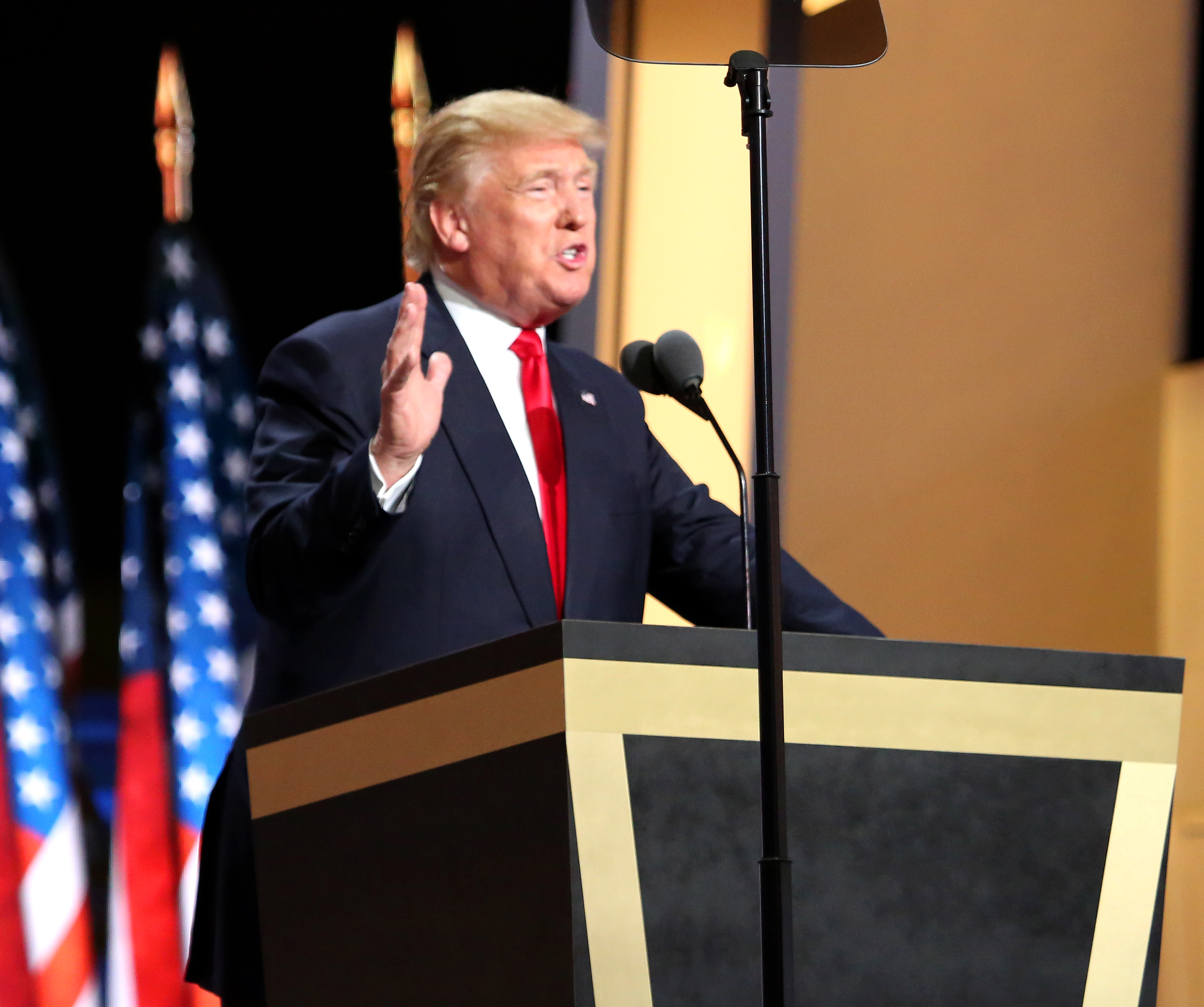
President Donald Trump has announced plans to create an AI Force and appoint an AI czar to oversee the development of artificial intelligence in the United States. The announcement comes as tech leaders across the industry have called for a pause or slowdown in AI advancements. Trump compared his new initiative to the creation of the Space Force during his first term, suggesting a similar approach to managing this emerging field. He emphasized that he does not intend to slow down AI growth in the United States, warning that doing so could allow China to gain an advantage.
The president’s post on Truth Social did not include specific details about what the new agency would do or when it would be formed, according to TechCrunch. He said AI is the next Industrial Revolution and could contribute up to 25% of the country’s GDP. Trump also stated that existing legal systems would be used to hold bad actors accountable in the AI space.
Critics have raised concerns about potential existential risks from AI, with some researchers suggesting a greater than 10% chance of catastrophic outcomes. Anthropic CEO Dario Amodei recently proposed slowing the pace of advanced AI development. OpenAI CEO Sam Altman and Elon Musk publicly backed the proposal.
Amodei called for independent safety evaluations and greater coordination among major AI companies. His proposal also included international cooperation aimed at reducing risks from increasingly powerful systems. Altman said the industry should pace the development of frontier models rather than continue advancing them as quickly as possible.
Nvidia CEO Jensen Huang has taken a different position on some of the warnings. Huang said predictions of AI destroying humanity lack a scientific basis. However, he also said safety concerns are legitimate and that the United States can continue developing AI while doing so safely. Trump separately called fears of an AI takeover a “hoax.”
Earlier this year, David Sacks stepped down from his role as AI and crypto czar to take on a new position in the President’s Council of Advisors on Science and Technology. Trump’s announcement would restore an AI czar position that the administration had previously left vacant.
Lawmakers have begun discussing legislation to regulate AI, though there remains disagreement over how much oversight is needed. Trump has argued that slowing American development could give China an advantage. His new proposal did not provide details about the AI Force’s structure, budget or whether it would be a civilian or military organization.
The UK Parliament’s Joint Committee on Human Rights also published a report this month urging new laws to address risks posed by AI technology in the United Kingdom. The committee called for a broad AI bill and said existing British laws may not be sufficient to address the technology’s potential effects on human rights.
Trump’s announcement has added to a broader debate over how governments and technology companies should manage the rapid development of artificial intelligence.