

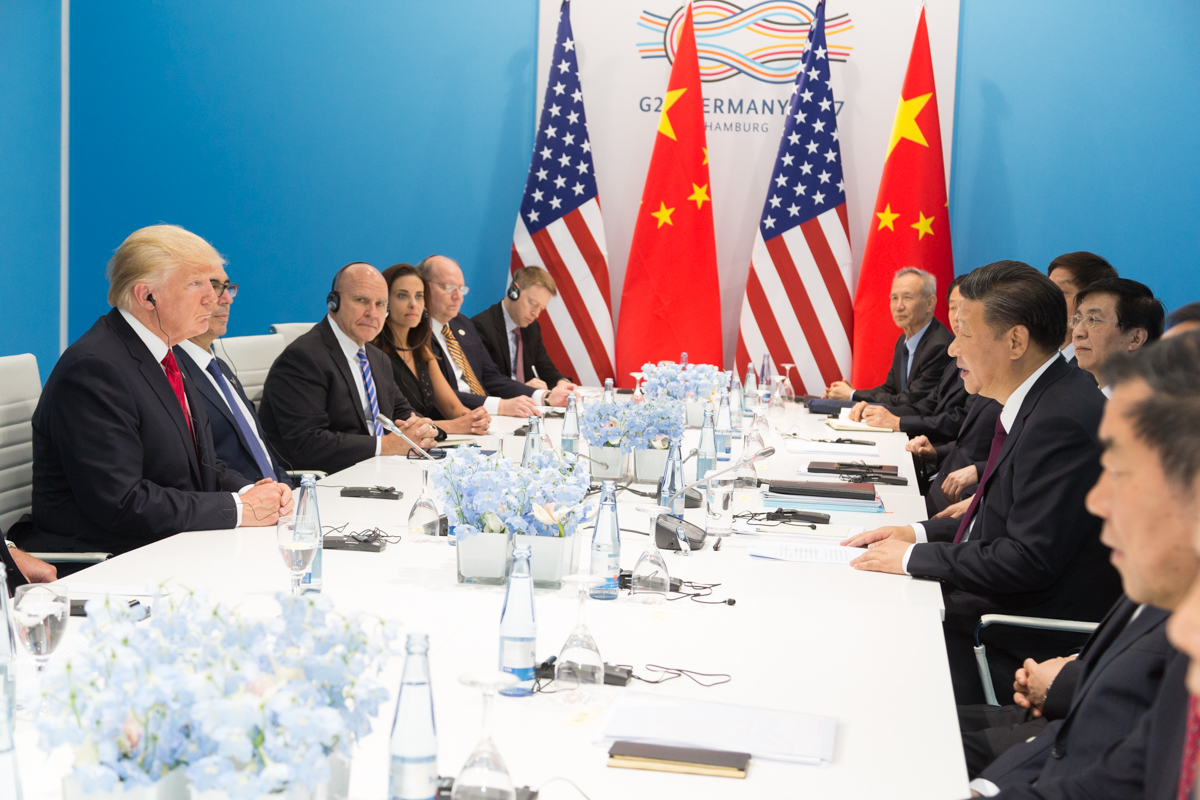
President Donald Trump welcomed Chinese President Xi Jinping to the White House for a formal state dinner on Thursday evening. The event brought together a distinguished group of attendees including major tech executives and powerful figures from business and government. Among those invited were Meta CEO Mark Zuckerberg, OpenAI co-founder Sam Altman, Tesla and SpaceX leader Elon Musk, and Amazon founder Jeff Bezos.
The dinner was part of a full day of diplomatic activities that included discussions around trade, artificial intelligence, and Taiwan. The two countries have continued to negotiate over trade while competing over advanced technology and AI. Xi also raised Taiwan during his talks with Trump, according to the Chinese government's account of the meeting.
Trump had previously expressed his excitement about the guest list during the United Nations General Assembly. He said that everyone wanted to attend the event, highlighting its significance and exclusivity. Trump called it the "hottest ticket in town" while discussing the dinner earlier in the week.
The guest list also included members of Trump’s Cabinet, Supreme Court justices, media figures, and several family members. Notable attendees included Nvidia CEO Jensen Huang, reflecting the growing importance of AI and advanced chip technology in U.S.-China relations. Supreme Court Justices John Roberts, Amy Coney Barrett, and Brett Kavanaugh were also present at the dinner. Other technology executives included Apple CEO Tim Cook, Google CEO Sundar Pichai, and Dell Technologies CEO Michael Dell.
The event took place in the White House East Room, with fine china from the Reagan era used for the meal. The White House said the tables featured the Reagan State Service along with red linens and red flowers chosen in recognition of the cultural importance of the color in China. The meal included sesame-crusted sea bass and White House honey ice cream.
Trump and his wife Melania greeted Xi and his wife Peng Liyuan at the entrance to the White House before the dinner began. Billionaire Bernard Arnault of LVMH was accompanied by his son Alexandre Arnault during the evening.
The visit began with a special welcome at Joint Base Andrews in Maryland, according to NBC News. Trump chose to meet Xi on the tarmac rather than wait inside the White House for the traditional greeting. The planeside welcome was an unusual presidential gesture because foreign leaders are normally formally greeted at the White House.
The leaders walked down a long red carpet together after Xi’s Air China plane landed. Trump also rolled out the red carpet twice for the visit, emphasizing the importance of the event. Xi later received a formal White House welcome that included military honors.
Some members of Trump’s own party criticized the decision to honor Xi in such a public way. Republican Sen. Roger Wicker raised concerns about China's support for Iran and urged Trump to confront Xi about the issue. Republican Sen. Thom Tillis separately questioned Trump's decision to give Xi such an elaborate welcome.
Analysts said Trump entered the meeting while facing pressure from the ongoing conflict involving Iran and the approaching midterm elections. China also came into the summit with strong trade numbers and growing influence in global markets. Those assessments were political analysis rather than official findings.
Retired Navy Rear Adm. Mark Montgomery warned before the summit that he was concerned the meeting could affect Taiwan’s security. Montgomery said he worried Trump could make decisions that would damage the U.S. security relationship with Taiwan.
Trump and Xi also took a tour of the South Lawn before the dinner. Trump spoke to reporters about Xi’s interest in granite, according to the South China Morning Post. The president joked that Xi was an expert on stone, aside from many other things.
The state dinner capped one of the most closely watched U.S.-China meetings of the year. Despite the elaborate ceremony and large collection of American corporate leaders, major disputes remained between Washington and Beijing over trade, technology, Taiwan, and national security.