

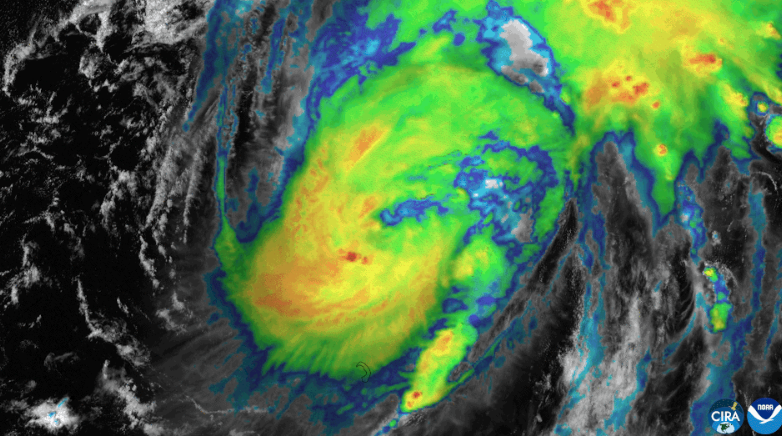
Hurricane Isaias struck the Florida Panhandle on Friday, October 9, 2026, making landfall near Destin with sustained winds of 105 mph. The Category 2 hurricane brought destructive winds, heavy rainfall and coastal flooding before moving inland across Alabama. By Saturday, at least four people had died in Florida and Alabama, while hundreds of thousands of customers remained without electricity.
The storm made landfall at approximately 9:30 p.m. Eastern time, according to Florida officials. Although Isaias weakened as it moved north, emergency authorities continued warning residents about flooding, fallen trees and damaged power lines.
The Associated Press reported that two people died in Florida's Escambia County. One woman was killed when a tree fell on her home, while a man died from carbon monoxide poisoning after operating a generator in his garage. Four other family members were hospitalized with injuries that were not considered life-threatening.
Two additional deaths were reported in Alabama. One person died when a tree fell on a building in Birmingham, while another was killed in a vehicle accident involving a fallen tree in Barbour County.
The deaths showed that the danger continued even after Isaias weakened. Emergency officials urged residents to avoid damaged roads, stay away from fallen electrical lines and operate generators only outdoors.
Strong winds damaged homes, businesses and public infrastructure across the western Florida Panhandle. Video footage showed heavy rain battering buildings, debris scattered along streets and trees bending under powerful gusts.
In Pensacola, strong winds tore the roof from a hotel. Other buildings sustained damage, while fallen trees and electrical lines blocked streets and made travel dangerous.
The storm also damaged Pensacola International Airport, forcing the suspension of commercial flights while officials assessed the facility. Local authorities reported problems with drinking water supplies and warned that restoring normal services could take time.
Florida Governor Ron DeSantis said approximately 260,000 customers had lost electricity during the initial stages of the storm. Outages spread across the Panhandle, affecting communities from Pensacola to Panama City and extending toward Tallahassee.
The number increased as Isaias moved inland. Reuters reported that approximately 670,000 customers across Florida, Alabama, Georgia and Mississippi remained without power around midday Saturday. Earlier outage totals had exceeded 900,000 across several affected states.
Florida accounted for approximately 420,000 outages in the midday report, followed by Alabama with 190,000. Georgia had about 43,000 customers without power, while Mississippi reported approximately 17,000.
Utility companies began deploying repair crews as soon as conditions were safe enough for workers to enter damaged neighborhoods. Florida officials said more than 16,000 utility workers had been prepared to respond to the hurricane.
Restoration efforts faced several obstacles, including flooded roads, blocked intersections and fallen trees. Crews also had to inspect damaged electrical equipment before restoring service to prevent additional hazards.
The National Hurricane Center warned before landfall that dangerous storm surge could affect a broad section of the northern Gulf Coast. Coastal flooding threatened low-lying communities, particularly where strong winds pushed seawater inland.
Water levels at Panama City Beach rose approximately 5.6 feet above the average high tide level, according to information released by Florida transportation officials. Wind gusts reached 116 mph near Santa Rosa Sound and approximately 100 mph near Pensacola.
Heavy rainfall added to the destruction. Several areas of the Florida Panhandle, southern Alabama and southwest Georgia received significant precipitation, increasing the risk of flash flooding and overflowing rivers.
Before landfall, forecasters warned that the hurricane could bring considerable urban flooding and dangerous conditions across the southeastern United States. The threat extended beyond coastal areas as the storm's moisture moved toward Georgia, the Carolinas and the southern Appalachians.
Isaias had been a stronger Category 3 hurricane before approaching the coast. Its sustained winds reached 120 mph on Friday afternoon before weakening as the storm neared Florida.
Despite that decrease in strength, the hurricane remained powerful enough to cause major disruptions. Residents in vulnerable coastal communities had been urged to evacuate, while others were told to shelter away from windows and prepare for extended power outages.
Florida and Alabama declared emergencies to support preparations and recovery operations. Government agencies coordinated personnel, emergency supplies and equipment to respond to damaged roads, flooding and interruptions to essential services.
In Pensacola, municipal workers began clearing debris once winds weakened. Police officers, firefighters and public works crews worked to reopen streets and reach neighborhoods affected by fallen trees and other hazards.
Some bridges and major highways reopened Saturday, although authorities continued urging drivers to avoid unnecessary travel. In Alabama's Houston County, officials closed roads because fallen trees and electrical lines made driving unsafe.
By early Saturday morning, Isaias had weakened into a post-tropical cyclone as it moved north through Alabama. The National Hurricane Center reported sustained winds of approximately 35 mph near Montgomery, well below hurricane strength.
The weakening storm nevertheless continued producing heavy rain and gusty winds. Forecasters warned that parts of Georgia and the Carolinas could receive between 3 and 6 inches of rainfall, with isolated totals reaching 10 inches.
Flooding remained a concern in the southern Appalachians, where steep terrain can increase the danger of rapidly rising streams and landslides. Tornadoes were also possible across portions of the Southeast as the storm continued moving inland.
The hurricane disrupted operations in the Gulf of Mexico, where energy companies evacuated personnel and suspended offshore production before the storm arrived. These precautions temporarily reduced domestic oil and natural gas supplies.
By Saturday, approximately 69% of oil production and 57% of natural gas production in the Gulf remained shut down. Companies including Shell and Chevron were beginning to return workers to offshore facilities and assess conditions.
The U.S. Department of Energy also authorized emergency exchanges of up to 4 million barrels of crude oil from the Strategic Petroleum Reserve. The measure was intended to help address supply disruptions affecting refinery operations.
Isaias was the first hurricane of the 2026 Atlantic season, an unusually late development in the annual hurricane cycle. The Atlantic hurricane season officially runs from June 1 through November 30, although tropical storms can form outside that period.
The hurricane shared its name with another Atlantic storm that affected the United States in 2020. That earlier Hurricane Isaias made landfall in North Carolina, while the 2026 storm struck Florida's Gulf Coast.
As recovery operations continued Saturday, officials were assessing damaged buildings, restoring electrical service and clearing debris from roads. Flood warnings remained in effect in parts of the Southeast, and residents were urged to remain cautious even as Isaias continued weakening.