

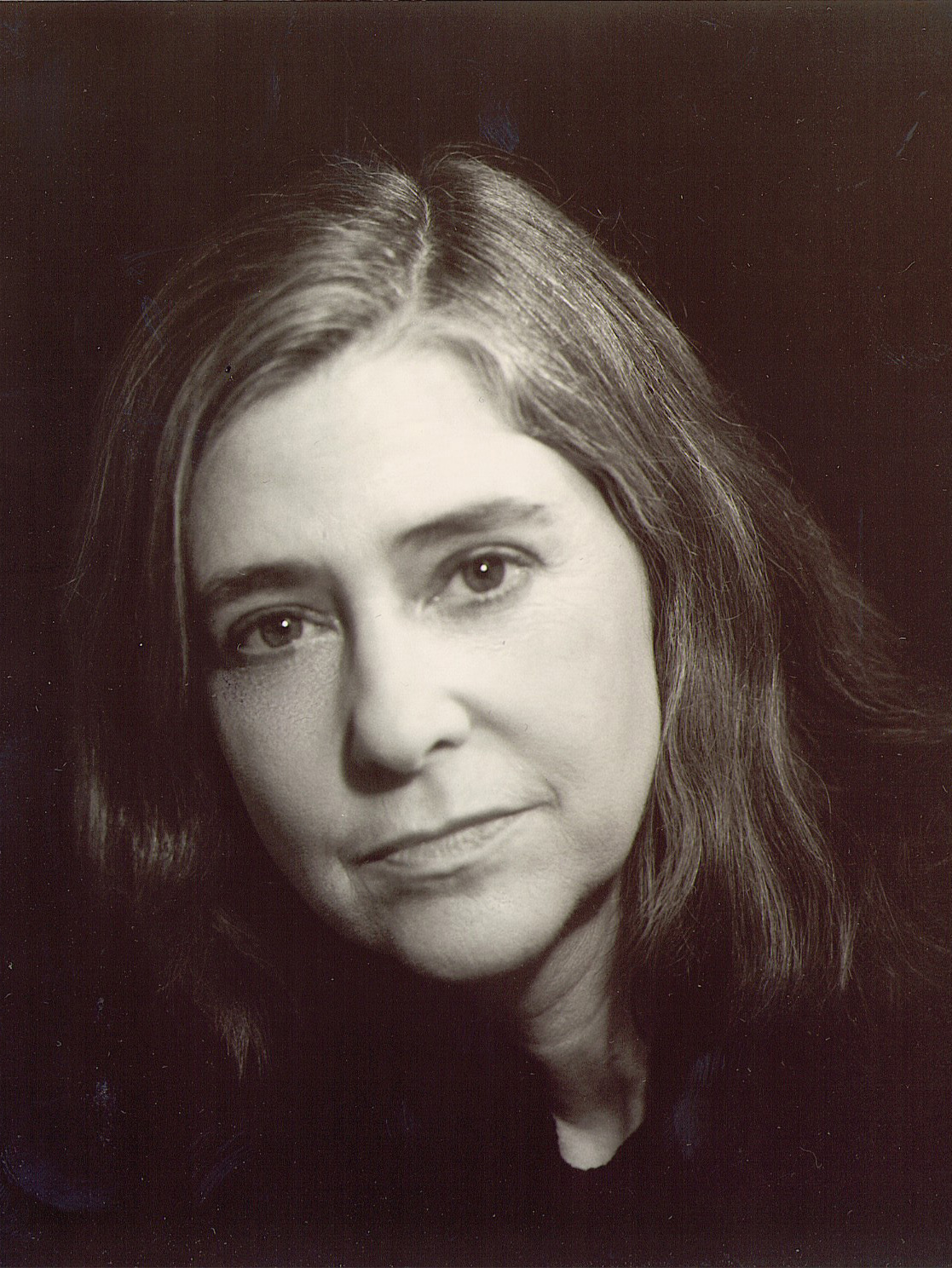
Margaret Hamilton, the pioneering computer scientist whose software helped NASA land the first humans on the moon, died September 30, 2026, at age 90. Hamilton led the team responsible for developing critical flight software for the Apollo program, establishing engineering practices that continue to influence the design of reliable computer systems.
Hamilton died at a hospital in Cambridge, Massachusetts, her daughter Lauren Hamilton confirmed to The Associated Press. Her death brought renewed attention to a career that transformed software development during one of the most ambitious technological projects in American history.
Although astronauts Neil Armstrong and Buzz Aldrin became the public faces of the first moon landing in July 1969, Hamilton and her colleagues played an essential role behind the scenes. Their software allowed the Apollo spacecraft to navigate, manage complex operations and respond to unexpected problems.
Hamilton's most famous contribution came during Apollo 11's descent to the lunar surface, when computer alarms threatened to interrupt the historic landing. The software her team developed recognized the overload and continued processing the tasks needed to land safely.
The episode demonstrated a principle Hamilton had championed for years: spacecraft software needed to anticipate problems rather than assume everything would operate exactly as planned.
From Mathematics to Early Computer Programming
Margaret Elaine Heafield was born August 17, 1936, in Paoli, Indiana. She grew up largely in Michigan's Upper Peninsula before pursuing an education in mathematics.
After studying at the University of Michigan, Hamilton attended Earlham College in Richmond, Indiana. She graduated in 1958 with a bachelor's degree in mathematics, preparing for a career at a time when computer programming was still an emerging profession.
She married fellow Earlham student James Hamilton and moved to the Boston area. In 1959, she began working at the Massachusetts Institute of Technology, where she developed software for weather prediction research.
Her early work involved meteorologist Edward Lorenz, whose research helped establish modern chaos theory. Hamilton programmed computers used to examine atmospheric conditions and the mathematical relationships involved in weather forecasting.
The experience introduced her to the challenges of developing programs for complex scientific problems. Computers were expensive, memory was limited and programmers had to work with machines far less powerful than modern consumer electronics.
Hamilton subsequently contributed to the Semi-Automatic Ground Environment, known as SAGE, a computerized air defense system. That work provided experience with real-time computing, where mistakes or delays could have serious consequences.
Her abilities eventually attracted attention at MIT's Instrumentation Laboratory, which was developing guidance and navigation technology for NASA's Apollo program. Hamilton joined the effort in the mid-1960s and became an important figure in its software organization.
Leading the Apollo Flight Software Team
NASA's Apollo program required computers capable of guiding spacecraft across hundreds of thousands of miles. Those systems also had to operate reliably despite severe limitations in memory, processing power and available electrical energy.
The Apollo Guidance Computer was developed through a collaboration involving MIT engineers, NASA and other contractors. Hamilton's responsibility centered on the onboard software that controlled and supported its operations.
She eventually became director of the Software Engineering Division at MIT's Instrumentation Laboratory. Her teams developed flight software for both the command module, which carried astronauts through much of their journey, and the lunar module, which transported crews to the moon's surface.
The programs handled navigation calculations, guidance instructions, operating procedures and other essential functions. They also helped astronauts respond to changing conditions during complicated phases of a mission.
Hamilton believed that software deserved the same engineering discipline as hardware. She promoted systematic testing, error detection and procedures designed to prevent failures from spreading through a computer system.
At a time when programming was sometimes treated as a secondary technical activity, her approach helped establish software engineering as a distinct professional discipline.
Hamilton also had to establish her authority in a workplace dominated by men. Her daughter later recalled that she often responded to discrimination with humor and quiet confidence rather than public confrontation.
Despite those obstacles, Hamilton led a team whose work became central to the success of NASA's crewed lunar missions.
The Computer Alarms That Nearly Interrupted Apollo 11
On July 20, 1969, Armstrong and Aldrin approached the moon aboard the lunar module Eagle. As the spacecraft descended, its guidance computer began displaying unfamiliar alarms, including codes 1201 and 1202.
The alarms indicated that the computer was receiving more work than it could process normally. Additional demands associated with the rendezvous radar system were consuming resources needed for other operations.
Mission controllers in Houston had to determine whether the alarms represented a dangerous failure or a condition the computer could safely manage. The astronauts were already approaching the surface with limited time and fuel.
The software developed by Hamilton's team had been designed to prioritize critical tasks. When overloaded, the computer could restart selected operations and continue the calculations necessary for guidance and landing.
Lower-priority processes could be delayed without interrupting the most important functions. That design allowed the system to continue operating despite demands that might otherwise have overwhelmed it.
NASA's historical records confirm that the priority-based software was essential to the landing's success. Flight controllers evaluated the warnings and authorized the astronauts to continue their descent.
Armstrong and Aldrin landed in the Sea of Tranquility on July 20, completing humanity's first crewed lunar landing. Armstrong later became the first person to walk on the moon, followed by Aldrin.
Hamilton was not the flight controller who made the final decision to continue. Her contribution was the engineering work that allowed the computer to recover and provided mission controllers with the information needed to make that decision.
The incident became one of the clearest demonstrations of why reliable software needed to handle unexpected conditions automatically.
A Childhood Discovery That Helped Apollo 8
Another important example of Hamilton's approach involved her young daughter Lauren, who occasionally accompanied her to MIT.
While playing with a command module simulator, Lauren accidentally activated a program intended for use before launch. The simulator was already operating as though the spacecraft were in flight, and the unexpected command caused it to crash.
Hamilton recognized that astronauts might make a similar mistake during a real mission. She proposed safeguards to prevent the incorrect program from being activated during flight.
Her suggestion was initially rejected because the astronauts were considered too well trained to make that particular error. However, the problem later appeared during Apollo 8 in December 1968.
Astronaut Jim Lovell accidentally selected the same prelaunch program, disrupting the spacecraft's stored navigation information. Hamilton and her colleagues helped develop the procedures needed to recover from the mistake.
The experience strengthened the argument for defensive programming, which anticipates possible human errors and builds protections into the software.
It also illustrated Hamilton's belief that computers should support people even when they make unexpected decisions. Designing reliable systems meant accounting for real human behavior rather than assuming perfect operation.
Recognition and Later Career
Hamilton continued working on Apollo-related software through the program's later years. Her expertise also contributed to work associated with Skylab, NASA's first space station.
After leaving MIT, she established Higher Order Software in 1976. She later founded Hamilton Technologies in 1986, continuing to develop methods intended to improve software reliability and reduce errors during system design.
Her contributions received increasing recognition as historians and computer scientists revisited the achievements of early spaceflight engineers.
In 2003, NASA presented Hamilton with its Exceptional Space Act Award for her scientific and technical contributions. The agency specifically recognized her work in priority scheduling, software testing and other methods that influenced reliable software design.
President Barack Obama awarded Hamilton the Presidential Medal of Freedom in November 2016. The honor recognized her leadership in the Apollo program and her role in advancing computer science.
She also received the National Air and Space Museum's Michael Collins Trophy for Lifetime Achievement in 2025, further recognizing her influence on aerospace technology.
Hamilton became a familiar figure to younger generations through a famous 1969 photograph showing her standing beside a towering stack of printed Apollo software. The image represented the enormous amount of programming work required to support early lunar missions.
In 2017, LEGO included Hamilton in its Women of NASA collection alongside astronomer Nancy Grace Roman, astronaut Sally Ride and astronaut Mae Jemison.
The renewed attention helped introduce her accomplishments to students who had grown up with computers but knew little about the engineers who developed the field.
A Lasting Influence on Software Engineering
Hamilton's work extended well beyond the Apollo missions. Her emphasis on rigorous testing, error recovery and assigning priorities to essential operations helped establish practices used in safety-critical computing.
Modern aircraft, spacecraft, medical devices and industrial systems rely on software that must respond predictably when unexpected conditions occur. The broader engineering principles Hamilton promoted remain important in those fields.
She also helped change perceptions of computer programming as a profession. By insisting that software required careful engineering, she contributed to its development into a field with its own methods, standards and professional responsibilities.
In its October 7 obituary, MIT credited Hamilton with authoring more than 130 publications and helping establish software engineering as a dedicated discipline.
Her daughter Lauren remembered a mathematician who loved abstract thinking, vintage clothing and humor. Although Hamilton eventually became internationally recognized, her daughter said public attention did not always come naturally to her.
Hamilton spent most of her adult life in Cambridge, where she worked, raised her family and built her software businesses.
Her achievements remain closely connected to one of NASA's defining moments. When Apollo 11's computer encountered trouble during its final descent, software designed under Hamilton's leadership kept the essential guidance calculations running and helped make the first moon landing possible.