

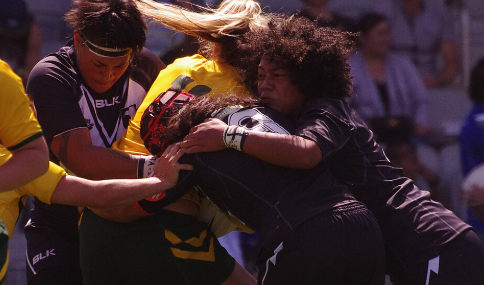
New Zealand narrowly avoided one of the biggest upsets in Women’s Rugby League World Cup history on Sunday, October 18, defeating tournament newcomers Fiji 18-12 at McDonald Jones Stadium in Newcastle, Australia. The Kiwi Ferns trailed at halftime and struggled to overcome Fiji’s determined defense before scoring the winning try with three minutes remaining.
The result gave New Zealand a winning start to its 2026 World Cup campaign, but the performance fell well short of the team's expectations. Fiji, playing in its first Women's Rugby League World Cup, produced a physical and disciplined display that repeatedly frustrated one of the competition's most successful nations.
New Zealand co-captain Georgia Hale acknowledged that her team had abandoned its intended approach and allowed Fiji to control long stretches of the contest. She described the performance as uncharacteristic and said the players needed to take responsibility for their mistakes.
Coach Ricky Henry called the match a wake-up call after watching his experienced squad struggle against opponents widely expected to lose. Although the Kiwi Ferns eventually found a way to win, their difficulties exposed areas requiring improvement before the tournament's knockout stages.
Fiji Stuns New Zealand With First-Half Fightback
New Zealand appeared headed for a comfortable victory when winger Stacey Waaka scored in the second minute. A sweeping attacking movement created space on the outside, allowing Waaka to cross for the opening try and give the Kiwi Ferns a 4-0 advantage.
The early score suggested New Zealand might quickly overwhelm Fiji, but the Bulikula responded with aggressive defense and increasingly confident attacking play. Rather than retreating after conceding, Fiji began winning territory and forcing the Kiwi Ferns into mistakes.
Fiji's first historic World Cup try came after 21 minutes. Captain Sereana Naitokatoka created an opening from dummy half, setting up Losana Lutu to cross the line and bring Fiji level.
The successful conversion gave Fiji a 6-4 lead, transforming the opening match into a genuine contest.
Five minutes later, Sienna Laing extended Fiji's advantage with another try. The conversion pushed the score to 12-4, placing New Zealand under pressure after a promising start.
The two tries demonstrated Fiji's ability to capitalize on defensive openings while maintaining the physical intensity needed to challenge a more experienced team.
New Zealand responded shortly before halftime when Waaka crossed for her second try. The score reduced Fiji's advantage to 12-10, but the Kiwi Ferns still entered the break trailing.
According to BBC Sport, it was the first time New Zealand had been behind at halftime in a Women's Rugby League World Cup match.
That statistic illustrated the scale of Fiji's performance. The newcomers had taken control against a nation that had reached every previous Women's World Cup final.
Defensive Resistance Keeps Fiji Ahead
Fiji maintained its advantage during much of the second half by repeatedly stopping New Zealand near the try line. The Kiwi Ferns enjoyed periods of attacking pressure but struggled to convert possession into points.
The Bulikula defended their territory with determination, forcing New Zealand to work through repeated attacking sets without finding an easy route to the line.
Fiji's ability to resist pressure became one of the defining features of the match. Its players combined physical tackling with quick defensive adjustments, frustrating New Zealand's attempts to create scoring opportunities.
The Kiwi Ferns also contributed to their difficulties through penalties, errors and inconsistent execution. Those problems prevented them from maintaining the attacking rhythm expected of a team with considerable international experience.
New Zealand eventually drew level when five-eighth Zahara Temara converted a penalty goal. The kick brought the score to 12-12 after Fiji had held its lead deep into the second half.
Temara later added another penalty goal, putting the Kiwi Ferns ahead 14-12. However, the narrow advantage did not provide much security against a Fiji side that had already demonstrated its attacking ability.
With New Zealand still struggling to establish control, the outcome remained uncertain until the closing minutes.
Halfback Raecene McGregor finally created the decisive opening with a carefully placed kick toward the corner. Winger Leianne Tufuga chased the ball, gathered it and scored with approximately three minutes remaining.
The try extended New Zealand's lead to 18-12 and ended Fiji's hopes of completing a historic upset.
Fiji had pushed the three-time world champions to the final stages of the match, but New Zealand's experience helped secure the result.
Georgia Hale Admits New Zealand Lost Its Way
Hale was particularly candid about New Zealand's disappointing performance. The co-captain said Fiji had played with determination and without appearing intimidated by the occasion.
"They were relentless, they kept coming, they played like they had nothing to lose," Hale said after the match.
She acknowledged that New Zealand had concentrated heavily on its own preparation and had not fully anticipated the challenge Fiji would present.
The Kiwi Ferns had planned to establish control through strong forward play, disciplined execution and direct attacking movements. Instead, the team repeatedly moved away from those priorities.
Hale said players sometimes attempted to compensate for teammates rather than focusing on their individual responsibilities. That approach contributed to disorder and reduced the team's overall effectiveness.
She also expressed disappointment with the lack of discipline and consistency. The performance did not reflect the standards New Zealand had established during its preparation for the tournament.
Her comments suggested the team understood that a narrow victory would not be sufficient against stronger opponents later in the competition.
New Zealand had entered the World Cup with ambitions of challenging Australia for the championship. Sunday's display raised questions about whether the Kiwi Ferns could maintain the structure needed to compete against the tournament favorites.
Still, Hale recognized that the team had managed to recover from a difficult position. The victory kept New Zealand's campaign on track, even if the performance offered little reassurance.
Coach Ricky Henry Calls Result a Wake-Up Call
Henry echoed his captain's concerns, describing the performance as a warning about the level of competition at the World Cup.
The coach acknowledged that New Zealand had struggled to control possession and territory. Fiji repeatedly forced his players to defend, increasing fatigue and reducing their opportunities to attack.
Henry estimated that his team had made approximately 50 more tackles than Fiji during the match. That additional defensive workload contributed to the Kiwi Ferns' difficulties as the contest progressed.
He also praised Fiji's determination and the quality of its players, many of whom have experience in Australia's National Rugby League Women's competition.
Although Fiji was making its World Cup debut, Henry said the team possessed enough talent and attacking creativity to challenge established international opponents.
He rejected the idea that New Zealand could simply blame its problems on early-tournament rustiness. The coach said the squad needed to address mistakes and return to its intended playing style.
Henry nevertheless took encouragement from the result. His players had remained competitive despite struggling for long periods and eventually produced the decisive score when the match was still in doubt.
That ability to recover could become valuable later in the tournament, particularly against opponents capable of maintaining pressure throughout an entire match.
Fiji Makes a Statement in World Cup Debut
For Fiji, the defeat represented a missed opportunity but also an important milestone for women's rugby league in the country.
The Bulikula entered the tournament without the extensive World Cup history enjoyed by New Zealand and Australia. Their opening performance nevertheless demonstrated that they could compete against an established international power.
Coach Jone Wesele praised his players for their effort and determination. He said the team had arrived at the tournament intending to compete rather than simply participate.
The performance was especially significant because New Zealand has historically dominated many of its opponents in World Cup group matches.
Fiji's willingness to attack, combined with its disciplined goal-line defense, gave the contest an intensity that few observers had anticipated.
Lutu and Laing will be remembered as Fiji's first Women's Rugby League World Cup try scorers. Their contributions helped produce a competitive debut against one of the sport's leading teams.
The performance also reflected the growth of women's rugby league across the Pacific region. More players are gaining opportunities to compete professionally, providing developing national teams with greater experience and confidence.
Although Fiji earned no competition points from the match, its showing could provide encouragement ahead of its remaining group fixtures.
The Bulikula will next face Papua New Guinea in Port Moresby, where another demanding contest awaits.
New Zealand Turns Attention to France
The Kiwi Ferns will return home for their next Group B match against France in Christchurch on Sunday, October 25.
France enters that contest following a heavy 58-4 defeat against Papua New Guinea. Despite that result, Henry said his team would prepare carefully rather than assume its next opponent would be easier to defeat.
New Zealand's long-term ambition remains winning a fourth Women's Rugby League World Cup title. The Kiwi Ferns captured the first three tournaments but finished runners-up to Australia in the following three editions.
Australia remains the defending champion and a leading contender for the 2026 title. A potential meeting with the Jillaroos later in the tournament would present a demanding test for New Zealand.
Before then, the Kiwi Ferns must improve their discipline, ball control and ability to maintain territory against determined opposition.
Sunday's victory ensured that New Zealand avoided an embarrassing opening defeat, but Fiji showed how quickly an established favorite can be pushed into difficulty.
The next match against France will offer New Zealand an opportunity to demonstrate that it has learned from the scare in Newcastle.