

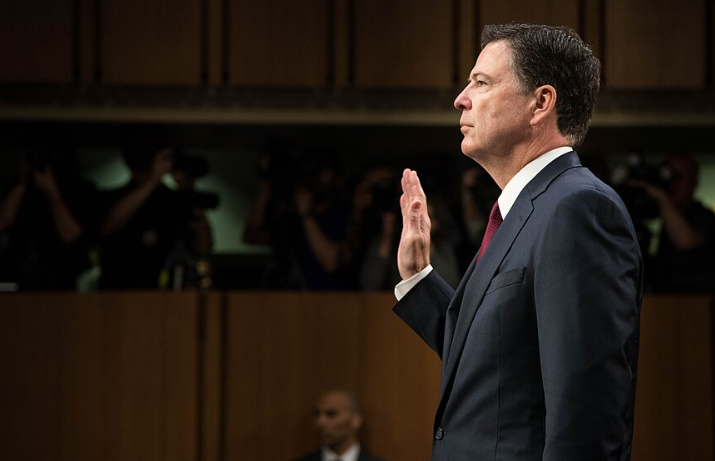
The U.S. Department of Justice has filed new criminal charges against former FBI Director James Comey, accusing him of unlawfully transmitting national defense information and conspiring to disclose sensitive government material. The allegations concern events in October 2016, when Comey was serving as FBI director, and became public on Monday, October 26, 2026.
The case represents the third criminal prosecution attempt involving Comey under President Donald Trump's administration. Unlike his previous cases, however, the latest charges were filed through a document known as a criminal information rather than an indictment approved by a federal grand jury.
Prosecutors Allege National Defense Information Was Disclosed
Federal prosecutors accuse Comey of knowingly and unlawfully sharing information related to national defense with someone who was not authorized to receive it. The charges also allege that he conspired with other individuals to disclose the information.
According to court documents, the alleged disclosure occurred around October 5, 2016. Prosecutors claim Comey directed another person to communicate sensitive government information to a reporter at a national news organization.
Reuters reported that the allegations involve information allegedly provided to a reporter from The New York Times. The prosecution centers on whether Comey unlawfully authorized the disclosure of protected information while leading the FBI.
The filing includes two counts involving the transmission of national defense information and conspiracy to transmit that information. Both concern alleged violations of federal law governing the protection of sensitive national security material.
The allegations remain unproven, and the available court documents do not establish that Comey personally provided classified records to a journalist. Prosecutors must prove the required elements of any criminal charges before a conviction can occur.
Justice Department Uses Unusual Filing Procedure
One of the most significant features of the new case is the method prosecutors used to bring the charges. Rather than obtaining a grand jury indictment, the Justice Department filed a criminal information in the U.S. District Court for the District of Columbia.
The document was filed under seal on October 5, 2026, exactly 10 years after the date associated with the alleged disclosure. The charges became public on October 26 after proceedings concerning the sealed case.
A criminal information is a formal accusation filed by a prosecutor without grand jury approval. Although this procedure is available in federal criminal cases, felony prosecutions generally require a grand jury indictment unless the defendant waives that constitutional protection.
Comey has not waived his right to a grand jury indictment, according to reporting on the case. That distinction is central to a legal dispute over whether the Justice Department's filing is sufficient to preserve its ability to prosecute him.
A Justice Department spokesperson said prosecutors submitted the information to prevent the applicable statute of limitations from expiring. The department maintains that using this procedure to preserve charges before a deadline is an accepted practice under federal law.
The department also described the matter as an ongoing criminal investigation and declined to discuss additional details. Prosecutors have indicated that they are still seeking to present the case to a grand jury.
Comey Denies Allegations and Challenges Prosecution
Comey has rejected the new accusations and says he intends to contest the charges in court. In a video posted Monday, he criticized the Justice Department's actions and reaffirmed his belief that he had committed no crime.
The former FBI director described the new prosecution as an "appalling abuse of the Department of Justice." He also said he remained confident in the independence of the federal judiciary and would continue defending himself.
Comey's attorney, Patrick Fitzgerald, issued a separate statement maintaining his client's innocence. Fitzgerald said Comey steadfastly denies wrongdoing and intends to challenge the prosecution.
His legal team had already sought dismissal while the case remained under seal. The defense argues that prosecutors cannot bypass the statutory deadline for obtaining a grand jury indictment by filing a criminal information without Comey's consent.
That dispute could become an important early issue in the case. A judge may need to decide whether the government's filing legally preserves the charges and whether prosecutors can continue pursuing a grand jury indictment.
The court's interpretation could affect whether the case proceeds toward trial. Even if prosecutors obtain an indictment, Comey would retain the right to contest the allegations and challenge the evidence presented against him.
Previous Case Dismissed Over Prosecutor Appointment
The latest action follows an earlier criminal case filed against Comey in September 2025. That prosecution accused him of making false statements and obstructing a congressional proceeding connected to his September 30, 2020, testimony before the Senate Judiciary Committee.
The earlier charges concerned questions about FBI investigations and communications with journalists. Comey denied wrongdoing and challenged the prosecution on several legal grounds.
On November 24, 2025, a federal judge dismissed the indictment after determining that the prosecutor who obtained it had been unlawfully appointed. The ruling concerned the authority of Lindsey Halligan, who had been appointed interim U.S. attorney for the Eastern District of Virginia.
The judge found that Halligan lacked the legal authority to bring the case before the grand jury. As a result, the indictment was dismissed without prejudice, meaning the ruling did not necessarily prevent prosecutors from seeking new charges through a lawful process.
The dismissal did not establish whether Comey's statements to Congress were truthful or false. Instead, the court resolved the matter on the separate question of whether the prosecutor had been legally authorized to act.
The Justice Department has challenged that ruling through the appeals process. The current national security case concerns different allegations and is proceeding in a different federal judicial district.
Separate Criminal Case Involves Social Media Post
Comey also faces a separate prosecution related to a social media post he published in May 2025. The image showed seashells arranged to form the numbers "86 47," which prosecutors interpreted as a threat against President Trump.
A federal grand jury in North Carolina indicted Comey in April 2026 on charges involving threats against the president and the transmission of a threatening communication. Comey has denied that the post was intended as a threat.
The former FBI director previously explained that he removed the photograph after learning some people interpreted the numbers as a call for violence. He has maintained that he opposes political violence.
The North Carolina case remains separate from the allegations involving national defense information. Each prosecution involves different conduct, legal requirements and evidence that must be evaluated independently.
The combination of the three cases has attracted substantial attention because of Comey's history with Trump. Their relationship deteriorated during investigations surrounding the 2016 presidential election and the first months of Trump's presidency.
Longstanding Dispute Between Comey and Trump
Comey served as FBI director from September 2013 until May 2017, when Trump dismissed him during his first presidential term. Before his removal, the FBI had been investigating Russian interference in the 2016 election and contacts between Russian officials and individuals associated with Trump's campaign.
The dismissal triggered political controversy and became part of the events leading to the appointment of special counsel Robert Mueller. Comey later testified publicly about his interactions with Trump and published a book describing his experience in federal law enforcement.
Trump has repeatedly criticized Comey's leadership and accused him of misconduct. Comey, in turn, has publicly questioned Trump's approach to the Justice Department and the independence of federal law enforcement.
Critics of the latest prosecution argue that the repeated attempts to charge Comey raise concerns about political retaliation. The Justice Department maintains that it is pursuing allegations of criminal conduct under federal law.
Those competing claims do not determine the outcome of the proceedings. The central legal questions concern the evidence supporting the accusations, whether prosecutors followed the required procedures and whether the government can establish criminal liability.
Legal Questions Remain Before Any Trial
The new prosecution is still at an early stage despite the alleged conduct dating back a decade. Prosecutors have not obtained a grand jury indictment in the national defense information case, and Comey's lawyers are challenging the filing itself.
The dispute over the statute of limitations may prove particularly important because the alleged disclosure occurred in October 2016. The government argues that its October 5 filing preserved the charges, while the defense maintains that the procedure was legally insufficient.
A federal judge must determine how the case can proceed under the applicable criminal rules and constitutional protections. The court has not established a trial schedule for the newly disclosed allegations.
Comey remains presumed innocent unless proven guilty in court. The immediate question is whether the Justice Department can overcome the defense's procedural objections and obtain a legally sufficient charging document before the case can advance toward trial.