

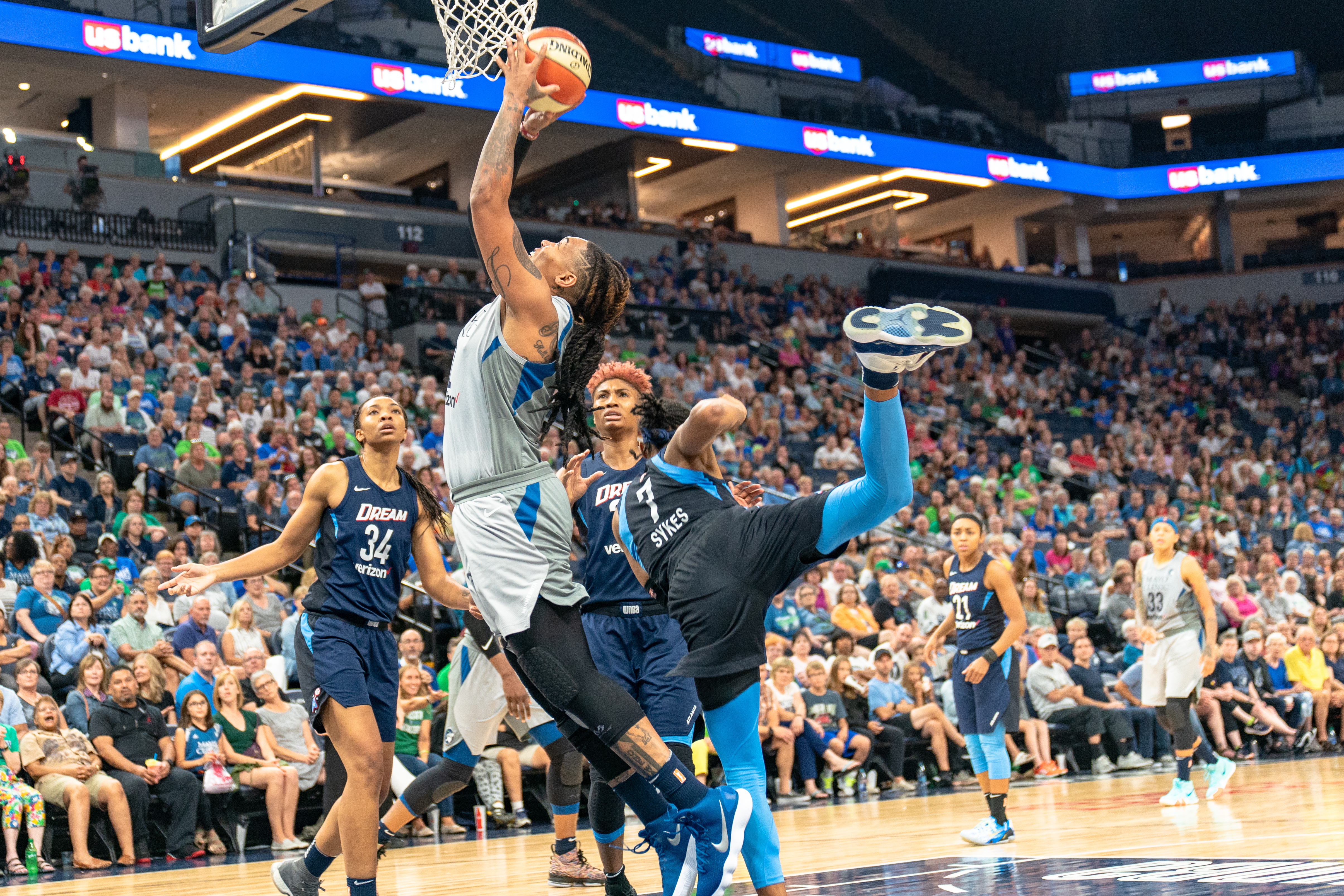
The Atlanta Dream defeated the Golden State Valkyries 80-69 on Thursday, October 29, forcing a deciding Game 7 in the 2026 WNBA Finals. Allisha Gray scored 23 points and Rhyne Howard added 21 as Atlanta built a commanding first-half lead before holding off Golden State's late comeback attempt at State Farm Arena.
The victory tied the best-of-seven championship series at three games apiece and kept Atlanta's hopes of winning its first WNBA title alive. The teams will meet again Saturday, October 31, at Chase Center in San Francisco, where one franchise will claim its first league championship.
Atlanta Takes Control With Explosive First Quarter
Facing elimination after consecutive losses in Games 4 and 5, Atlanta produced one of its strongest offensive starts of the championship series. The Dream outscored Golden State 32-15 in the opening quarter, using accurate outside shooting and aggressive defense to seize control.
Atlanta made six of its first eight three-point attempts and converted 11 of 15 field-goal attempts during the first quarter. The Dream also put together a 13-0 scoring run after Golden State briefly held a 6-5 advantage.
Jordin Canada helped establish Atlanta's momentum by hitting two three-pointers during that run. Her early contributions allowed the Dream to attack from several positions rather than relying exclusively on its leading scorers.
Howard and Gray continued the offensive pressure as the first half progressed. By halftime, Atlanta held a 46-26 advantage, giving the home team a 20-point cushion.
The defensive performance was equally important. Golden State made only nine of 34 field-goal attempts in the opening half as Atlanta limited its opportunities near the basket and challenged outside shots.
The Dream eventually extended their advantage to 25 points, their largest lead of the afternoon. Golden State struggled to recover from the early deficit despite producing a stronger offensive performance after halftime.
Allisha Gray Leads Atlanta's Offense
Gray finished with a team-high 23 points, including five three-pointers, while also contributing six rebounds. Her outside shooting proved particularly valuable whenever Golden State threatened to reduce the deficit.
Howard added 21 points, four rebounds and four assists, giving Atlanta another reliable scoring option. She connected on four three-pointers and helped maintain the Dream's offensive rhythm throughout the contest.
Angel Reese delivered an important all-around performance with 15 points, 14 rebounds and six assists. Her work on the boards gave Atlanta additional possessions and helped limit Golden State's opportunities to score following missed shots.
Reese also made a three-pointer during the second quarter, extending an unusual winning trend for the Dream. Atlanta entered the contest unbeaten in games in which Reese had made at least one three-pointer.
The three players combined for 59 of Atlanta's 80 points. Their production helped the Dream recover from the offensive difficulties that contributed to their losses earlier in the series.
Atlanta had scored just 62 points in Game 4 and 55 in Game 5. The improved shooting against Golden State demonstrated how much the team's offensive execution had changed with its season on the line.
The Dream finished Game 6 shooting 43.5% from the field. Although Atlanta committed 15 turnovers, its defense limited Golden State to 12 points from those mistakes.
Atlanta also turned 11 Golden State turnovers into 18 points, helping offset its own ball-handling difficulties. The combination of timely shooting and defensive pressure proved enough to protect the lead.
Gabby Williams Sparks Golden State Comeback Attempt
Golden State entered Game 6 needing one victory to secure the championship in just its second WNBA season. However, the Valkyries struggled to match Atlanta's energy and shooting accuracy during the opening half.
Gabby Williams led all scorers with 26 points, producing 21 of those points after halftime. Her improved second-half performance gave Golden State an opportunity to challenge Atlanta despite the substantial deficit.
Tiffany Hayes contributed 15 points as the Valkyries attempted to create more offensive opportunities. Golden State also increased its defensive pressure and forced Atlanta into several difficult possessions.
The Valkyries reduced the deficit to 63-47 by the end of the third quarter. A three-pointer from Kaila Charles helped Golden State close the period with its smallest deficit since Atlanta's early scoring run.
Golden State continued to press in the fourth quarter, reducing Atlanta's lead to 13 points at 68-55. Gray and Reese responded with three-pointers that restored a more comfortable advantage.
The Valkyries made another late push and briefly narrowed the margin to eight points. Williams played a central role in the comeback attempt, attacking the basket and finding scoring opportunities as Atlanta tried to slow the game.
Gray answered with another important three-pointer in the final minute, ending Golden State's hopes of completing the comeback. Atlanta maintained control through the closing possessions to secure the 11-point victory.
Golden State finished the game shooting approximately 31% from the field. Its slow start proved too costly, despite the improvement in offensive production during the second half.
Sold-Out Crowd Supports Atlanta During Unusual Tipoff
Game 6 attracted a sellout crowd of approximately 17,000 spectators despite beginning at 12:30 p.m. Eastern Time on a Thursday. The unusual scheduling had drawn criticism because many fans faced work and school commitments during the afternoon.
The WNBA originally scheduled the game for 8 p.m. Eastern Time. However, a conflict involving the Atlanta Hawks' home game against the Cleveland Cavaliers led the league to move the Finals matchup to an earlier time.
The game remained at State Farm Arena, a larger venue than the Dream's regular-season home. The Hawks adjusted their own schedule to accommodate the championship contest.
The WNBA announced the revised start time on October 26, only three days before Game 6. Officials said the arrangement would allow fans to continue attending the Finals at the downtown Atlanta arena.
Despite concerns over the scheduling change, the crowd provided strong support throughout the contest. Fans repeatedly cheered Atlanta's defensive stops and celebrated the team's early offensive surge.
Reese credited the supporters for attending despite the afternoon start. She also said the players had regained their confidence after two disappointing performances.
Dream head coach Karl Smesko welcomed the victory while emphasizing that the team still had another game to win. His players now face the challenge of delivering a similar performance away from home.
First Game 7 in WNBA Finals History
Saturday's matchup will mark the first Game 7 in WNBA Finals history. The league introduced its best-of-seven championship format in 2025, replacing the previous best-of-five system.
Under the expanded format, a team must win four games to claim the title. Atlanta's victory on Thursday ensured that the championship would require all seven games for the first time.
The series has featured several shifts in momentum. Golden State won the opener 68-64 before Atlanta responded with victories in Games 2 and 3.
The Dream appeared to have established control following a commanding 97-71 victory in Game 3. However, Golden State answered by winning Game 4 in Atlanta and Game 5 in San Francisco.
Those victories gave the Valkyries a 3-2 series lead and an opportunity to finish the championship Thursday. Atlanta's Game 6 performance prevented that outcome and sent the series back to California.
Both teams are pursuing their first WNBA championship, although their histories are considerably different. The Dream entered the league in 2008 and previously reached the Finals in 2010, 2011 and 2013 without winning the title.
Golden State began play as an expansion franchise in 2025. Reaching the Finals in its second season represents a rapid rise for a team still establishing its identity.
The Valkyries will have home-court advantage for the deciding game, having earned the higher playoff seed. However, Atlanta has already demonstrated that it can win at Chase Center, taking Game 2 there earlier in the series.
Championship Decider Set for Halloween
Game 7 is scheduled to begin at 8 p.m. Eastern Time, or 5 p.m. Pacific Time, on Saturday, October 31. The contest will be played at Chase Center and televised on USA Network and CNBC, with streaming available through Peacock.
Golden State will attempt to recover from Thursday's defeat and capitalize on its home crowd. The Valkyries will also need improved shooting after struggling throughout much of Game 6.
Atlanta will look to maintain the balanced scoring that powered its victory. Gray, Howard and Reese have demonstrated that they can provide different offensive strengths when the Dream are playing effectively.
The championship will be decided by a single game after six contests split evenly between the two teams. Saturday's winner will lift the WNBA trophy for the first time in franchise history.