

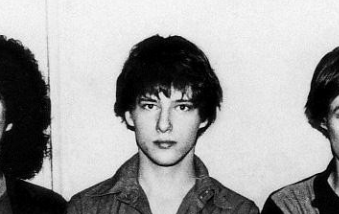
Richard Lloyd, the founding guitarist of the influential New York rock band Television, died Saturday, November 7, 2026, at his home in Chattanooga, Tennessee. He was 75. Lloyd had been battling cholangiocarcinoma, a rare form of bile duct cancer diagnosed earlier this year.
His family confirmed that Lloyd died Saturday morning with his wife, Sheila, and their dog, Willie Mays, beside him. His death ended a musical career spanning more than five decades, during which he helped redefine electric guitar playing in punk and alternative rock.
Lloyd was best known for his work alongside singer and guitarist Tom Verlaine in Television, one of the defining bands of New York City's 1970s music scene. Their intricate guitar arrangements distinguished Television from other early punk groups and helped establish the sound of the band's landmark 1977 album, Marquee Moon.
A message posted on Television's social media account confirmed Lloyd's passing and offered condolences to his family. The band expressed sadness over his death and extended its sympathies to Sheila and his friends.
Cancer Diagnosis and Final Months
Lloyd was diagnosed with cholangiocarcinoma in March 2026. The disease develops in the bile ducts, which transport bile from the liver and gallbladder to the small intestine.
His illness became public in August when friends organized a fundraising campaign to help cover medical expenses and household costs. Reports at the time indicated that cancer had spread to his liver and that surgery was not considered a safe treatment option.
The campaign also described the financial difficulties Lloyd and his wife faced during his illness. With touring providing much of his income, his declining health limited his ability to perform and earn money.
According to Rolling Stone, Lloyd spent his final months receiving treatment while remaining at his Chattanooga home. His family announced his death on November 7, prompting tributes from musicians and fans who had followed his career for decades.
From Pittsburgh to New York's Punk Scene
Richard Lloyd was born October 25, 1951, in Pittsburgh, Pennsylvania. His family moved to New York City when he was a child, and he grew up in Greenwich Village during a period of major cultural change.
He initially studied drums before developing an interest in the electric guitar. One of his early musical influences was guitarist Velvert Turner, who claimed to have studied under Jimi Hendrix. The exact nature of Turner's relationship with Hendrix has remained disputed, but Lloyd frequently discussed the experience as part of his musical education.
After spending time in Boston and Los Angeles, Lloyd returned to New York in 1973. He met Tom Verlaine, and the two musicians discovered that their different approaches to guitar could produce a distinctive sound.
They formed Television with bassist Richard Hell and drummer Billy Ficca. The group soon became a regular performer at CBGB, the Lower Manhattan club that would become closely associated with the emergence of American punk rock.
Television was among the earliest groups to perform at CBGB before the venue became internationally famous. The club subsequently provided an important stage for artists including the Ramones, Blondie, Patti Smith and Talking Heads.
Lloyd later claimed that he played an important role in bringing Television to CBGB and helping establish its reputation. His account reflected the band's position in the early development of New York's punk scene, although the club's history involved numerous musicians, promoters and performers.
How Marquee Moon Changed Guitar Rock
Television released its debut album, Marquee Moon, in February 1977 through Elektra Records. By then, bassist Fred Smith had replaced Richard Hell, establishing the lineup that recorded the band's best-known music.
The album stood apart from much of the punk music emerging at the time. While many contemporary groups favored short songs and simple chord progressions, Television developed longer arrangements built around precision, improvisation and the interaction between two lead guitars.
Lloyd and Verlaine often played different melodic lines that complemented one another rather than following conventional lead and rhythm guitar roles. Their playing combined the urgency of punk with elements of jazz, psychedelic rock and experimental music.
The album's title track, which runs for more than 10 minutes, became a defining example of the band's approach. Its extended instrumental passages and interlocking guitar parts demonstrated how much musical complexity could exist within the emerging punk movement.
Although Marquee Moon was not a major commercial success in the United States, its reputation grew steadily over the following decades. Rolling Stone ranked the record at No. 107 on its 2023 list of the 500 greatest albums of all time.
Television followed the debut with Adventure in 1978 before breaking up later that year. The group reunited in the early 1990s and released a self-titled third studio album in 1992.
Solo Albums and Musical Collaborations
Lloyd launched his solo recording career with Alchemy in 1979. The album allowed him to develop his own songwriting and guitar style outside the musical partnership that had defined Television.
His career was interrupted by struggles with substance abuse, which he later discussed openly. After becoming sober in 1984, he returned to recording and released Field of Fire in the mid-1980s.
He continued producing solo music and collaborating with other performers throughout the following decades. His work included contributions to Matthew Sweet's acclaimed 1991 album Girlfriend, which brought his guitar playing to another generation of alternative rock listeners.
Lloyd also collaborated with John Doe of the punk band X and performed with Rocket From the Tombs. His extensive musical activities included live performances, studio recordings and guitar instruction.
Television reunited for performances during the 2000s, but Lloyd departed in 2007 to concentrate on his solo career. His final solo studio album, The Countdown, arrived in 2018.
He also documented his experiences in the memoir Everything Is Combustible: Television, CBGB's and Five Decades of Rock and Roll, published in 2017. The book explored his early life, the formation of Television and his experiences in the music industry.
Musicians Remember an Influential Guitarist
Following the announcement of Lloyd's death, musicians began sharing tributes acknowledging his influence on rock music. Former Smiths guitarist Johnny Marr described him as a musical inspiration and expressed gratitude for having known him.
Singer-songwriter Lloyd Cole also remembered Television's music, specifically highlighting the guitar riffs Lloyd contributed to the band's performances. The tributes reflected his reputation among musicians who admired both his technical ability and distinctive approach to songwriting.
Television's influence extended well beyond the original New York punk scene. Groups including Sonic Youth, Pixies and Gang of Four drew inspiration from the musical possibilities demonstrated by the band's recordings.
Lloyd's longtime musical partner Tom Verlaine died in January 2023 at age 73. Their partnership remains central to Television's history, particularly the unusual balance between their individual guitar styles.
Bassist Fred Smith also died in February 2026, making Lloyd the third member of Television's classic Marquee Moon lineup to die in recent years. Drummer Billy Ficca is the surviving member of that quartet.
Lloyd continued teaching guitar and discussing his musical methods long after his most commercially visible years. His recordings with Television and his solo catalog remain lasting examples of an approach that brought sophisticated guitar arrangements into the raw energy of punk rock.