

A nationwide ground stop ordered by the Federal Aviation Administration on Friday, November 13, 2026, left thousands of airline passengers stranded and disrupted travel plans across the United States. Among those affected was Morgane Richardson, who was returning home to Albany, New York, with her wife and three children after a trip to Puerto Rico. Their connecting flight was canceled in Orlando, leaving the family facing nearly three additional days away from home and potentially thousands of dollars in unexpected expenses.
The ground stop lasted approximately four hours after communication problems affected multiple air traffic control centers. Although the FAA eventually lifted the restrictions, airlines continued struggling with canceled flights, displaced aircraft and disrupted schedules. For Richardson's family, the consequences extended far beyond the temporary suspension of departures.
Family Stranded During Journey Home
Richardson had traveled to Puerto Rico for a work conference and brought her wife and three children along. The family included three-year-old twins and an eight-year-old, making their journey more complicated than a typical business trip. They were flying through Orlando before taking a connecting flight to Albany.
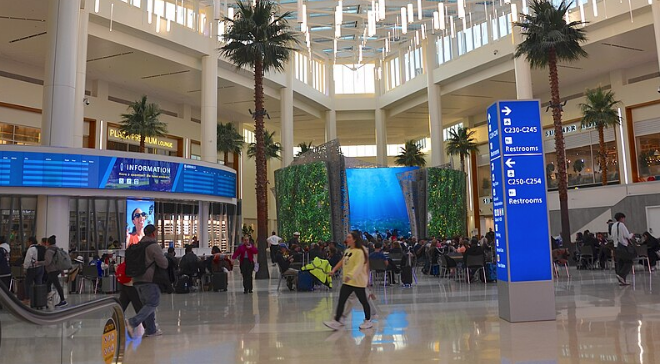
The family was already airborne when news of the nationwide ground stop reached their flight. Their aircraft landed safely in Orlando around 7 p.m., but passengers were informed that their connecting flights had been canceled or disrupted. Richardson described encountering crowded airport terminals and lengthy lines of travelers seeking assistance.
In an account published by Business Insider on November 14, Richardson described the family's experience navigating the disruption. She said she waited about an hour to speak with an airline representative while her wife looked after their children. The family initially believed they could still depart later that night.
According to Richardson, a customer service representative told her that the connecting flight was expected to leave at approximately 1 a.m. Rather than searching immediately for accommodation, the family remained inside the airport. That decision became increasingly difficult as the children grew tired and the terminal's businesses began closing.
Children Spend Hours Waiting at Airport
Richardson said the family's three children struggled with exhaustion while waiting for updates about their flight. One child managed to fall asleep in a stroller, but the others remained awake until approximately 10 p.m. The children eventually rested on the airport floor without access to their usual bedtime comforts.
The family reported receiving no complimentary snacks or blankets from the airline during the prolonged wait. Richardson said the cold terminal made the situation especially uncomfortable for the children. Although they had purchased dinner before airport restaurants closed, they were unable to obtain everything the children normally needed.
One of the younger children was accustomed to drinking warm milk before bedtime. By the time the family needed it, airport vendors had already shut their doors. The disruption added another challenge to an evening that had already become stressful.
After nearly six hours in the terminal, the family learned shortly before 1 a.m. that their flight would not depart. The cancellation meant they needed somewhere to sleep, but finding an available hotel room was difficult. Thousands of other travelers were also searching for accommodation following the nationwide disruption.
Missing Luggage Creates Additional Problems
The family encountered another difficulty when attempting to retrieve their checked luggage. Their carry-on bags contained only one change of clothes, leaving them poorly equipped for an extended delay. With three young children, access to additional clothing and other personal supplies was particularly important.
Richardson said a Southwest Airlines employee responded angrily when she asked about retrieving their belongings. She also questioned how families were expected to manage without essential items such as diapers or infant formula. These descriptions reflect Richardson's personal account and have not been independently confirmed by the airline.
Eventually, a baggage handler helped locate the family's checked bags among the luggage left at the airport. Richardson said the employee spent approximately an hour searching for their belongings. The assistance allowed the family to recover necessary supplies before leaving the terminal.
They finally found a hotel willing to accommodate them for a 4 a.m. check-in. By then, the children and adults had spent much of the night dealing with canceled travel arrangements. Their overnight ordeal illustrated how quickly a temporary aviation shutdown could develop into a much longer disruption.
Rebooking Could Delay Return Until Monday
The family's next major challenge was securing replacement flights to Albany. Richardson said Southwest's earliest available itinerary departed Orlando at approximately 9 p.m. Sunday, November 15. That arrangement also included a seven-hour layover in Baltimore before the family could complete its journey.
Under the replacement itinerary, the family expected to arrive home close to midnight on Monday, November 16. That would put their return almost three days behind the original schedule. As of Richardson's November 14 account, the family was still contacting Southwest to see whether earlier travel arrangements could be secured.
Driving home was not a practical alternative. Richardson said rental vehicles were unavailable when the family began considering other transportation options. The drive from Orlando to Albany would also take approximately 18 hours, an especially difficult journey with three young children.
The family's situation illustrates how airline disruptions can continue long after an FAA ground stop has ended. Once aircraft and crews are displaced, airlines must reorganize schedules while accommodating passengers from multiple canceled flights. Available seats can become scarce, particularly when disruptions affect airports nationwide.
Unexpected Costs Could Reach Thousands
Richardson estimated that the cancellation could cost her family thousands of dollars. Their hotel accommodation was approximately $300 per night, creating a substantial expense if they remained in Orlando until Sunday. Meals and other daily necessities would add to the total.
The unexpected stay also affected the family's employment income. Richardson explained that her wife works as an acupuncturist and would miss several days of scheduled appointments. That lost income could increase the financial consequences beyond their immediate travel expenses.
Richardson also considered finding activities to keep the children occupied while they waited for replacement flights. However, sightseeing or other outings would create additional expenses. The family had originally expected to return home rather than extend its stay in Florida.
The amount Richardson expected to lose was an estimate rather than a verified final expense. The family had not yet completed its journey when her account was published. Any reimbursements, refunds or additional assistance from Southwest could affect the eventual financial impact.
FAA Identifies Communications Problems Behind Shutdown
The FAA ordered the nationwide ground stop after communications problems affected several Air Route Traffic Control Centers on November 13. The agency suspended departures as a safety precaution while technicians investigated the disruption. Airlines could not resume normal operations until the necessary systems were tested and considered stable.
Transportation Secretary Sean Duffy and FAA Administrator Bryan Bedford provided additional information the following day. Officials said the problem involved telecommunications equipment being upgraded as part of efforts to replace older copper connections with fiber-optic technology. A malfunction involving network routers interfered with communications and radar information used by air traffic controllers.
Duffy said investigators were examining whether a defective router or an installation problem caused the malfunction. The precise responsibility had not been established when officials addressed the incident. The transportation secretary emphasized that protecting passengers and aircraft was the reason for suspending flights.
Federal officials reported that more than 3,500 aircraft were safely brought to the ground during the emergency response. After the restrictions ended, more than 8,000 flight operations resumed that night. Nevertheless, the nationwide interruption left airlines dealing with extensive scheduling problems into the weekend.
Southwest Warns of Continuing Cancellations
Southwest Airlines acknowledged that the November 13 ground stop affected its operations across the country. The carrier said the FAA restrictions lasted approximately four hours and that flights had resumed after the order was lifted. It also warned passengers that delays and cancellations could continue as the airline worked to restore normal schedules.
The airline encouraged customers experiencing significant disruptions to review their travel options through its website or mobile application. Southwest also published a travel advisory explaining that the air traffic control outage had affected multiple airlines. The advisory did not specifically address Richardson's account of her family's treatment at the Orlando airport.
The Department of Transportation requires airlines to provide refunds in qualifying situations when flights are canceled or significantly changed and passengers decline alternative transportation. However, reimbursement for hotels, meals and other expenses can depend on the circumstances and applicable airline policies. Federal safety-related ground stops do not automatically guarantee compensation for every additional expense.
For Richardson, the immediate concern remained getting her family home safely while limiting further financial losses. Their experience demonstrated how a nationwide aviation emergency could create serious consequences for travelers even after flight restrictions were lifted. As of November 14, the family was still hoping to find an earlier flight instead of spending another two nights away from home.