

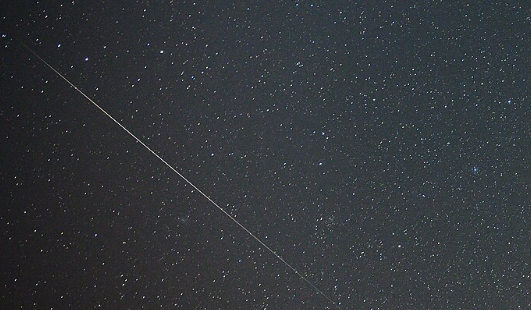
The Leonid meteor shower is approaching its annual peak, offering skywatchers an opportunity to see fast-moving meteors streak across the night sky on November 16–18, 2026. The display is expected to produce approximately 10 to 15 meteors per hour under ideal viewing conditions, with the best opportunities coming after midnight and before sunrise. Astronomers do not expect a major meteor storm this year, but observers may still catch unusually bright shooting stars.
The shower occurs each November when Earth passes through a stream of debris left by Comet 55P/Tempel-Tuttle. Tiny particles enter the atmosphere at tremendous speeds, producing flashes of light that can sometimes leave glowing trails. The display is visible across much of the world, although the number of meteors seen depends on weather, light pollution, moonlight and the observer's location.
When Will the Leonid Meteor Shower Peak?
The Leonids will be particularly active during the early morning hours of November 17 and 18. The exact maximum is predicted for late November 17 in Coordinated Universal Time, placing it during the afternoon of November 17 in the western United States. Because the shower remains active around its peak, observers can still see meteors during the surrounding nights.
NASA recommends watching before dawn on November 17 or 18, when the constellation Leo is positioned higher in the sky. The American Meteor Society identifies November 16–17 as a principal peak night, while other astronomical forecasts favor the following morning. These differences reflect how meteor activity can vary as Earth encounters different concentrations of comet debris.
The most favorable viewing period generally begins after midnight and continues until the first light of dawn. At that time, the radiant point, where the meteors appear to originate, rises higher above the horizon. Observers in the Northern Hemisphere generally have a better view of the radiant than those farther south.
Although forecasts suggest as many as 15 meteors per hour under ideal conditions, that figure is not a guarantee. Such estimates assume exceptionally dark skies, favorable radiant positioning and an unobstructed view. People watching from cities or suburban neighborhoods will probably see considerably fewer shooting stars.
Moonlight Could Affect This Year's Display
Moonlight is an important factor when observing meteor showers because it can wash out faint streaks of light. Fortunately, the Moon will reach its first-quarter phase on November 17, leaving much of the second half of the night relatively dark. This creates a useful opportunity for observers willing to stay awake until the early morning hours.
The Moon will be approximately half illuminated around the peak, making it bright enough to interfere with meteor watching while above the horizon. However, it will set around midnight in many Northern Hemisphere locations. Once it disappears, observers should have better conditions for spotting faint meteors.
Cloud cover and artificial lighting will remain significant obstacles. Streetlights, illuminated buildings and vehicle headlights can make dim meteors difficult to detect even when the Moon is absent. A rural viewing location with an open horizon offers a much better chance of seeing the shower.
People planning to watch should also allow their eyes approximately 20 to 30 minutes to adjust to darkness. Looking at a bright phone screen can interrupt that adjustment and reduce visibility. Using a dim red light, rather than a bright white flashlight, can help preserve night vision.
What Makes the Leonid Meteors So Fast?
The Leonids are among the fastest meteors regularly observed from Earth. According to NASA, particles associated with the shower enter the atmosphere at approximately 71 kilometers per second, or about 158,000 miles per hour. Their extraordinary speed helps produce the brief, brilliant streaks that characterize the display.
Most Leonid meteors originate from particles no larger than grains of sand or small pebbles. When those particles collide with atmospheric gases, they heat the surrounding air and create visible trails. The light generally appears dozens of miles above Earth's surface, far higher than commercial aircraft fly.
Occasionally, larger fragments produce especially bright meteors known as fireballs. Some Leonids also leave persistent glowing trails that remain visible briefly after the meteor itself disappears. These features make the shower attractive to photographers and amateur astronomers, even during years with relatively modest activity.
The meteors appear to radiate from the constellation Leo, which gives the shower its name. That does not mean observers must stare directly at Leo to see them. Meteors can appear across the sky, and those farther from the radiant often produce longer visible streaks.
How to Watch the Leonid Meteor Shower
Watching the Leonids requires no telescope, binoculars or specialized astronomical equipment. In fact, optical instruments can make meteor spotting more difficult because they restrict the observer's field of view. The best approach is to find a comfortable location where a large portion of the sky remains visible.
A reclining chair or blanket can make prolonged viewing easier, particularly during cold November nights. Warm clothing and a sheltered location are also useful because successful meteor watching often requires patience. Observers should plan to spend at least an hour outside rather than expecting a continuous display.
For viewers in North America, Leo generally rises in the eastern sky around midnight. Looking eastward can help locate the constellation, but watching a broad section of the darker sky is more effective than concentrating on a single point. Meteors may appear overhead or in other directions as they cross the atmosphere.
The Leonids are also visible from parts of the Southern Hemisphere, although viewing conditions can be less favorable. The radiant remains lower in the sky for many southern observers, reducing the number of meteors they can see. Local weather, latitude and the amount of surrounding light pollution will determine the best viewing opportunities.
Why the Leonids Sometimes Produce Meteor Storms
Although this year's shower is expected to be moderate, the Leonids have produced some of history's most extraordinary meteor displays. Unlike ordinary annual showers, meteor storms can send hundreds or thousands of shooting stars across the sky within a single hour. Such events occur when Earth passes through unusually dense streams of comet debris.
One of the most famous Leonid storms occurred in November 1833, when observers across eastern North America reported remarkable numbers of meteors. The display attracted widespread public attention and helped stimulate scientific interest in meteor showers. Other major Leonid storms followed in 1866 and 1966.
The 1966 event was particularly impressive, with some observers reporting thousands of meteors per minute during its most intense moments. Another series of strong displays occurred around 1999, 2001 and 2002. These events established the Leonids' reputation as a shower capable of producing extraordinary activity.
Astronomers do not expect anything comparable in 2026. Current forecasts indicate that Earth will encounter relatively sparse debris streams rather than the dense concentrations responsible for historic storms. Some models suggest minor variations in activity, but a significant outburst is not predicted.
Comet Tempel-Tuttle Is Responsible for the Shower
The source of the Leonids is Comet 55P/Tempel-Tuttle, a periodic comet that completes an orbit around the Sun approximately every 33 years. As the comet approaches the Sun, solar heating releases gas and dust from its icy surface. Some of that material spreads along its orbital path, creating debris streams that Earth encounters each November.
The comet was discovered independently by astronomers Ernst Tempel and Horace Parnell Tuttle in the 19th century. Scientists later connected its orbit with the recurring Leonid meteor shower. The relationship helped establish that many annual meteor displays originate from debris released by comets.
Tempel-Tuttle is expected to reach its next closest approach to the Sun, known as perihelion, in May 2031. However, the comet's return does not automatically guarantee a meteor storm. The intensity of a shower depends on whether Earth intersects a particularly dense trail left during an earlier passage.
The International Meteor Organization notes that major Leonid storms may remain unlikely for several decades. Stronger displays are possible around future comet returns, but predicting their exact intensity requires detailed calculations of debris streams. Astronomers continue refining those forecasts as new observations become available.
More Meteor Showers Are Coming Later This Year
The Leonids are not the final opportunity to watch a meteor shower in 2026. The Geminids, generally considered one of the year's strongest annual displays, are expected to peak in mid-December. Under excellent conditions, the Geminids can produce substantially more meteors per hour than the typical Leonid shower.
The Ursids will follow later in December, providing another opportunity for observers in the Northern Hemisphere. Both showers have different parent objects, radiant positions and expected activity levels. Their appearances illustrate how Earth regularly crosses streams of small particles distributed throughout the solar system.
For now, the Leonids offer an accessible opportunity to observe a familiar astronomical event without special equipment. Clear skies, limited artificial lighting and patience will provide the best chance of seeing bright meteors before dawn on November 17 and 18. Even a modest display can reveal the remarkable speed of particles entering Earth's atmosphere from an ancient comet's debris trail.