

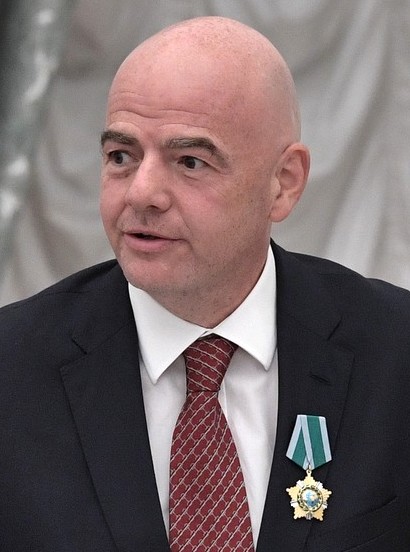
FIFA president Gianni Infantino is facing his first contested presidential election since taking office in 2016. Newly leaked documents have intensified scrutiny of his abandoned proposal to transfer World Cup commercial rights to a private investment-backed subsidiary for as long as 96 years.
Philippe Diallo of France and Kohzo Tashima of Japan are seeking to replace Infantino as president of international soccer's governing body. The election is scheduled for March 18, 2027, at the 77th FIFA Congress in Rabat, Morocco.
The leadership contest comes amid continuing disagreements over FIFA's financial strategy, transparency, and relationships with private investors.
Leaked Documents Reveal Details of $20 Billion Proposal
Documents reviewed by The Associated Press on November 24 revealed previously undisclosed details about the proposed FIFA Forward Enterprises project.
The planned subsidiary carried a valuation of $20 billion and would have managed commercial rights associated with FIFA competitions. An internal risk assessment identified a proposed arrangement lasting 96 years.
Commercial rights represent a major source of income for international soccer. They include revenue-generating opportunities associated with broadcasting, sponsorships, licensing, and tournament-related commercial activities.
The proposed arrangement would have extended across several generations of FIFA leadership. Future administrators would have inherited financial commitments negotiated by the current organization.
The project was already at an advanced stage during the weekend of the men's World Cup final on July 19, 2026. Details became public nine days later, prompting opposition from soccer officials and governing bodies.
Infantino withdrew the proposal within days of its public disclosure.
Kushner Investment Firms Were Involved in Discussions
The proposed investment attracted interest from businesses connected to the Kushner family.
FIFA initially held discussions with Affinity Partners, the investment firm founded by Jared Kushner, President Donald Trump's son-in-law. Joshua Kushner's Thrive Capital subsequently became the proposed lead investor.
Documents indicated that FIFA pursued negotiations with potential investors rather than conducting a conventional competitive bidding process. The organization cited the unusual nature of the proposed transaction when explaining its approach.
Questions about the process have become part of a broader debate over whether FIFA's financial opportunities should be negotiated privately or opened to competing investment proposals.
The arrangement was never completed, and investors did not acquire the proposed commercial interests.
Executive Compensation Raises Further Questions
The leaked materials also described potential financial incentives for executives responsible for managing the subsidiary.
A management compensation proposal outlined possible bonus payments worth tens of millions of dollars. Decisions concerning those payments would have fallen under the authority of a board chaired by the serving FIFA president.
The proposed incentives have attracted attention because of the relationship between FIFA's nonprofit structure and the planned commercial business.
FIFA defended the compensation framework as a conventional feature of comparable investment structures. The organization also stated that FIFA's existing leaders would not receive additional compensation for serving on the subsidiary's board.
The governing body emphasized that the project remained a proposal requiring approval from its member associations.
The documents describe potential compensation arrangements rather than payments that actually occurred.
FIFA Defends Financial Objectives
FIFA originally presented the investment proposal as an opportunity to increase funding for its 211 member associations.
Under the proposed financial strategy, national soccer federations could have received substantially greater development funding during future World Cup cycles. These funds support activities such as infrastructure improvements, youth development, coaching, and the expansion of women's soccer.
FIFA also maintained that it would preserve authority over sporting decisions, competition regulations, and the international match calendar.
Supporters of private investment arrangements argue that outside capital can help organizations develop new commercial opportunities and increase available funding.
Critics, however, question whether long-term financial commitments could restrict future decision-making or create conflicts between investor returns and the interests of soccer development.
The unusually long duration of the proposed arrangement has become a central issue in those discussions.
Philippe Diallo Enters Presidential Race
Diallo, who became president of the French Football Federation in 2023, has emerged as one of Infantino's two challengers.
Reuters reported that his candidacy received backing from European soccer representatives serving on UEFA's executive committee and the FIFA Council.
Diallo was among the European soccer officials who withdrew their support for Infantino following the commercial investment controversy.
UEFA has called for renewed trust and cooperation within international soccer. Its opposition to the proposed investment arrangement reflects broader disagreements about FIFA's leadership and financial decision-making.
Diallo's campaign will require support beyond Europe because FIFA's presidential election includes national associations from across the world.
Kohzo Tashima Calls for Governance Reform
Tashima, the honorary president of the Japan Football Association and a member of the FIFA Council, has also criticized the organization's leadership.
Speaking at a November 20 news conference in Japan, he emphasized fairness, integrity, and the need for institutional reform.
Tashima indicated that he would be willing to cooperate with Diallo because they share concerns about FIFA's direction. However, both men remain in the presidential race.
His candidacy comes despite the Asian Football Confederation's previously announced support for Infantino.
Tashima has argued that World Cup revenue belongs to FIFA and should be managed in the interests of the wider soccer community.
Infantino Seeks Another Term
Infantino was first elected in February 2016 following the departure of longtime FIFA president Sepp Blatter. He subsequently secured additional terms without facing an opposing candidate.
His presidency has included the expansion of the men's World Cup to 48 teams and the introduction of an expanded FIFA Club World Cup.
He has also emphasized increased development funding for national soccer associations, particularly those with fewer commercial resources.
Infantino is seeking another term that would extend his presidency through 2031. FIFA previously determined that his initial period in office did not count as a full term because he was completing Blatter's presidential mandate.
Despite criticism surrounding the abandoned investment plan, Infantino maintains that he has substantial support among FIFA's member associations.
Election Preparations Continue Ahead of March Vote
FIFA confirmed on November 19 that it had received presidential nominations for Infantino, Diallo, and Tashima.
The three nominations must undergo examination before the candidates receive final approval to participate in the election.
FIFA's member associations are expected to vote by secret ballot in Morocco. Each eligible national association has one vote, regardless of its population, financial resources, or international soccer ranking.
With the commercial investment proposal withdrawn, the immediate focus has shifted toward governance, financial oversight, and the presidential election.
FIFA's electoral authorities are scheduled to notify member associations of the approved candidates no later than February 18, 2027, one month before the presidential vote in Rabat.