

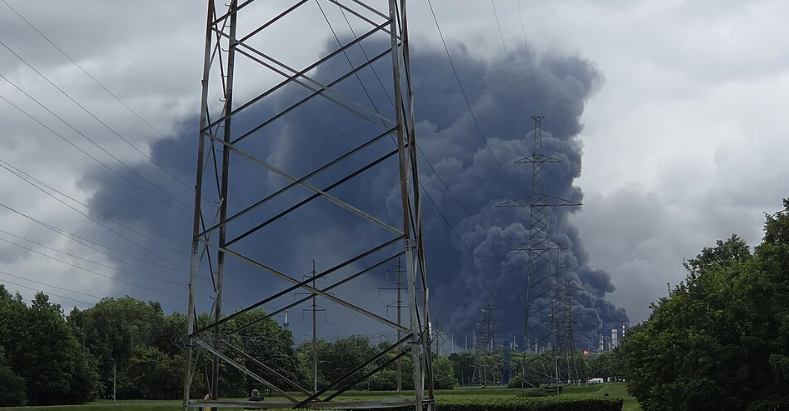
Ukraine launched another series of attacks against Russian oil refineries on Wednesday, November 25, 2026, intensifying its campaign against Russia's energy industry ahead of winter. Ukrainian military officials confirmed strikes against two major refining facilities in Russia's Samara region, where fires were reported following the attacks.
Meanwhile, Russian attacks on Ukrainian electricity and natural gas infrastructure continue to threaten essential services as temperatures fall across the country.
The escalating attacks have raised concerns about fuel supplies, electricity shortages and access to heating during the coldest months of the year.
Ukraine Targets Russian Oil Refineries
Ukraine's General Staff confirmed attacks against the Syzran and Kuibyshev oil refineries on Wednesday. Both facilities belong to Rosneft, Russia's state-controlled petroleum company.
Ukrainian military officials reported damage to infrastructure at both refineries, although the full extent of the damage remains unclear.
Reuters reported that Russian regional authorities confirmed attacks on industrial facilities in Syzran. Officials also reported that one person was killed in a separate drone strike in the regional capital of Samara.
The attacks followed Ukrainian strikes against the Afipsky and Ilsky oil refineries in Russia's Krasnodar region on November 18.
Ukraine has increasingly focused on Russian petroleum infrastructure as part of its efforts to disrupt the economic and industrial resources supporting Moscow's military operations.
Oil production and refining remain important components of Russia's economy. Petroleum exports provide government revenue, while domestic refining supports transportation, agriculture, industry and military operations.
Damage to major refineries could disrupt production and increase pressure on domestic fuel supplies. However, the long-term consequences depend on the severity of the damage and Russia's ability to restore operations.
Russia Continues Attacks on Ukrainian Energy Infrastructure
Ukraine faces a separate and potentially severe energy crisis as Russian forces continue attacking facilities responsible for supplying electricity and natural gas.
Russia has repeatedly targeted Ukraine's energy infrastructure since launching its full-scale invasion in February 2022.
These attacks have damaged power generation facilities and electricity distribution networks, leaving communities vulnerable to extended interruptions.
Winter increases the consequences of such disruptions. Electricity is necessary not only for lighting and household appliances but also for many heating systems, water pumps and telecommunications networks.
Hospitals and other essential facilities must maintain reliable electricity supplies despite damage to the national power grid.
According to Euronews, Ukrainian energy officials have accused Russia of deliberately attempting to deprive civilians of heating during winter.
Ukraine has responded to previous attacks by repairing damaged equipment, importing electricity and expanding emergency power arrangements.
However, repeated attacks can damage infrastructure faster than repair crews can restore it.
Putin Warns of Further Retaliation
Russian President Vladimir Putin addressed Ukraine's refinery attacks on Tuesday, November 24, promising further retaliation.
According to Reuters, Putin claimed that Ukraine had continued targeting Russian petroleum facilities despite requests from U.S. President Donald Trump to stop such attacks.
Ukrainian President Volodymyr Zelenskyy has defended attacks on Russian energy infrastructure as a response to Moscow's continuing military campaign.
The opposing statements reflect the continuing disagreement over attacks on energy facilities and their role in the war.
International humanitarian law requires parties to distinguish between military objectives and civilian infrastructure. It also requires precautions to minimize civilian harm.
The legality of an individual attack depends on its circumstances, including the military purpose of the target and the anticipated consequences for civilians.
As winter approaches, damage to infrastructure serving civilian populations remains a particularly serious humanitarian concern.
Poland Considers New Border Airspace Restrictions
The escalating conflict has also increased security concerns in neighboring Poland, a member of the North Atlantic Treaty Organization.
Polish Deputy Defense Minister Cezary Tomczyk said Wednesday that the government is preparing new airspace restrictions along its eastern border.
The proposed measures could take effect in late December or early January 2027.
Polish officials described the restrictions as part of an effort to improve the country's response to unauthorized aircraft entering its airspace.
The proposal follows reported incidents involving Russian missiles and drones entering Polish territory during attacks against Ukraine on November 23 and 24.
Poland previously intercepted Russian drones that entered its airspace during a large-scale attack against Ukraine in September 2025.
Polish Foreign Minister Radosław Sikorski also raised the possibility of intercepting Russian missiles over Ukrainian territory at Kyiv's request.
The proposal has been discussed among NATO representatives in Brussels. However, the alliance has not approved such an arrangement.
Any decision to conduct interceptions over Ukraine would represent a significant change in NATO's involvement and would require careful consideration by participating governments.
Ukraine Reports Arrest in Alleged Assassination Plot
Ukraine's Security Service announced Wednesday that it had arrested a former Ukrainian service member suspected of working for Russian military intelligence.
Authorities accused the suspect of participating in a plot to assassinate a Ukrainian special operations commander.
The security agency said the former soldier had left military service in 2024 before allegedly becoming involved with Russian intelligence.
He has been charged with high treason under martial law and remains in custody.
The allegations have not yet been established through a completed criminal trial.
The arrest reflects the continuing intelligence conflict between Russia and Ukraine, which extends beyond conventional military operations along the front lines.
Humanitarian Concerns Continue in Occupied Communities
The war has also created severe difficulties for civilians living in Russian-occupied areas of Ukraine.
Oleshky, a city in the southern Kherson region, has experienced prolonged shortages of essential supplies and limited access to humanitarian assistance.
A temporary ceasefire in late October allowed aid deliveries and civilian evacuations from the occupied community.
Ukrainian journalist Yehor Romakhlo subsequently described difficulties covering the humanitarian operation, including unreliable communications and restricted opportunities to gather information.
His account highlighted the challenges journalists face when reporting from occupied territory.
Ukrainian authorities have expressed interest in arranging additional humanitarian operations for communities where civilians remain trapped.
As temperatures continue to fall, access to electricity, heating, food, medicine and safe evacuation routes will remain urgent concerns. Poland's proposed border restrictions and the continuing attacks on Russian and Ukrainian energy infrastructure also leave important regional security questions unresolved.