

President Donald Trump on Saturday rejected an Iranian proposal that could have reopened the Strait of Hormuz within seven days and restarted nuclear negotiations between Washington and Tehran. The proposal tied those steps to several U.S. concessions, including lifting the naval blockade of Iranian ports and easing restrictions on Iranian oil sales.
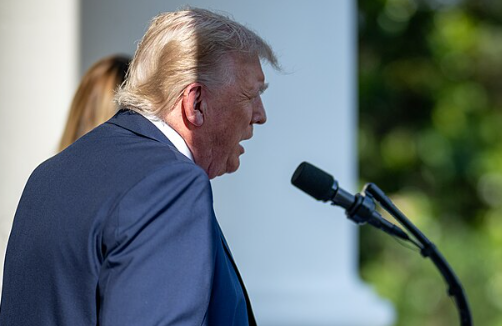
Trump confirmed his decision while speaking to reporters outside the White House on September 26. He said Iran had made a proposal but that he rejected it, while also saying he remained interested in an acceptable agreement.
Iran's proposal came during a week of diplomacy surrounding the United Nations General Assembly in New York. Iranian President Masoud Pezeshkian and Foreign Minister Abbas Araghchi were in the city as mediators tried to narrow the differences between Washington and Tehran.
According to Reuters, Iran said it could reopen the strategically important waterway within a week if the United States reduced military pressure and lifted its blockade of Iranian ports. Tehran also sought relief from restrictions on its oil exports as part of the proposed arrangement.
The Associated Press reported that Iran's latest offer called for the United States to lift the blockade, waive sanctions on Iranian oil sales and observe a ceasefire that would include Lebanon. In return, Iran would reopen the strait and resume negotiations over its nuclear program.
Those conditions remain a major obstacle.
The Strait of Hormuz is a narrow waterway connecting the Persian Gulf with the Gulf of Oman and the Arabian Sea. It has long been one of the most important shipping routes in the world because large amounts of oil and liquefied natural gas from Persian Gulf producers normally pass through it.
The current conflict has sharply disrupted that trade. Commercial vessels have continued to move through the area under U.S. protection, but traffic remains below levels seen before the war.
The White House said in August that U.S. forces had cleared Iranian mines from international shipping lanes and escorted commercial vessels through the strait. The administration also said its blockade had prevented Iran from exporting oil from its own ports. Those are claims made by the administration as part of its description of U.S. control over the waterway.
The dispute over Hormuz is closely tied to the broader conflict between the United States and Iran. Fighting that began earlier this year has damaged energy infrastructure, disrupted shipping and increased pressure on governments throughout the Persian Gulf.
The two countries have made previous attempts to stop the fighting. A June agreement was supposed to reopen the Strait of Hormuz and create a path toward renewed nuclear negotiations, but the arrangement quickly broke down.
The latest Iranian proposal tried to put the process on a much faster schedule. Araghchi described a plan under which steps toward reopening the strait and returning to negotiations could be completed within days.
The Los Angeles Times reported that Iran also sought the release of frozen Iranian assets. The newspaper said many of Tehran's conditions were similar to demands it had made during earlier negotiations.
Trump's rejection does not necessarily mean that all indirect contacts have ended. Iran said Saturday that mediators had not yet formally delivered a final U.S. response to Tehran.
Araghchi said Iran was waiting for the mediators to convey Washington's definitive position before deciding what to do next. That creates an unusual situation in which Trump has publicly rejected the proposal while Iranian officials say the diplomatic process has not formally delivered that rejection.
Qatar has played an important role in carrying messages between the two governments. U.S. and Iranian officials also held indirect discussions during the U.N. gathering, their first such talks in months.
The two sides remain divided over what should come first.
Iran wants relief from the U.S. blockade and economic restrictions while seeking to restore normal shipping through Hormuz. Washington has continued to press Iran for concessions involving its nuclear program and argues that Iran cannot use access to an international waterway as leverage.
Trump has repeatedly said that Iran cannot be allowed to obtain a nuclear weapon. Iranian leaders maintain that their nuclear program is for peaceful purposes and have demanded relief from U.S. economic and military pressure.
The disagreement has consequences far beyond the two countries. The Persian Gulf contains some of the world's largest oil and gas producers, including Saudi Arabia, the United Arab Emirates, Qatar, Kuwait, Iraq and Iran.
Before the conflict, roughly one-fifth of the world's oil and liquefied natural gas trade moved through the Strait of Hormuz. Disruptions there can affect crude oil prices, shipping costs and insurance rates, with those increases eventually reaching consumers and businesses in other countries.
Oil markets have responded quickly to signs that the waterway might reopen. Earlier reports of Iran's willingness to negotiate helped push crude prices lower as traders considered the possibility that more normal shipments could resume.
That possibility is now less certain following Trump's rejection.
The military situation also remains dangerous. Recent attacks and threats around the Persian Gulf and Yemen have increased concerns that a wider regional confrontation could further disrupt shipping and energy production.
Iran's Revolutionary Guard has warned that it could change its military strategy and targets if U.S. operations escalate. At the same time, the United States has maintained a substantial military presence around the strait and says it can protect commercial shipping.
Neither side has announced a new agreement.
The immediate question is whether mediators can revise Iran's proposal enough to bring Washington back into negotiations. Iran continues to say that diplomacy is possible, while Trump has indicated that he is willing to consider a deal but not on the terms Tehran has offered.
For now, the Strait of Hormuz remains both a military flashpoint and a central bargaining issue between the United States and Iran. A settlement could restore more normal energy shipments and restart nuclear talks, but the latest exchange shows that the two governments remain far apart over the terms required to get there.