

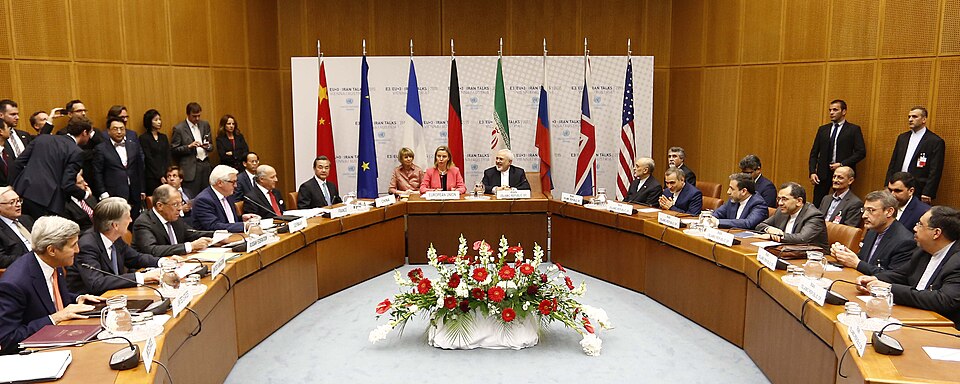
The United States and Iran opened direct negotiations in Islamabad on Saturday, with Pakistan serving as mediator in talks aimed at solidifying a two-week ceasefire as the conflict enters its seventh week. Vice President JD Vance's team arrived in Pakistan's capital early Saturday, joining Special Envoy Steve Witkoff and Jared Kushner, while the Iranian delegation was led by parliamentary speaker Mohammad Bagher Ghalibaf and Foreign Minister Abbas Araghchi.
Two rounds of talks had already taken place by midday, with a third scheduled for later Saturday. An Iranian delegate offered a cautiously optimistic assessment, telling reporters, "Talks have gone well so far. America is listening to us." Pakistan's Prime Minister Muhammad Shehbaz Sharif, who met with both delegations, expressed hope the negotiations would become "a stepping stone toward durable peace in the region."
The diplomatic push is playing out against a volatile backdrop. Iran continues to block most shipping through the Strait of Hormuz, the narrow waterway through which roughly a fifth of the world's oil supply passes daily. On Saturday, U.S. Central Command confirmed that two Navy guided-missile destroyers had transited the strait for the first time since the conflict began, setting conditions to clear Iranian sea mines from the waterway.
The broader economic ripple effects of the conflict are already being felt. United Airlines, which reported plans to push ticket prices higher, has pointed to the Iran war as one factor reshaping the cost environment for carriers, though analysts note the airline's premium pricing strategy was already in motion before hostilities began. The disruption to energy markets from the Hormuz blockade has added fuel costs and uncertainty across multiple industries.
Whether the Islamabad talks produce a lasting agreement remains uncertain. Iran has reiterated a list of preconditions, and the ceasefire has already come under strain. But the mere fact that high-level delegations are sitting across from each other — with a willing host in Pakistan — represents the most significant diplomatic opening since the war began.