

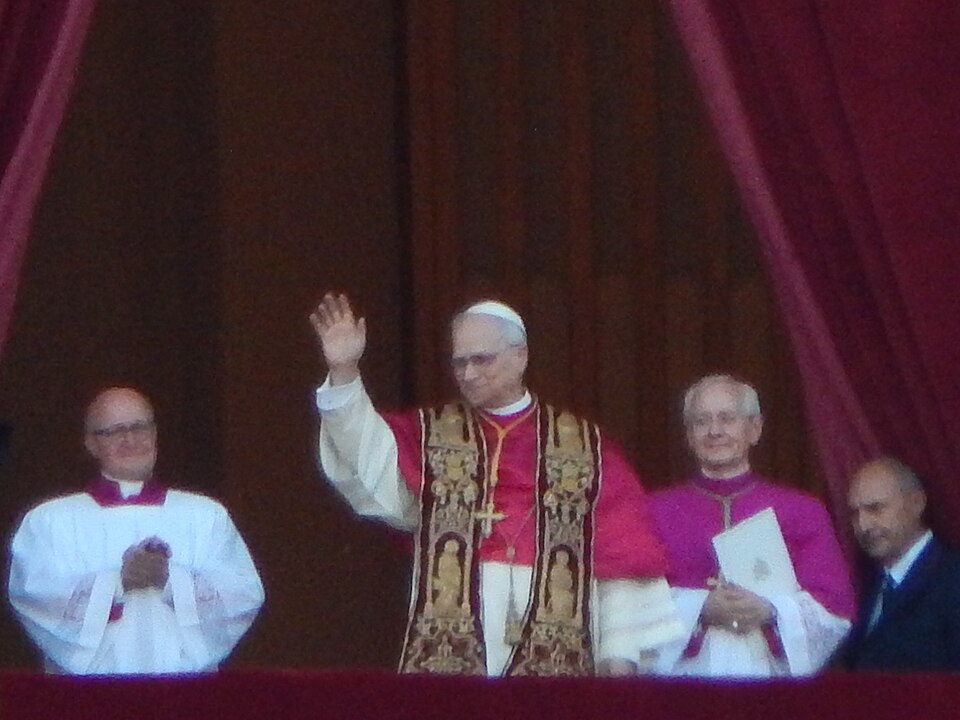
Pope Leo XIV on Saturday delivered his most forceful denunciation yet of the war in Iran, calling out a "delusion of omnipotence" and demanding that political leaders come to the negotiating table. The remarks came during an evening prayer vigil for peace at St. Peter's Basilica, held on the same day the United States and Iran began face-to-face negotiations in Pakistan.
"Enough of the idolatry of self and money! Enough of the display of power! Enough of war!" the pope said, speaking in Italian. Though he did not mention President Trump by name, the message appeared squarely directed at U.S. officials who have boasted of military superiority and invoked religious language to justify the conflict. Trump posted on Truth Social the same day, declaring that the United States had "completely destroyed Iran's Military."
The Chicago-born pontiff — the first American-born pope in history — had been initially reluctant to publicly criticize the violence in the war's early weeks. But his tone has sharpened dramatically in recent days. Earlier this week, he called Trump's threat to annihilate Iranian civilization "truly unacceptable." On Friday, he wrote on social media that "God does not bless any conflict."
During Saturday's vigil, Leo prayed for an end to what he called the "demonic cycle of evil" and urged world leaders to sit at "tables of dialogue and mediation, not at the tables where rearmament is planned and death is deliberated." In the pews sat the archbishop of Tehran, Belgian Cardinal Dominique Joseph Mathieu, along with the U.S. deputy chief of mission, Laura Hochla.
The remarks coincided with significant diplomatic activity. Vice President JD Vance, senior envoy Steve Witkoff, and Jared Kushner met with Iranian leaders in Pakistan for direct talks, a senior U.S. official told CBS News. A fragile two-week ceasefire remained in place, though Trump warned Iran to comply with its terms or face large-scale attacks. The White House pushed back on the pope's criticism, with a spokesperson saying all of the president's foreign policy actions "have made the world safer, more stable, and more prosperous."