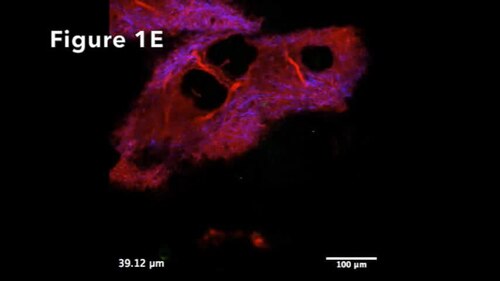
A team at Oregon Health & Science University has uncovered a hidden transportation system inside cells that works like internal "trade winds," actively pushing proteins to the cell's leading edge. The discovery, published in Nature Communications, challenges the long-standing scientific assumption that proteins move through cells mainly by random diffusion.
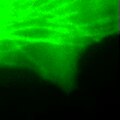
The breakthrough began by accident. Researchers Catherine and James Galbraith were conducting a standard classroom experiment at the Marine Biological Laboratory in Massachusetts when they noticed something unexpected. Using a laser technique to track protein movement, they observed a dark band appearing at the front edge of a living cell — a sign that proteins were being rapidly pushed forward rather than drifting randomly.
"We realized the cartoon models in textbooks were missing a huge piece," James Galbraith said. "There had to be some kind of flow in the cell pushing things forward. Cells really do 'go with the flow.'"
The internal currents carry soluble actin, a key protein involved in cell movement, to the area where cells extend and repair tissue. For decades, scientists believed actin reached this region through diffusion alone. The new findings reveal a far more active and directed process.
The implications extend well beyond basic biology. Understanding these cellular flows could help explain why some cancer cells are able to spread so aggressively through the body. If researchers can learn to disrupt or control these internal currents, it could open new avenues for slowing metastasis — the process by which cancer moves from one part of the body to another. The discovery also has potential applications in wound healing and tissue repair research.