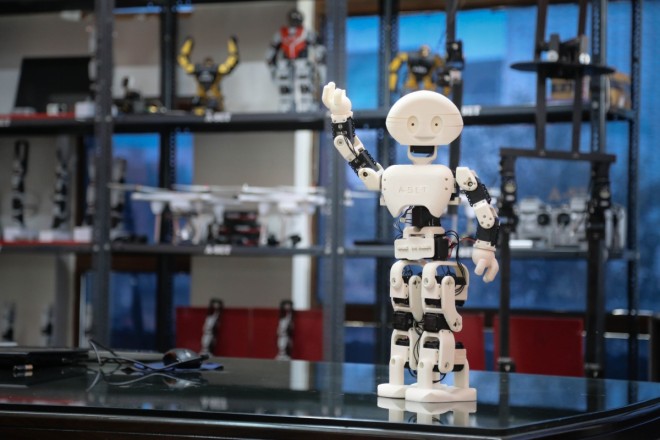
A humanoid robot sprinted its way into the record books in Beijing, completing a half-marathon faster than the human world record for the distance. The achievement, reported by The Seattle Times, represents a dramatic leap forward in the capabilities of bipedal robots and is likely to intensify global conversation about the pace of robotics development.
The feat is remarkable not just for the raw speed involved but for the endurance and balance it required. Running 13.1 miles on two legs demands sophisticated coordination of movement, energy management, and real-time adjustments to terrain — challenges that have long made bipedal locomotion one of the hardest problems in robotics. That a machine can now sustain such effort over a long distance signals that years of engineering breakthroughs are compounding rapidly.
The demonstration took place in China, which has been investing heavily in robotics and artificial intelligence as part of its broader industrial strategy. Chinese technology firms and research institutions have been racing to develop humanoid robots for applications ranging from manufacturing and logistics to eldercare and disaster response. A robot that can run a half-marathon may seem like a novelty, but the underlying technology has serious commercial and military implications.
For the robotics industry worldwide, the Beijing half-marathon performance raises the bar. It also raises familiar questions about the future relationship between humans and machines — not just in athletics, but in workplaces and societies that are increasingly shaped by automation. The line between what humans and robots can physically accomplish continues to blur.