Brent crude surged past $105 a barrel Thursday as peace negotiations between the United States and Iran remained deadlocked, sending ripples through global markets and pushing Asian stocks lower Friday morning.
The price for a barrel of Brent crude for June delivery settled at $105.07 on Thursday, at one point topping $107, according to market data. Early Friday, Brent was trading around $99.70, with U.S. benchmark crude up 0.6 percent at $96.62 per barrel. Oil prices have stayed elevated since the Iran war began on February 28.
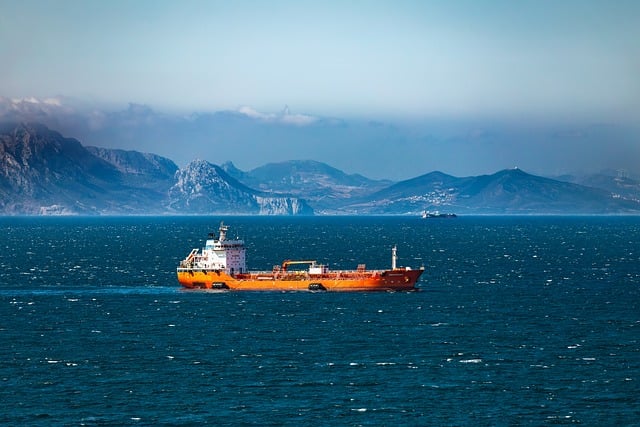
The Strait of Hormuz, through which roughly a fifth of the world's oil and natural gas normally passes, remains largely closed. A U.S. naval blockade of Iranian ports is still in effect. After the blockade was imposed last week, Iran attacked three ships in the strait on Wednesday and seized two of them. President Trump responded by ordering the U.S. military to destroy any vessel caught laying mines in the area.
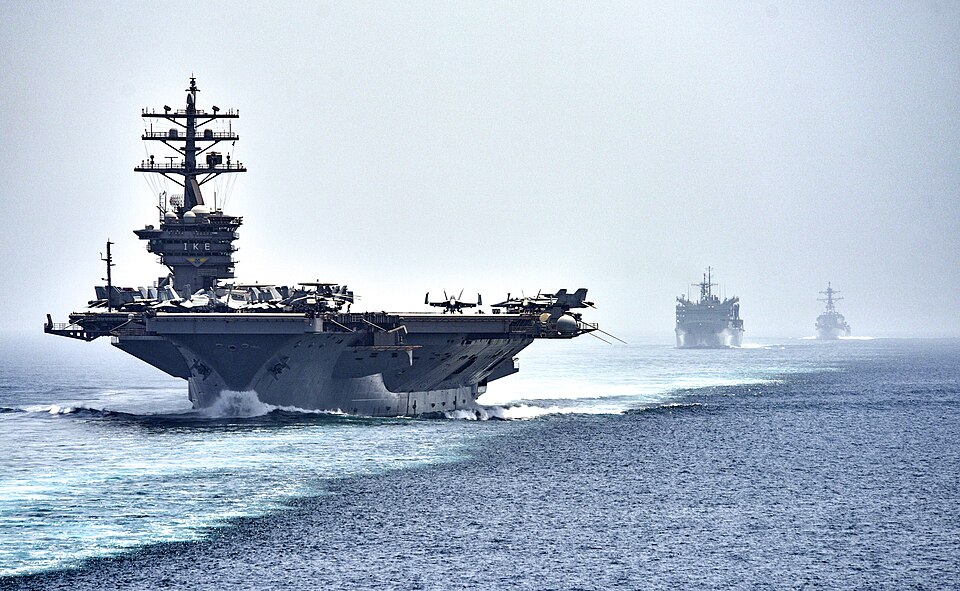
A third U.S. aircraft carrier, the USS George H.W. Bush, has arrived in the Middle East, bringing the total number of American carriers operating in the region to three.
Trump extended the ceasefire indefinitely on Tuesday, one day before it was set to expire. But senior Iranian officials have blamed Washington for the breakdown in talks, pointing to the naval blockade. Iran's President Masoud Pezeshkian, parliamentary speaker Mohammad Bagher Ghalibaf, and judiciary chief Gholamhossein Mohseni Ejei all pushed back against Trump's claims of internal divisions within Iran's leadership, presenting a coordinated message of unity.
Trump said Thursday that American forces could quickly "neutralise" any rebuilt Iranian military capacity. He also issued a notable clarification: for the first time, he stated explicitly that the United States would not use a nuclear weapon against Iran. The comment followed days of intense speculation after Trump posted a threat on social media that was widely read as suggesting Iran's civilisation could be erased.
On the propaganda front, Al Jazeera reported that fake AI-generated images and videos purporting to show female victims of the Iranian government have been spreading online, with Trump himself sharing some of the content. The outlet reported that such imagery is being used to build a public rationale for continued military pressure on Tehran.
In Asian markets Friday, Hong Kong's Hang Seng fell 0.8 percent and South Korea's Kospi shed 0.4 percent. Tokyo's Nikkei 225 bucked the trend, gaining 0.6 percent to 59,504 after briefly topping 60,000 on Thursday for the first time. Taiwan's Taiex jumped 2.5 percent, led by a more than 4 percent gain in chipmaker TSMC.
Wall Street's S&P 500 dropped 0.4 percent Thursday to 7,108.40, snapping a rally that had pushed it to all-time highs. The index has been resilient despite the energy shock. "With the S&P 500 still hugging record highs, markets are still at ease to give the negotiations more time," ING Bank analysts Michiel Tukker and Padhraic Garvey wrote in a research note.
Trump also announced a separate three-week extension to the ceasefire between Israel and Lebanon following talks at the White House with Israeli and Lebanese envoys. An Israeli strike killed three people in southern Lebanon even as the extension was announced.