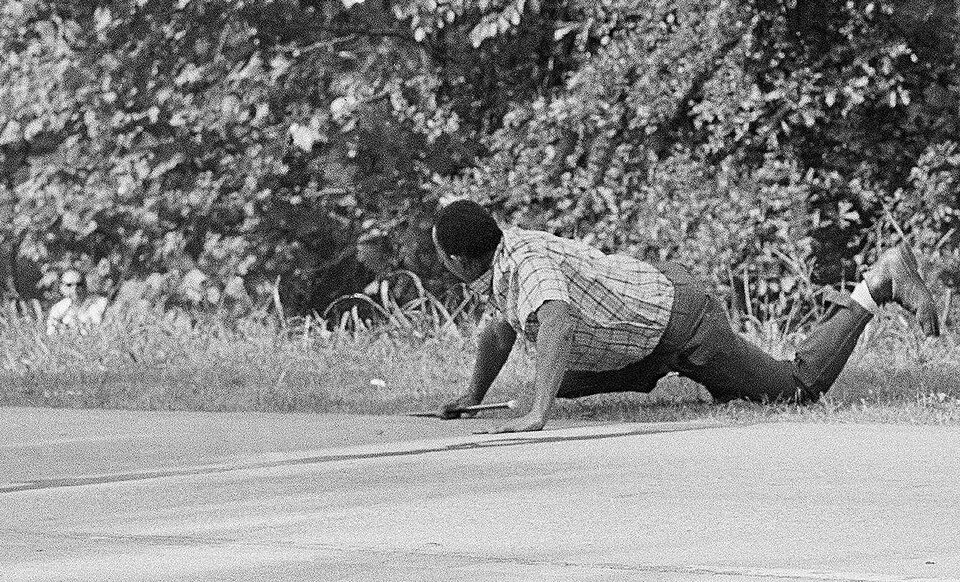
Jack Thornell, the Associated Press photographer whose image of a wounded James Meredith on a Mississippi highway won the 1967 Pulitzer Prize, died Thursday at a hospital in Metairie, Louisiana. He was 86. His son, Jay Thornell, said the cause was complications from kidney disease.
Thornell spent four decades at the AP, from 1964 to 2004. He shot politicians, natural disasters, and crime scenes, but civil rights coverage defined his career from the start. On his first day at the AP's New Orleans bureau, he covered the integration of a Mississippi Gulf Coast school.
In June 1966, Thornell was 26 years old and assigned to follow Meredith, who had already made history four years earlier by integrating the University of Mississippi. Meredith was leading a "March Against Fear" through the state, walking U.S. Highway 51 near Hernando to encourage Black residents to register to vote. Thornell and a rival photographer were parked roadside when the first shotgun blast rang out.
Thornell scrambled and fired his camera. One image shows Meredith grimacing in pain as he dragged himself toward the road's edge. The Pulitzer winner was a second shot: Meredith on the ground, arms extended, hands flat on the pavement, head turned as if looking toward his attacker, who is barely visible at the far left edge of the frame among roadside foliage.
Thornell didn't know he had the shot. He feared his rival had captured the gunman and he hadn't, and expected to be fired. Instead, the image became one of the defining photographs of the civil rights era.
Aubrey James Norvell, who was apprehended at the scene, pleaded guilty to the attack and served 18 months of a five-year sentence. Meredith survived and recovered.
Thornell's body of civil rights work extended beyond that day. In 1964, he photographed the burned-out station wagon in Neshoba County, Mississippi, belonging to civil rights workers Michael Schwerner, James Chaney, and Andrew Goodman, whose bodies were later found buried in an earthen dam after Ku Klux Klansmen abducted and killed them. He also photographed the local sheriff's arrest by federal agents on conspiracy charges in connection with those murders.