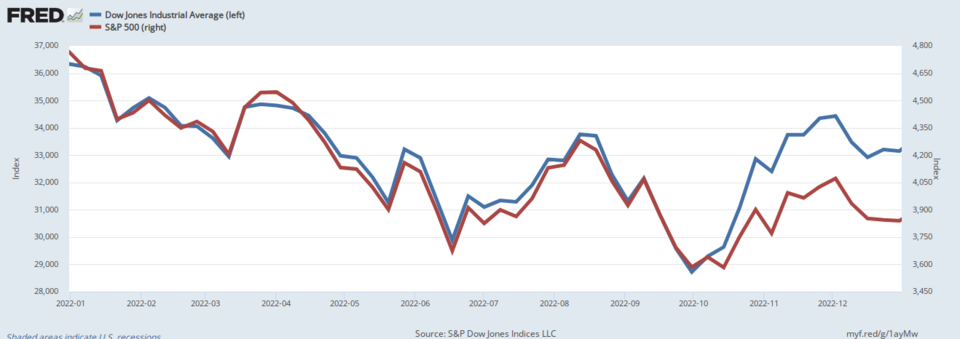
The S&P 500 has climbed more than 3% since the United States and Israel attacked Iran on February 28, hitting multiple all-time highs along the way — including a fresh record this past Monday. The tech-heavy Nasdaq has surged nearly 8% from its pre-war level. The Dow Jones Industrial Average has dipped about 1%.
Those numbers might seem surprising. The Iran war triggered one of the worst oil crises in recent history, sent U.S. gasoline prices to a four-year high, and prompted some economists to raise their odds of a recession within the next year. The stock market, by most measures, barely flinched.
Analysts point to two main reasons. Corporate earnings have been stronger than expected, and investors have grown more confident that the conflict will not spiral out of control. Roughly 140 members of the S&P 500 have reported results so far this earnings season, beating analyst expectations at a rate 14% higher than a year ago, according to a Bank of America research note.
"The market appears to be looking past the Iran war because investors have another story to focus on: fundamentals," Bret Kenwell, an investing analyst at eToro, told ABC News. "Earnings estimates have continued to climb despite the conflict."
President Trump's willingness to pull back from actions that threaten severe market reactions has also reassured investors, analysts said. Stocks moved steadily higher this month as both sides signaled openness to a ceasefire. Since the U.S. and Iran reached a temporary truce on April 7, the S&P 500 has climbed nearly 7%.
The conflict closed the Strait of Hormuz, a maritime route that carries roughly one-fifth of global oil supply. It remains effectively closed even as fighting has largely stopped. Steve Sosnick, chief strategist at Interactive Brokers, said investors have been buying consistently throughout the war — but he cautioned that patience has limits. "The longer this goes on, the greater the risks," he said.
On Wednesday, the Federal Reserve held its benchmark interest rate steady for the third consecutive meeting, keeping the federal funds rate in its current range of 3.5% to 3.75%. The decision was widely expected. The CME FedWatch tool had forecast a 100% probability of no change. The Fed's rate-setting committee cited "a high level of uncertainty about the economic outlook" and said "elevated" inflation is tied to the recent rise in global energy prices.
Fed Chair Jerome Powell used the occasion to announce he plans to remain as a board governor after his chairmanship term ends in May. The Department of Justice recently ended an investigation into his oversight of renovations at the Fed's Washington headquarters, a probe Powell had called politically motivated. U.S. Attorney Jeanine Pirro confirmed on April 24 that her office was closing the inquiry.
Powell also addressed the Fed's broader institutional standing. He expressed concern about the central bank's independence, particularly in the wake of President Trump's attempt to fire Fed Governor Lisa Cook. The Supreme Court is expected to rule later this year on whether the president has the authority to remove a Federal Reserve official.
"The institution is battered — we have had to go to the courts," Powell said. "It's not over."
Bankrate analyst Stephen Kates called Powell's decision to stay on "a bold departure from the norm of chairs exiting after their chairmanship term ends," saying it signals Powell "remains steadfast in his commitment to preserving Fed independence through continued service."