A small icy body drifting far beyond Neptune's orbit has turned up something that, by most planetary science logic, should not be there: an atmosphere.
The object, designated (612533) 2002 XV93, measures roughly 500 kilometers across, making it far smaller than Pluto, which spans 2,377 kilometers. Objects in that size range, sitting in the frigid outer reaches of the solar system, typically lack the gravity to hold onto any gas. Scientists have generally assumed they are airless. As Science Daily reported, a team of professional and amateur astronomers in Japan has now found evidence that challenges that assumption.
The discovery came through a rare event called a stellar occultation, which occurs when a distant object passes directly in front of a background star as seen from Earth. On January 10, 2024, 2002 XV93 did exactly that, as viewed from multiple locations across Japan. A research team led by Ko Arimatsu at the NAOJ Ishigakijima Astronomical Observatory was watching.
The logic of the technique is straightforward. If the object has no atmosphere, the star's light vanishes abruptly the moment the object blocks it. If an atmosphere is present, the light fades gradually as it passes through layers of gas before disappearing entirely. What Arimatsu's team measured matched the gradual dimming pattern, strongly suggesting a surrounding layer of gas.
What makes the finding especially puzzling is that the atmosphere should not last. Calculations suggest it would dissipate entirely within about 1,000 years unless something is continuously replenishing it. By astronomical timescales, that is essentially nothing. The implication is that whatever produced this atmosphere did so recently, or is doing so right now.
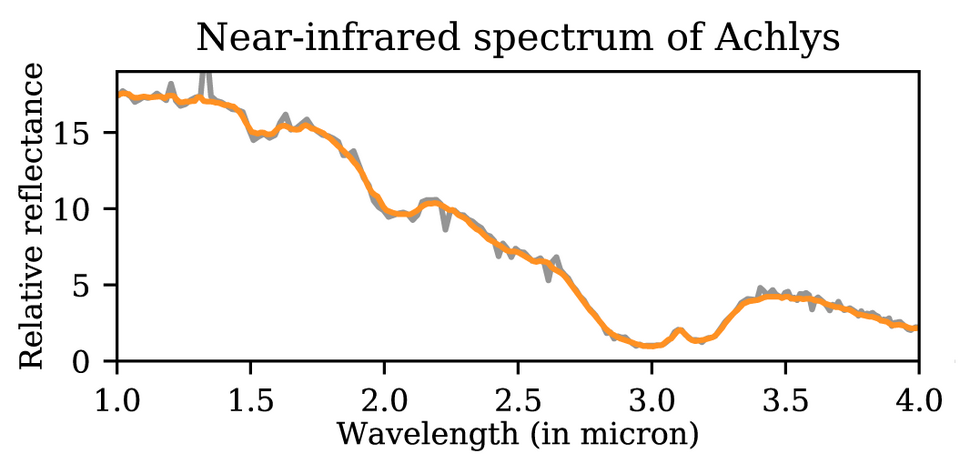
The team looked to the James Webb Space Telescope for clues about what might be feeding the gas layer. Webb's observations found no evidence of frozen volatile gases on the object's surface, the kind of ices that, when warmed, can slowly sublimate into vapor and sustain a thin atmosphere. That absence makes the source of the gas harder to explain, not easier.
Several possibilities remain open. A recent impact could have released trapped gases from the interior. Some form of ongoing geological or chemical activity might be venting material. Or the object's surface composition could be stranger than current data reveal.
Further observations will be needed to determine the atmosphere's composition and nail down how it formed. The finding adds 2002 XV93 to a very short list of outer solar system bodies with confirmed or suspected atmospheric activity, and raises broader questions about how many other small, distant worlds might be hiding similar surprises.