Three people have died and at least eight cases of hantavirus have been reported among passengers of the expedition cruise ship MV Hondius, which was traveling from Argentina across the Atlantic, according to the World Health Organization and subsequent health reports. At least five U.S. states, including Texas, Virginia, Georgia, Arizona, and California, are now monitoring residents who returned from the vessel.
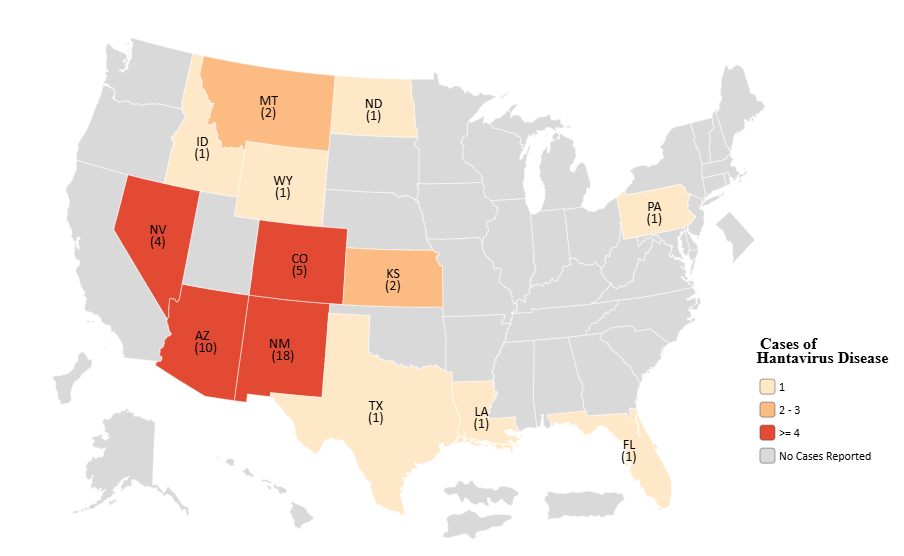
The outbreak has drawn renewed attention to hantavirus exposure risks inside the United States, where the disease has historically been rare but not unknown. The Centers for Disease Control and Prevention recorded 890 cases of hantavirus in the U.S. from 1993 through the end of 2023, according to agency data. That works out to roughly 800 to 900 total cases over three decades, according to Luis Marcos, a professor of medicine and director of the Infectious Diseases Fellowship Program at Stony Brook Medicine in New York.
"Most of these cases have been west of the Mississippi River, and classically the risk factors are being in contact with feces and urine from rodents," Marcos told Fox News Digital.
The most common U.S. strain is called Sin Nombre. It spreads through inhaling contaminated particles from rodent urine, droppings, or saliva, and is not transmitted between people. Typical exposure scenarios involve camping or hiking in remote areas where contact with rodent waste can happen without a person realizing it.
The MV Hondius outbreak, however, involves a different and more dangerous strain. "The only proven human-to-human transmission has been with the Andean virus from South America — and that's what's happening now," Marcos said. The outbreak reportedly began with a couple who contracted the virus while traveling in Argentina and were not showing symptoms when they boarded the ship.
"They were not symptomatic at all — the incubation period can be one, two, three or four weeks," Marcos said.
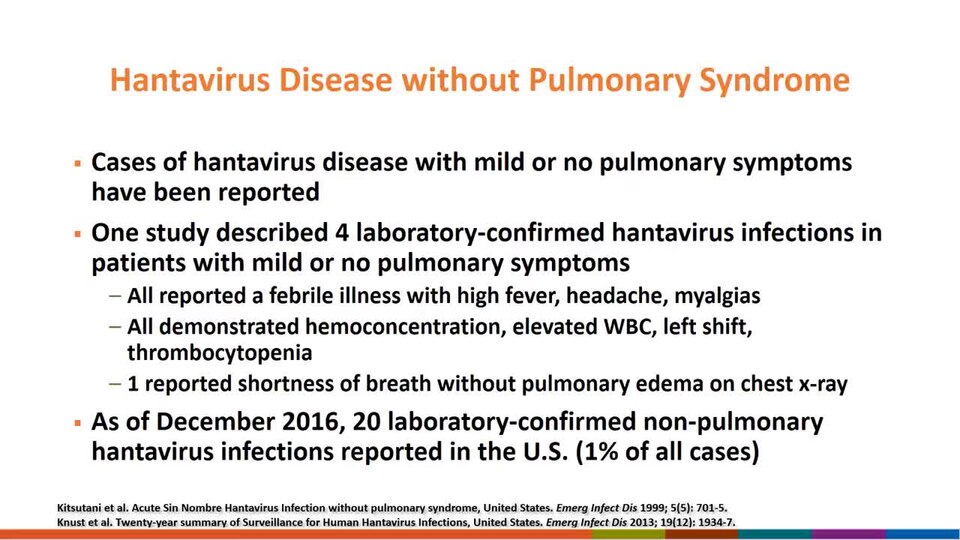
Most people infected with hantavirus develop flu-like symptoms including fever and muscle pain. In rare cases, the virus progresses to hantavirus pulmonary syndrome, or HPS, a severe condition in which the lungs fill with fluid. "The mortality rate [among those with HPS] is between 30% and 60% — so yes, it's a deadly virus," Marcos said.
Not every infected person becomes critically ill. "Some people may have mild disease, so not everybody will be very, very sick," the doctor noted. Transmission efficiency also varies by strain. "The transmission is not as efficient as other viruses," Marcos said of hantavirus generally.
The cruise ship case has also drawn attention because of a separate high-profile hantavirus death earlier this year. Betsy Hackman, wife of actor Gene Hackman, died from hantavirus, and subsequent reports indicated the couple's home was found to be infested with rodents.
Public health officials in the five monitoring states have not disclosed how many returning passengers are under observation or what protocols are in place. The WHO has confirmed multiple laboratory cases from the MV Hondius voyage, and investigation into the full scope of the outbreak is ongoing.