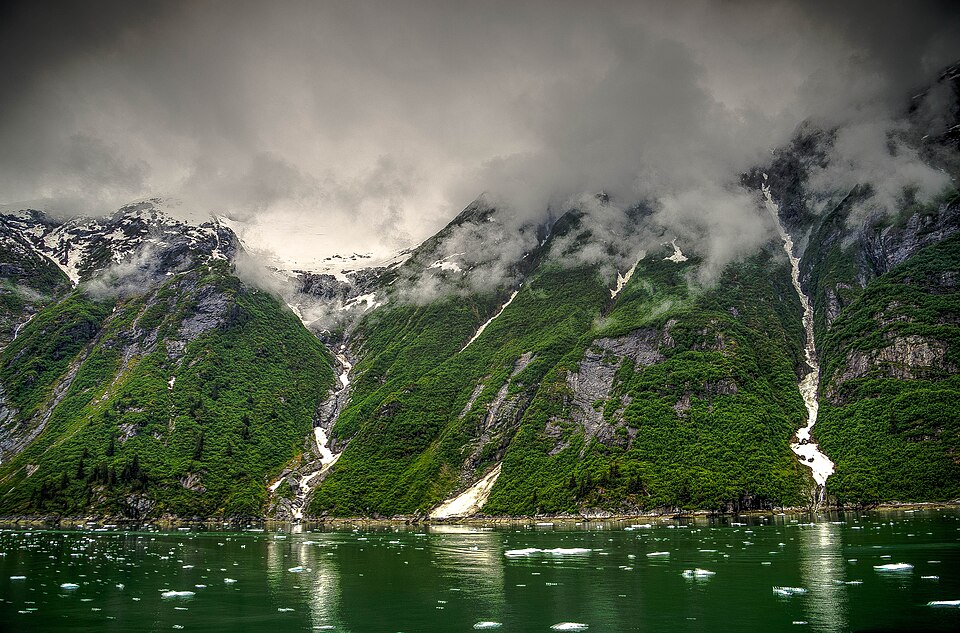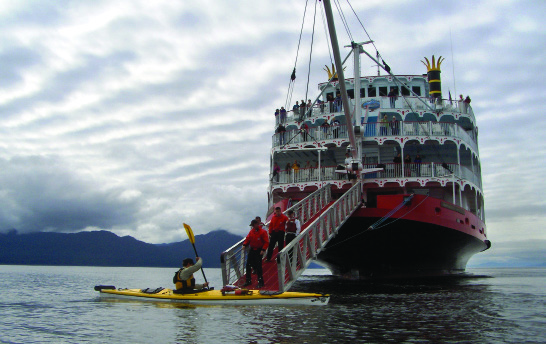
A cruise ship called the Hanse Explorer had spent the evening of August 9, 2025, near the South Sawyer Glacier in southeastern Alaska, with passengers taking selfies and videos of the ice. The ship moved on. Twelve hours later, a section of the adjacent mountain collapsed into the fjord below, triggering the second-highest tsunami in recorded history.
According to a report in the journal Science, the landslide sent water and debris 1,580 feet, or 481 meters, up the opposite wall of the fjord. That is higher than the top floor of the Taipei 101 skyscraper. The force of the water stripped the fjord walls down to bare rock before the wave continued down Tracy Arm. Fortunately, no ships were in the area when it happened, just after 5 o'clock in the morning.
Researchers at the Alaska Earthquake Center, including Alaska's state seismologist, authored the study. They described a chain of conditions that came together before the collapse. The glacier below the landslide area had experienced rapid calving and retreated more than a third of a mile in the two months before the event. Heavy rain had been falling, which enters fractures in mountain rock and increases water pressure in cracks, pushing slopes closer to failure. The landslide occurred in August, when warm ocean temperatures and heavier precipitation both favor glacier retreat and slope instability.
Most striking was a pattern of seismic activity in the days before the collapse. Thousands of small tremors emanated from the area of the slide before the mountainside gave way. The researchers said that this combination of warning signs, taken together, would have been sufficient to issue progressive alerts had anyone been monitoring for them.
The mechanics of why mountains become unstable when glacial ice disappears are still poorly understood, but the researchers noted a distinct pattern: multiple major landslides in coastal Alaska have occurred precisely at the terminus of a retreating glacier. When a landslide hits water, the momentum of millions of tons of rock transfers directly into tsunami waves.
This is not a problem confined to Alaska. The same phenomenon is occurring from Greenland to Norway, sometimes with deadly consequences. Researchers say communities and governments across the Arctic are trying to figure out how to respond to a hazard that is growing but remains difficult to predict. The options, as described in the report, are not attractive: avoid large sections of coastline, or accept a poorly understood risk.
The researchers said alert systems could play an obvious role, but only if scientists develop a clearer picture of where and when landslides are likely to occur. In the months after the Tracy Arm event, some cruise lines began avoiding the fjord entirely. The conditions that produced the landslide, however, are not unique to that location.